Download Mendeley
Distinct associations of pioneer factor Ascl1-E12a with nucleosomes drive changes in cell fate.
Zhou, B.R., Luzete-Monteiro, E., Zhang, J., Takenaka, N., Tang, H.Y., Fernandez Garcia, M., Coradin, M., Frederick, M., Donahue, G., Garcia, B., Bai, Y., Zaret, K.S.(2026) Mol Cell
- PubMed: 42285106 Search on PubMedSearch on PubMed Central
- DOI: https://doi.org/10.1016/j.molcel.2026.05.020
- Primary Citation Related Structures:
8U9S, 8UBI, 8UBJ, 8UBK, 8UBL - PubMed Abstract:
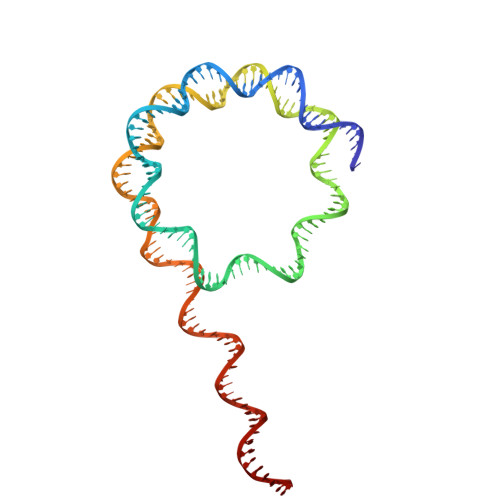
Understanding how pioneer transcription factors target nucleosomal DNA and initiate chromatin accessibility reveals the earliest events in cell fate changes. We integrated structural, biochemical, and genomic approaches to assess how the pioneer factor Ascl1-E12a heterodimer perturbs nucleosomes in vitro and in vivo to induce a neural cell fate. Two Ascl1-E12a heterodimers shift and unwrap 15 bp of nucleosomal DNA in a stepwise manner while eliciting solvent exchanges within the octamer. Nucleosome binding, but not free DNA binding, by Ascl1-E12a is enhanced by two types of associations with the nucleosome that differentially affect the kinetics of DNA unwrapping and shifting. Nucleosome association mutants of Ascl1 perturb chromatin opening on linker histone-compacted nucleosome arrays-independent of nucleosome remodelers-and targeting of closed chromatin in vivo, with consequent deficiencies in cellular reprogramming. Our findings establish that distinct associations with nucleosomes are essential for the pioneer factor Ascl1 to overcome chromatin barriers to reprogram cell fate.
- Laboratory of Biochemistry and Molecular Biology, National Cancer Institute, National Institutes of Health, Bethesda, MD 20892, USA.
Organizational Affiliation: