Download Mendeley
Structural and mechanistic insights into gating and allosteric modulation of GluN1-GluN3A NMDA receptors.
Kim, J., Benton, A.J., Lotti, J.S., Rouzbeh, N., Hansen, K.B., Gouaux, E.(2026) Nat Struct Mol Biol 33: 1299-1310
- PubMed: 42665662 Search on PubMedSearch on PubMed Central
- DOI: https://doi.org/10.1038/s41594-026-01866-9
- Primary Citation Related Structures:
9OEH, 9OEM, 9OEN, 9OEO, 9OFI, 9OFM, 9OFY, 9OFZ - PubMed Abstract:
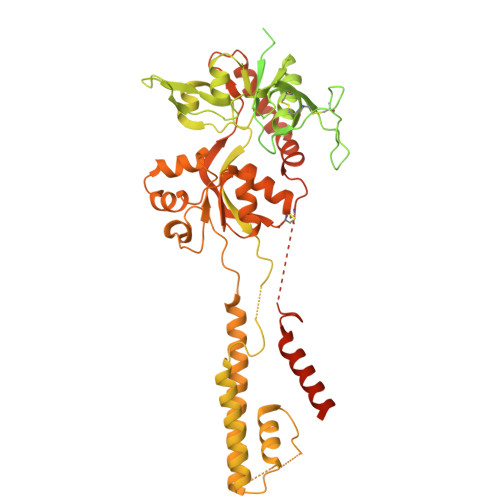
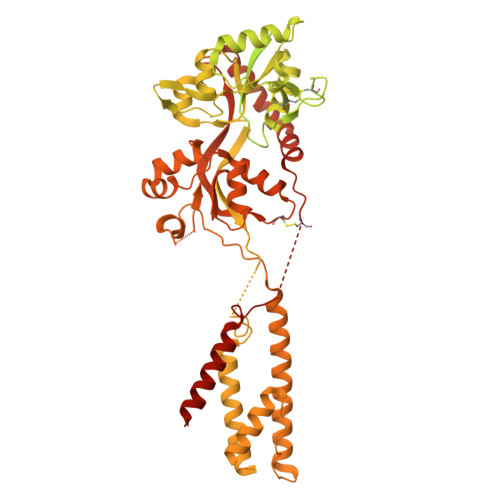
N-methyl-D-aspartate receptors (NMDARs) mediate excitatory signaling essential for synaptic plasticity and memory. Unlike GluN2-containing NMDARs, GluN3-containing receptors are activated solely by glycine and exhibit profound desensitization and paradoxical potentiation by GluN1-selective antagonists, including CGP-78608 (CGP). Although GluN3A-containing NMDARs regulate synapse pruning and excitotoxicity, and are associated with schizophrenia, autism and stroke, their native stoichiometry and gating mechanism are poorly defined. Here, using single-molecule pull-down analysis, we show that native GluN3A-containing receptors are diheteromeric assemblies. Cryogenic-electron microscopy analysis of GluN1-GluN3A receptors in antagonist-bound, preactive, active and desensitized states, augmented by electrophysiology and pharmacology experiments, show how glycine activates the receptor solely via GluN3A-dependent conformational changes, opening the gate with two-fold symmetry, and induces a roughly four-fold symmetric desensitized state. CGP-bound GluN1 restricts GluN3A rotation, promoting glycine-induced activation by blocking desensitization. These findings illuminate how CGP potentiates GluN1-GluN3A receptor activity, place the receptor gating mechanism on a structural foundation and define the molecular basis for pharmacological modulation.
- Vollum Institute, Oregon Health and Science University, Portland, OR, USA.
Organizational Affiliation: