Download Mendeley
Structural insight into how RAD51 paralog exchange regulates RAD51 filament formation.
Rawal, Y., Kwon, Y., Jia, L., Ruben, E.A., Ji, J.H., Guo, L., Stratton, C.M., Nayak, D., Tovar, M., Fang, Q., Jamalruddin, M.A., Zhou, S., Kuppa, S., Syed, S., Jasper, A.M., Katz, J.N., Rogers, C.M., Kaur, H., Samentar, L., Zhao, W., Dray, E., Zhang, F., Stoilova-McPhie, S., Taylor, A.B., Burma, S., Rao, M.K., Libich, D.S., Hromas, R., Mazin, A.V., Jasin, M., Zhou, D., Bernstein, K.A., Greene, E.C., Wasmuth, E.V., Sung, P., Olsen, S.K.(2026) Nat Struct Mol Biol 33: 768-781
- PubMed: 42020761 Search on PubMedSearch on PubMed Central
- DOI: https://doi.org/10.1038/s41594-026-01796-6
- Primary Citation Related Structures:
9OMY, 9OMZ, 9ON2, 9ZZR - PubMed Abstract:
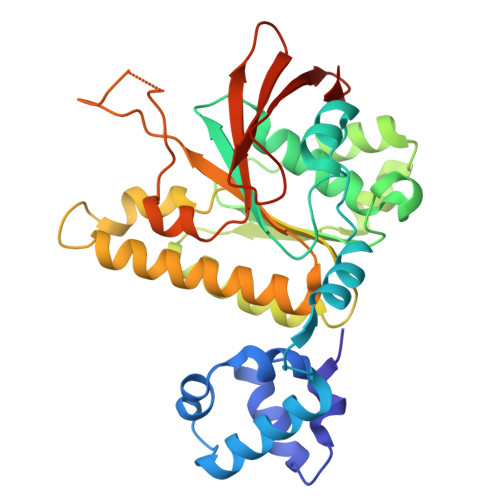
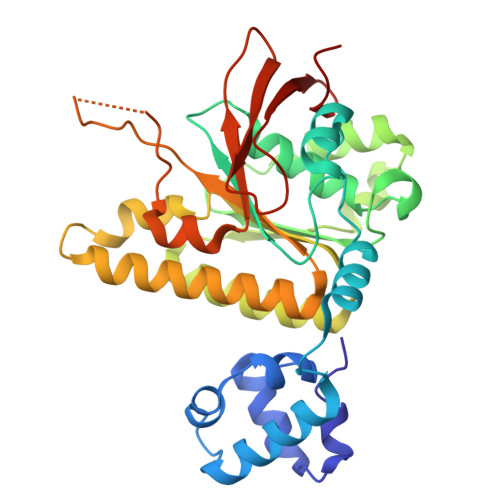
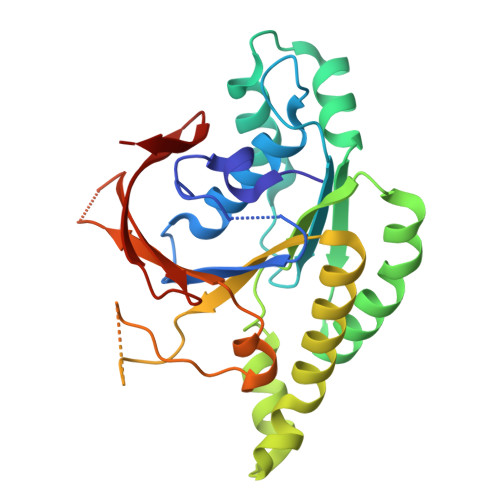
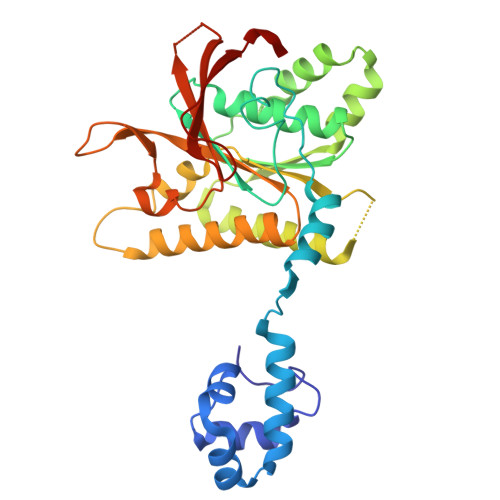
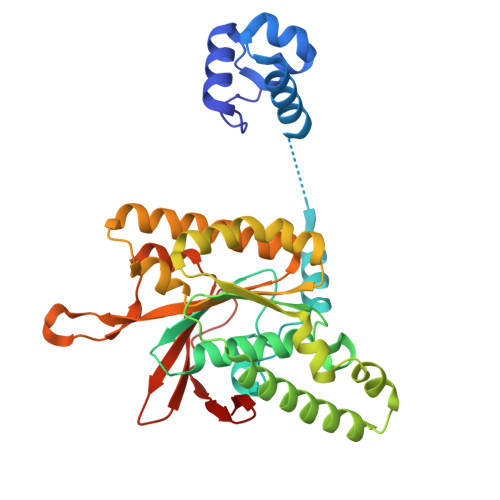
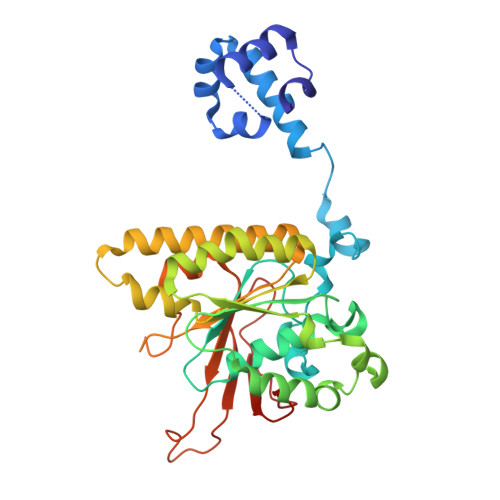
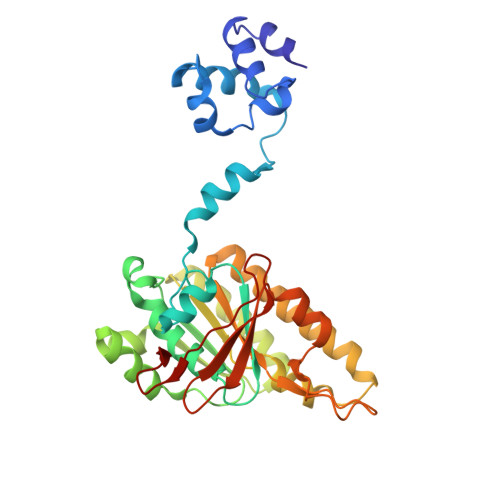
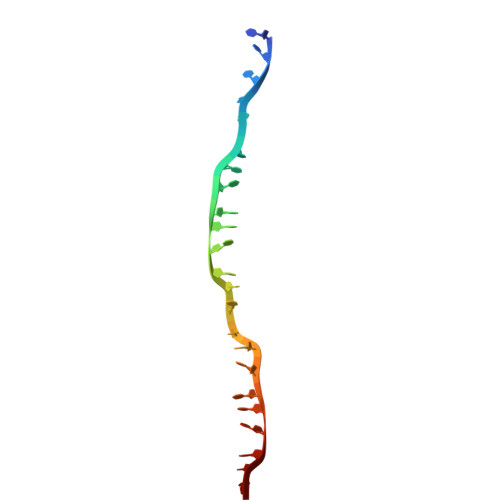
Homologous recombination (HR) repairs DNA double-strand breaks and stabilizes stressed replication forks, and HR deficiency promotes genome instability and cancer. HR requires assembly of RAD51 nucleoprotein filaments on single-stranded DNA (ssDNA), a process regulated by the human RAD51 paralogs RAD51C, XRCC3, RAD51D and XRCC2. Here, using cryo-electron microscopy, we find that the RAD51-XRCC3-RAD51C complex (RAD51-X3C) assembles into an octamer in which XRCC3 engages the RAD51 DNA-binding surface and RAD51 subunits adopt a misaligned configuration incompatible with filament formation. These features define an autoinhibited RAD51-X3C state that limits nonproductive RAD51 binding to double-stranded DNA or RNA-DNA hybrids while preserving RAD51 availability for ssDNA-dependent strand exchange. We further show that the RAD51D-XRCC2 paralog complex remodels RAD51-X3C into a pentameric RAD51-X3CDX2 assembly by engaging the exposed RAD51C surface and disrupting contacts that stabilize the octamer. This remodeling exposes the RAD51 DNA-binding interface, enhances RAD51-ssDNA filament assembly, and promotes strand exchange on RPA-coated ssDNA, and yields a filament-compatible paralog assembly that integrates into ssDNA-bound RAD51 filaments. Together, these findings establish paralog exchange as a mechanism that converts an autoinhibited RAD51-X3C octamer into an activated RAD51-X3CDX2 pentamer to regulate RAD51 filament formation during HR and replication fork preservation.
- Department of Biochemistry & Structural Biology, University of Texas Health Science Center at San Antonio, San Antonio, TX, USA.
Organizational Affiliation: