Download Mendeley
Structural dynamics of kappa opioid receptor interactions with beta-arrestin 1.
Han, J., Fine, E.J., Jiang, Q., Zhuang, Y., Suomivuori, C.M., Chen, Z.W., Denn, E., Whiddon, K., Li, K., Evers, A.S., Fuller, J., Carter, J., Fay, J.F., Chen, M., Dror, R.O., Che, T.(2026) Nat Commun 17
- PubMed: 42243110 Search on PubMedSearch on PubMed Central
- DOI: https://doi.org/10.1038/s41467-026-73968-3
- Primary Citation Related Structures:
9ZZO - PubMed Abstract:
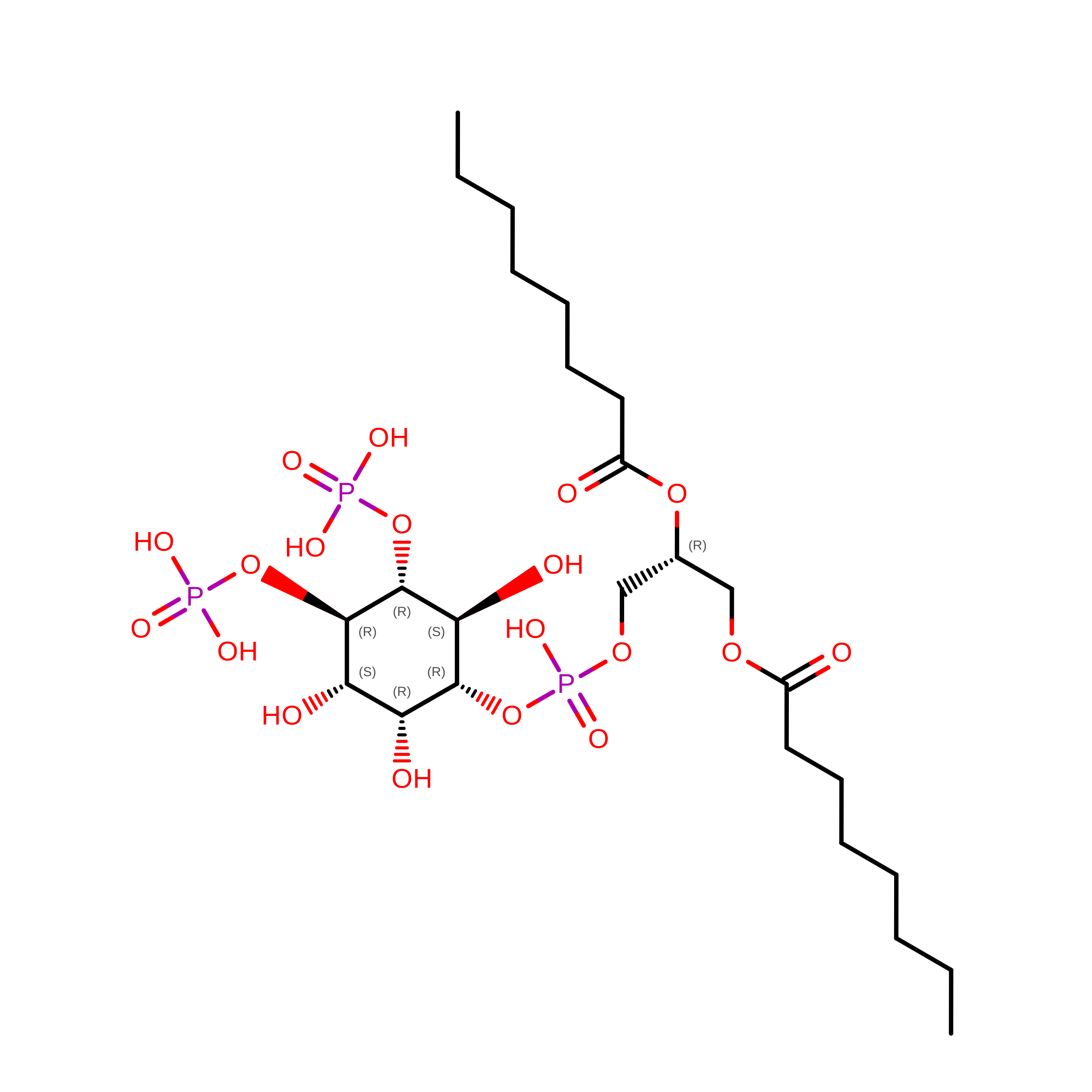
Opioid receptors signal through Gi/o protein and β-arrestin pathways that mediate distinct effects of opiate drugs. While opioid binding and G protein activation are well studied, β-arrestin recruitment remains poorly understood. Here, we determine the complex structure of the kappa opioid receptor (KOR) with β-arrestin1 (βarr1) at 2.60 Å resolution using cryogenic electron microscopy. Structural and mass spectrometry analyses reveal multiple phosphorylation sites and a phospholipid-binding site that specifically enhances arrestin recruitment. The KOR-βarr1 complex adopts a core interaction and exhibits notable differences from other GPCR-βarr1 complexes. Comparisons with the structures of KOR-Nb39 and KOR-Gi1 complexes also reveal distinct structural features in the orthosteric binding site and the KOR-transducer interface that affect signaling bias. Using extensive 3D variation analysis and molecular dynamics simulations, we identify a range of conformational dynamics in both the receptor and βarr1, suggesting an allosteric pathway for arrestin's entry and exit.
- Center for Clinical Pharmacology, Department of Anesthesiology, Washington University School of Medicine, Saint Louis, MO, USA. jianming@wustl.edu.
Organizational Affiliation: