Download Mendeley
Structural mechanism of SAM-AMP and SAM-AMP 2 synthesis by the type III-D2 CRISPR effector complex.
Mitsuda, Y., Sugaya, M., Ishikawa, J., Nagahata, N., Okazaki, S., Hiraizumi, M., Kato, K., Gootenberg, J.S., Abudayyeh, O.O., Osawa, T., Yamashita, K., Nishimasu, H.(2026) Nat Commun 17
- PubMed: 42342668 Search on PubMedSearch on PubMed Central
- DOI: https://doi.org/10.1038/s41467-026-74422-0
- Primary Citation Related Structures:
9WXH, 9WXI, 9WXJ - PubMed Abstract:
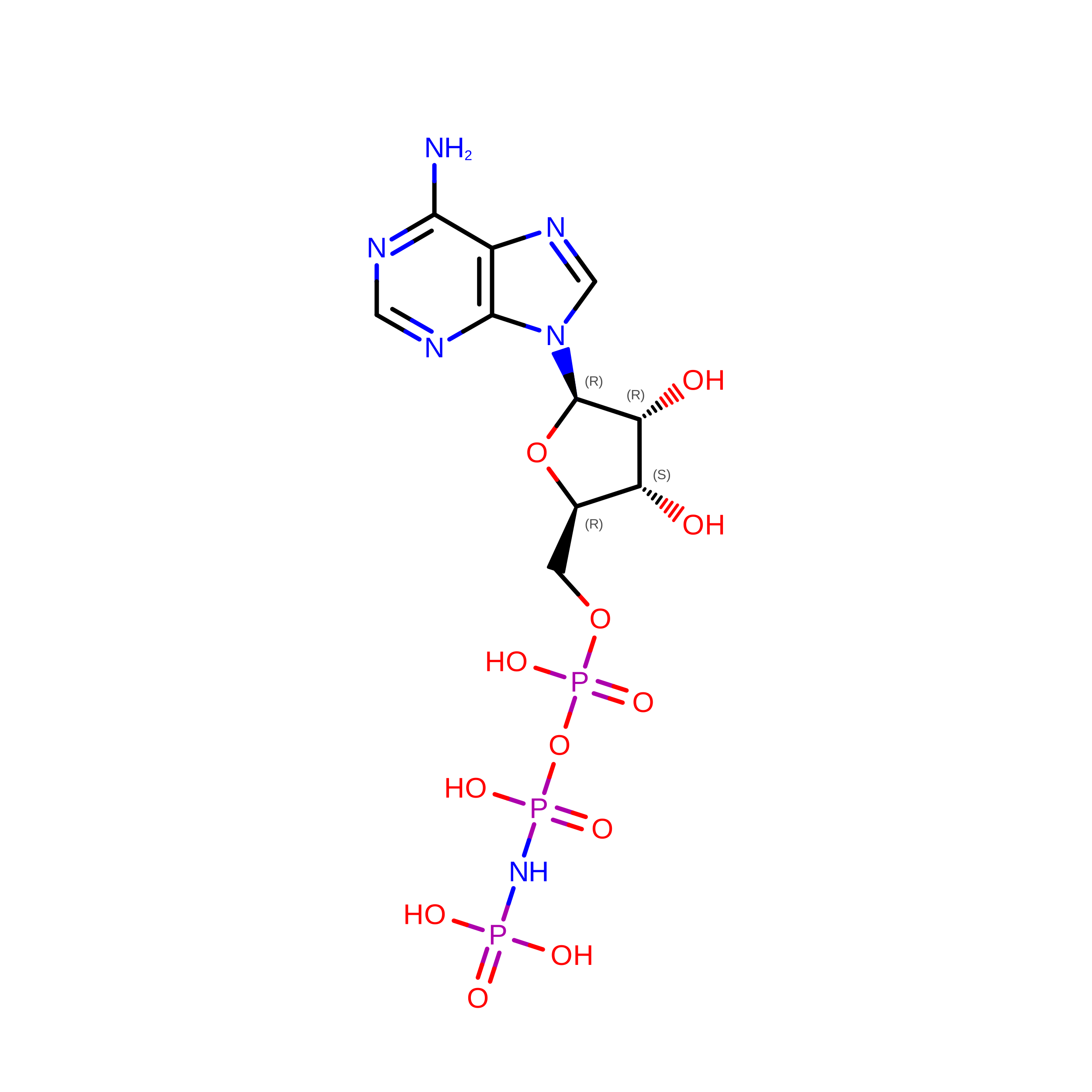
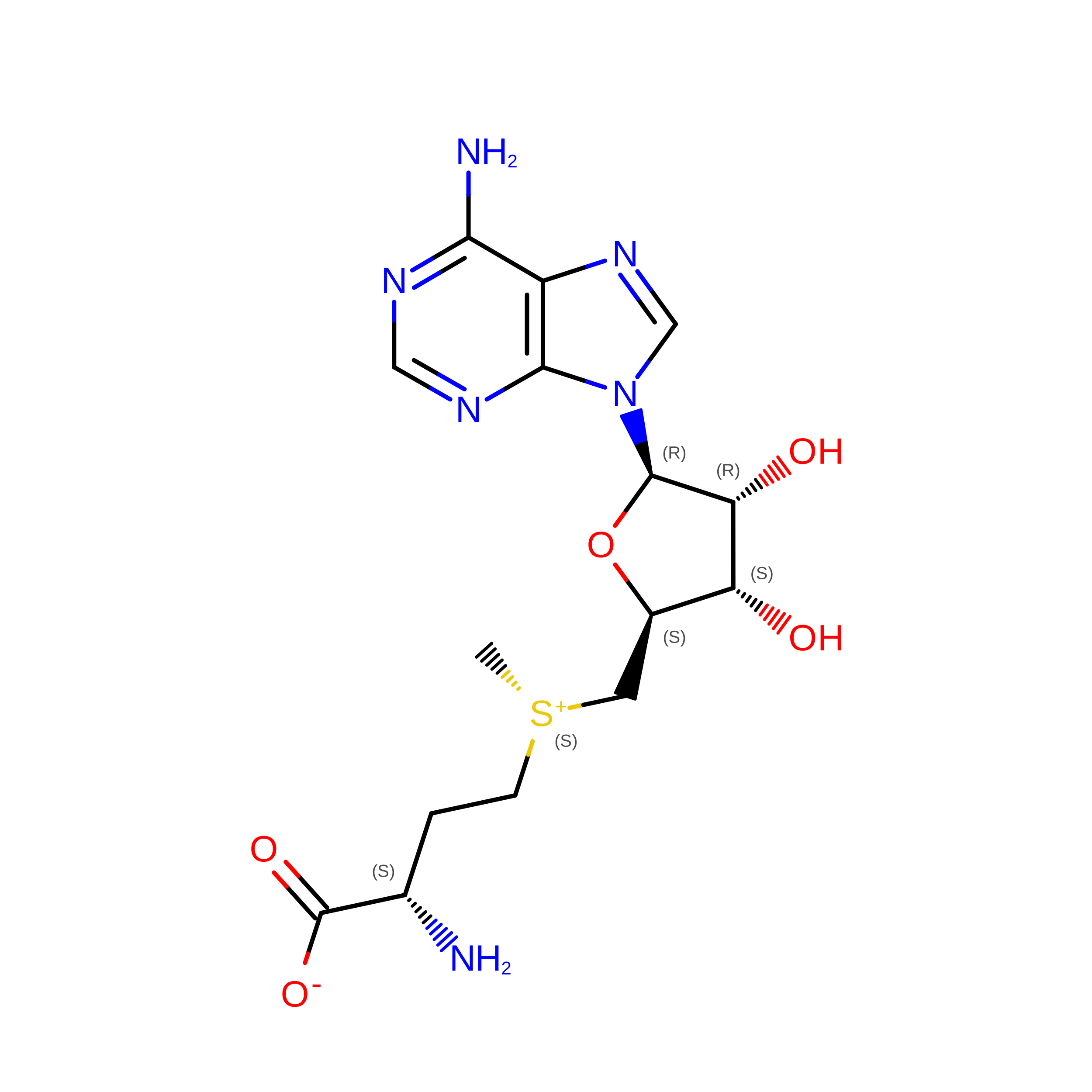
The type III-D2 CRISPR-Cas system comprises multiple Cas subunits and a CRISPR RNA, and is likely an evolutionary intermediate between the well-studied type III-A and III-E systems. Here we show that the type III-D2 complex synthesizes two distinct second messengers, SAM-AMP and SAM-AMP 2 , from S-adenosylmethionine (SAM) and ATP in response to target RNA recognition. We determined cryo-electron microscopy structures of the type III-D2 effector complex in different functional states, providing mechanistic insights into target RNA cleavage and second messenger synthesis. The structures reveal how SAM and ATP are recognized by the Cas10 subunit within the effector complex. Furthermore, our biological data suggest that both SAM-AMP and SAM-AMP 2 act on the CorA ancillary effector, inducing growth arrest of infected bacterial cells and thereby conferring immunity. Thus, our study establishes the type III-D2 system as a unique anti-phage defense mechanism that employs both SAM-AMP and SAM-AMP 2 as second messengers, expanding the repertoire of second messenger strategies in bacterial defense systems and highlighting the remarkable functional diversity of CRISPR-Cas systems.
- Department of Chemistry and Biotechnology, Graduate School of Engineering, The University of Tokyo, 7-3-1 Hongo, Bunkyo-ku, Tokyo, Japan.
Organizational Affiliation: