Download Mendeley
G protein selectivity in group I metabotropic glutamate receptors.
Lu, Y., Wen, T., Lu, X., Zhang, G., Meng, T., Liu, T., Wang, X., Shen, Y., Yang, X.(2026) Sci Adv 12: eaee0044-eaee0044
- PubMed: 42430471 Search on PubMedSearch on PubMed Central
- DOI: https://doi.org/10.1126/sciadv.aee0044
- Primary Citation Related Structures:
27TM, 9WQK, 9WQL, 9WQM, 9WQN, 9WQO - PubMed Abstract:
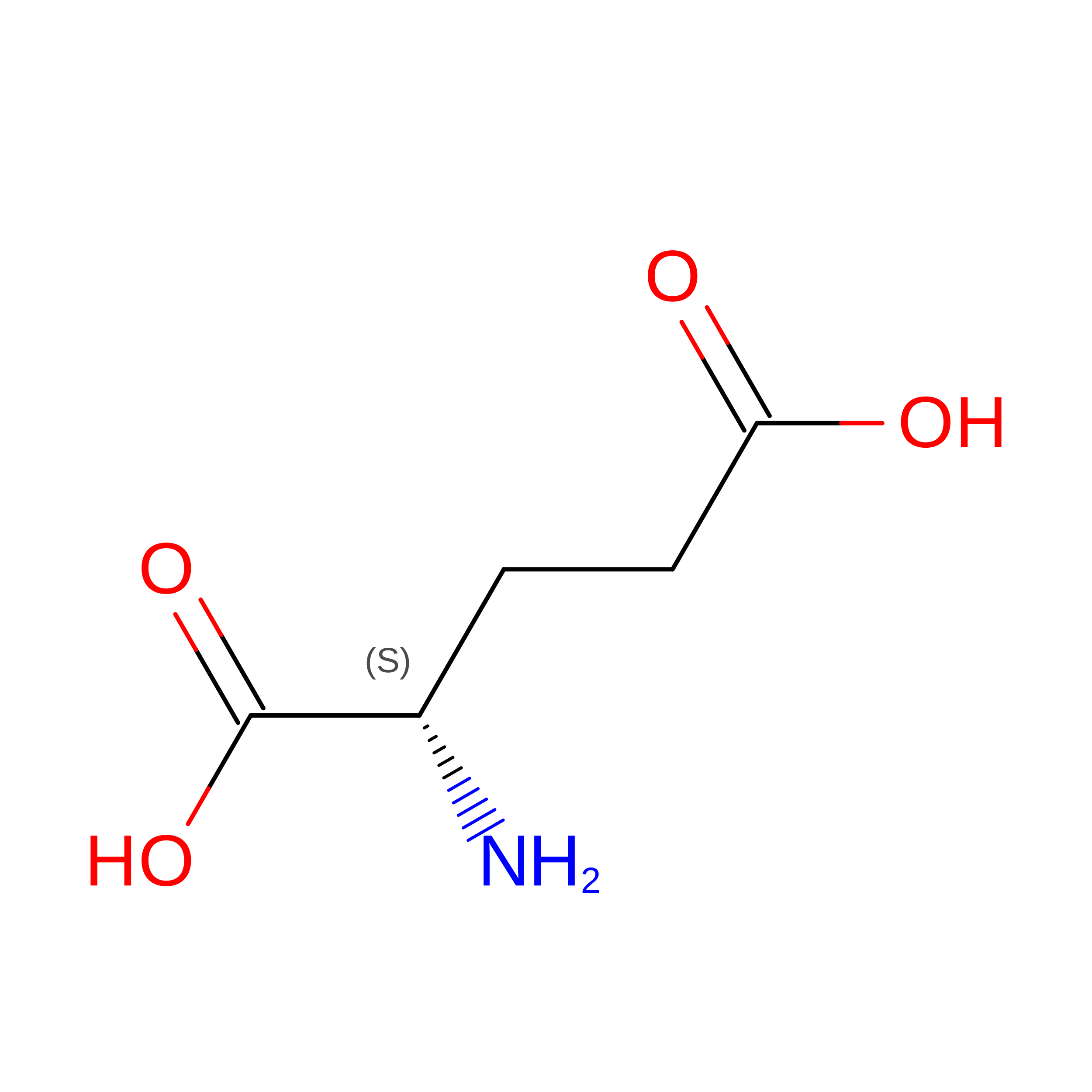
Metabotropic glutamate (mGlu) receptors are class C G protein-coupled receptor involved in synaptic transmission and neurological disorders. Group I mGlu receptors (mGlu1 and mGlu5) predominantly couple to G q/11 , whereas group II and III receptors primarily engage G i/o . Although G i/o -coupling mechanisms have been defined for several group II/III receptors, how group I receptors preferentially engage G q/11 remains unclear. Here we report cryo-electron microscopy structures of active mGlu-G protein complexes (mGlu1-G q , mGlu1-G i , mGlu5-G q , and mGlu5-G i ) bound to l-glutamate and positive allosteric modulators (PAMs), together with two additional activated-state structures of mGlu1. Comparative structural and biochemical analyses identify a group I-specific ICL2 insertion that promotes preferential G q engagement. Each receptor dimer asymmetrically binds one G protein heterotrimer via an intracellular pocket engaging the Gα amino-terminal helix. PAM binding to one 7TM domain induces W 6.50 rotation and TM6 outward movement, bringing the two 7TMs into closer. These findings provide a structural basis for preferential G q/11 engagement and activation of group I mGlu receptors.
- State Key Laboratory of Medicinal Chemical Biology and Frontiers Science Center for Cell Responses, College of Life Sciences, Nankai University, Tianjin 300350, China.
Organizational Affiliation: