Download Mendeley
Molecular arrangement and modulation of extrasynaptic alpha beta delta GABA A receptors.
Nestorow, S.A., Chen, W.N., Bertrand, D., Wahid, A.A., Wyatt, C.E., Mortensen, M., Clairfeuille, T., Reutlinger, M., Friz, G., Pardon, E., Steyaert, J., Ladds, G., Cecere, G., Smart, T.G., Hernandez, M.C., Joedicke, L., Miller, P.S.(2026) Nat Commun 17
- PubMed: 42749722 Search on PubMedSearch on PubMed Central
- DOI: https://doi.org/10.1038/s41467-026-76879-5
- Primary Citation Related Structures:
9SL1, 9SLD, 9SLM - PubMed Abstract:
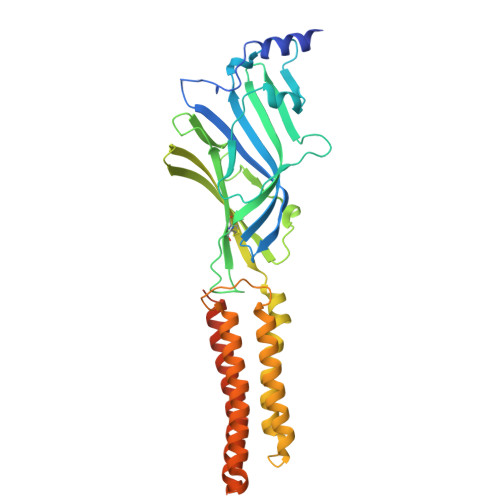
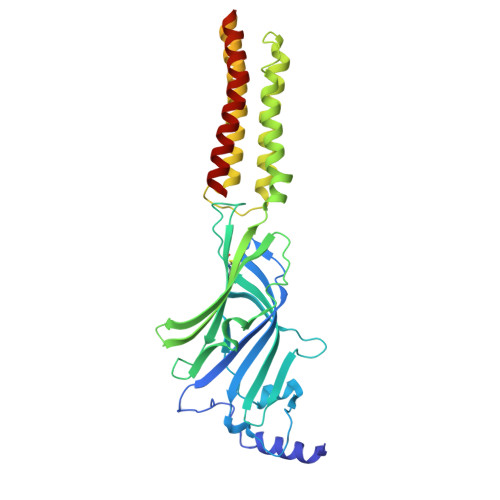
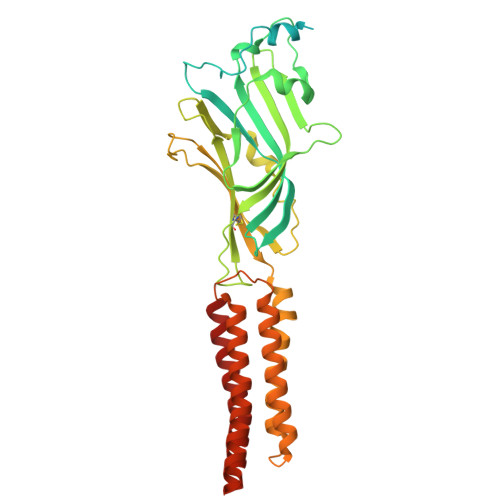
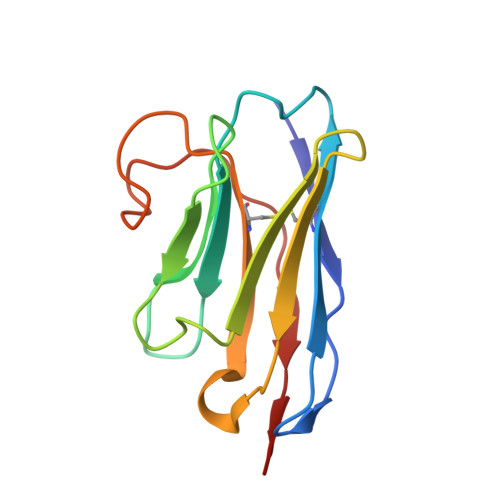
γ-aminobutyric acid Type-A (GABA A ) αβδ receptors regulate neuronal excitability and contribute to sleep, mood and motor coordination. However, the molecular arrangements of these receptors and the basis of GABA activation and δ-selective drug modulation remain unclear. We solve cryo-EM structures of α4β3δ receptors in an α-β-α-β-δ arrangement that contains two GABA binding pockets. GABA binding supports a classical β-subunit tilt and an outward configuration of the β-subunit M2-M3 loops. However, the δ subunit M2-M3 loop is orientated inward and the 9' activation gate in the pore is closed, consistent with the low efficacy for these receptors. Addition of a δ-selective positive allosteric modulator (PAM), DS2-Me, reveals binding to an α-δ pocket that causes the 9' activation gate to open. In this work we provide key insights into the stoichiometry, arrangement and molecular modes of GABA activation and δ-selective modulation of these critical regulators of neuronal excitability.
- Department of Pharmacology, University of Cambridge, Cambridge, UK.
Organizational Affiliation: