Download Mendeley
Structural basis for uracil removal from DNA by human SMUG1.
Ludascher, J.M., Scaletti Hutchinson, E., Vila-Julia, G., Jemth, A.S., Shahid, S., Wiita, E., Cabeza de Vaca, I., Pach, S., Gajdos, L., Aggarwal, S., Walse, E., Mortusewicz, O., Helleday, T., Carlsson, J., Stenmark, P.(2026) Nat Commun 17
- PubMed: 42230560 Search on PubMedSearch on PubMed Central
- DOI: https://doi.org/10.1038/s41467-026-72937-0
- Primary Citation Related Structures:
9GGS, 9GK0, 9GM2, 9RQP, 9RQS, 9SQ2 - PubMed Abstract:
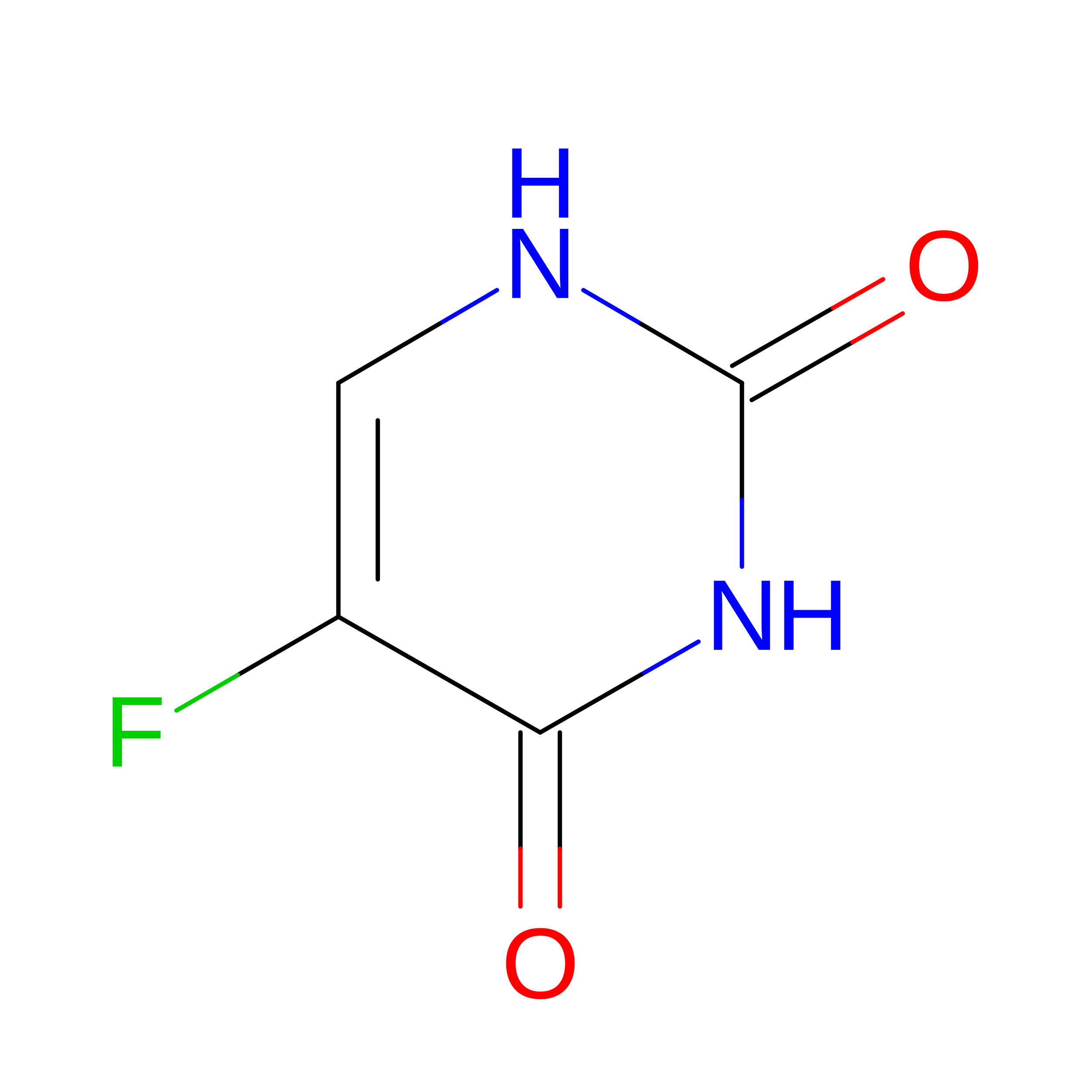
Human single-strand-selective monofunctional uracil DNA glycosylase 1 (hSMUG1) removes uracil, 5-hydroxymethyluracil (5hmU) and 5-fluorouracil (5FU) from DNA, thereby initiating the base excision repair (BER) process. hSMUG1 is important for maintaining genomic integrity and plays a significant role in cancer biology. Here, we present the structures of hSMUG1, including complexes with products (uracil and 5FU) and an enzyme-product complex of hSMUG1 with double-stranded DNA (dsDNA). Analysis of our hSMUG1-dsDNA complex reveals how uracil is flipped out of the dsDNA for excision and identifies key residues that we confirm to be critical for both DNA binding and enzymatic activity. Furthermore, our hSMUG1 substrate complexes, molecular dynamics simulations and neutron diffraction data suggest a mechanism by which the substrate uracil rotates following base excision. The structural and functional information presented here will be highly useful for the future development of inhibitors and/or activators targeting hSMUG1.
- Department of Biochemistry and Biophysics, Stockholm University, Stockholm, Sweden.
Organizational Affiliation: