8UK2 | pdb_00008uk2

The rotavirus VP5*/VP8* conformational transition permeabilizes membranes to Ca2+ (class 5 reconstruction)


Experimental Data Snapshot

  • Method: ELECTRON MICROSCOPY
  • Resolution: 8.00 Å
  • Aggregation State: PARTICLE 
  • Reconstruction Method: SINGLE PARTICLE 

Starting Model: experimental
View more details

wwPDB Validation 3D Report Full Report

Validation slider image for 8UK2

This is version 1.2 of the entry. See complete history

Literature

The rotavirus VP5*/VP8* conformational transition permeabilizes membranes to Ca2.

de Sautu, M.Herrmann, T.Scanavachi, G.Jenni, S.Harrison, S.C.

(2024) PLoS Pathog 20: e1011750-e1011750

  • DOI: https://doi.org/10.1371/journal.ppat.1011750
  • Primary Citation Related Structures: 
    8UK2, 8UK3

  • PubMed Abstract: 

    Rotaviruses infect cells by delivering into the cytosol a transcriptionally active inner capsid particle (a "double-layer particle": DLP). Delivery is the function of a third, outer layer, which drives uptake from the cell surface into small vesicles from which the DLPs escape. In published work, we followed stages of rhesus rotavirus (RRV) entry by live-cell imaging and correlated them with structures from cryogenic electron microscopy and tomography (cryo-EM and cryo-ET). The virus appears to wrap itself in membrane, leading to complete engulfment and loss of Ca2+ from the vesicle produced by the wrapping. One of the outer-layer proteins, VP7, is a Ca2+-stabilized trimer; loss of Ca2+ releases both VP7 and the other outer-layer protein, VP4, from the particle. VP4, activated by cleavage into VP8* and VP5*, is a trimer that undergoes a large-scale conformational rearrangement, reminiscent of the transition that viral fusion proteins undergo to penetrate a membrane. The rearrangement of VP5* thrusts a 250-residue, C-terminal segment of each of the three subunits outward, while allowing the protein to remain attached to the virus particle and to the cell being infected. We proposed that this segment inserts into the membrane of the target cell, enabling Ca2+ to cross. In the work reported here, we show the validity of key aspects of this proposed sequence. By cryo-EM studies of liposome-attached virions ("triple-layer particles": TLPs) and single-particle fluorescence imaging of liposome-attached TLPs, we confirm insertion of the VP4 C-terminal segment into the membrane and ensuing generation of a Ca2+ "leak". The results allow us to formulate a molecular description of early events in entry. We also discuss our observations in the context of other work on double-strand RNA virus entry.


  • Organizational Affiliation
    • Department of Biological Chemistry and Molecular Pharmacology, Harvard Medical School, Boston, Massachusetts, United States of America.

Macromolecule Content 

  • Total Structure Weight: 934.57 kDa 
  • Atom Count: 44,775 
  • Modeled Residue Count: 5,617 
  • Deposited Residue Count: 8,196 
  • Unique protein chains: 2

Macromolecules

Find similar proteins by:|  3D Structure
Entity ID: 1
MoleculeChains  Sequence LengthOrganismDetailsImage
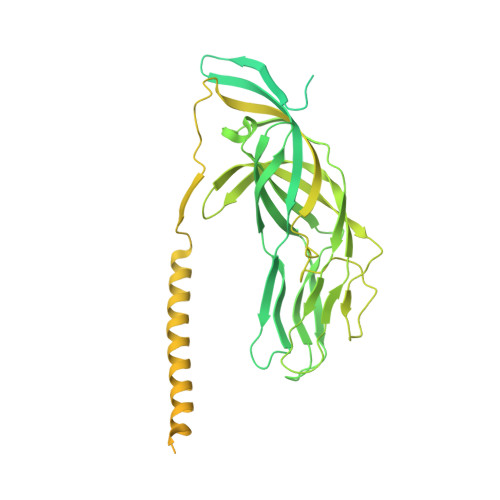
Outer capsid protein VP4A [auth 1],
C [auth 2],
E [auth 3]
776Simian rotavirus A strain RRVMutation(s): 0 
UniProt
Find proteins for P12473 (Rotavirus A (strain RVA/Monkey/United States/RRV/1975/G3P5B[3]))
Explore P12473 
Go to UniProtKB:  P12473
Entity Groups
Sequence Clusters30% Identity50% Identity70% Identity90% Identity95% Identity100% Identity
UniProt GroupP12473
Sequence Annotations
Expand
Reference Sequence
Find similar proteins by:|  3D Structure
Entity ID: 2
MoleculeChains  Sequence LengthOrganismDetailsImage
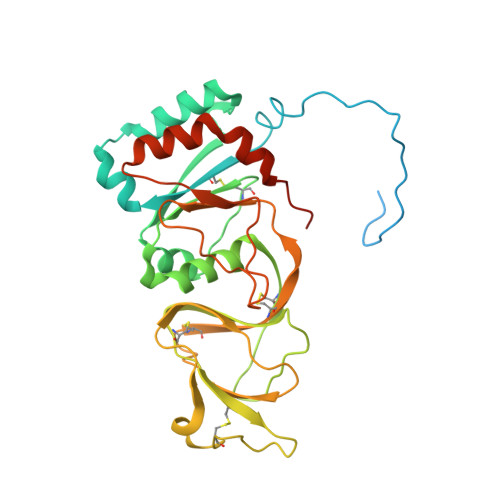
Outer capsid glycoprotein VP7326Simian rotavirus A strain RRVMutation(s): 0 
UniProt
Find proteins for P12476 (Rotavirus A (strain RVA/Monkey/United States/RRV/1975/G3P5B[3]))
Explore P12476 
Go to UniProtKB:  P12476
Entity Groups
Sequence Clusters30% Identity50% Identity70% Identity90% Identity95% Identity100% Identity
UniProt GroupP12476
Glycosylation
Glycosylation Sites: 1
Sequence Annotations
Expand
Reference Sequence

Small Molecules

Ligands 2 Unique
IDChains Name / Formula / InChI Key2D Diagram3D Interactions
NAG

Query on NAG


Download:Ideal Coordinates CCD File
BB [auth n]
DA [auth h]
FC [auth c]
HB [auth o]
JA [auth i]
BB [auth n],
DA [auth h],
FC [auth c],
HB [auth o],
JA [auth i],
JB [auth p],
KC [auth d],
LC [auth e],
MA [auth j],
NB [auth q],
PA [auth k],
TB [auth r],
V [auth f],
VA [auth l],
VB [auth a],
XA [auth m],
Z [auth g],
ZB [auth b]
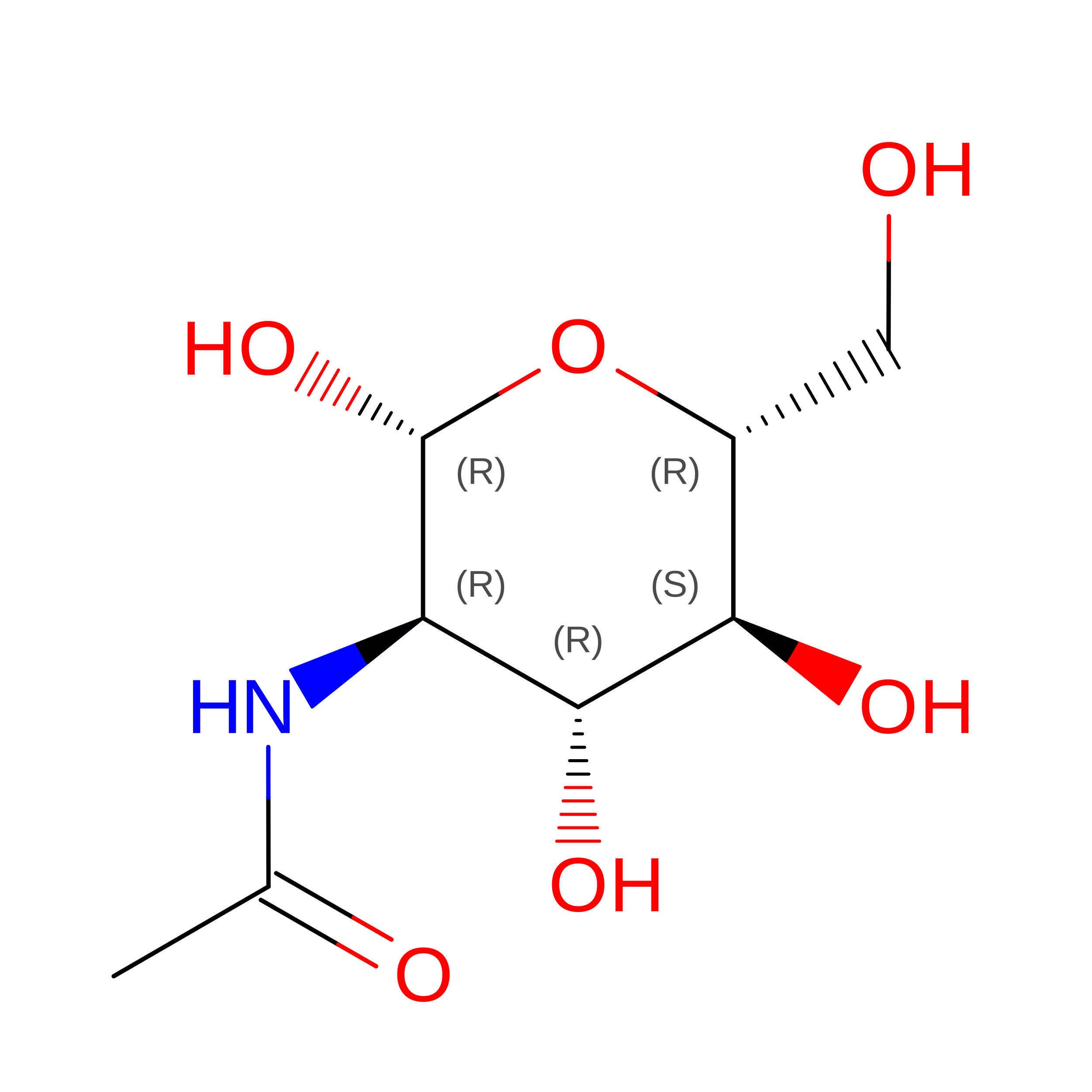
2-acetamido-2-deoxy-beta-D-glucopyranose
C8 H15 N O6
OVRNDRQMDRJTHS-FMDGEEDCSA-N
CA

Query on CA


Download:Ideal Coordinates CCD File
AA [auth g]
AB [auth m]
AC [auth b]
BA [auth g]
BC [auth b]
AA [auth g],
AB [auth m],
AC [auth b],
BA [auth g],
BC [auth b],
CA [auth g],
CB [auth n],
CC [auth b],
DB [auth n],
DC [auth c],
EA [auth h],
EB [auth n],
EC [auth c],
FA [auth h],
FB [auth o],
GA [auth h],
GB [auth o],
GC [auth c],
HA [auth i],
HC [auth d],
IA [auth i],
IB [auth o],
IC [auth d],
JC [auth d],
KA [auth i],
KB [auth p],
LA [auth j],
LB [auth p],
MB [auth p],
MC [auth e],
NA [auth j],
NC [auth e],
OA [auth j],
OB [auth q],
OC [auth e],
PB [auth q],
QA [auth k],
QB [auth q],
RA [auth k],
RB [auth r],
SA [auth k],
SB [auth r],
TA [auth l],
UA [auth l],
UB [auth r],
W [auth f],
WA [auth l],
WB [auth a],
X [auth f],
XB [auth a],
Y [auth f],
YA [auth m],
YB [auth a],
ZA [auth m]
CALCIUM ION
Ca
BHPQYMZQTOCNFJ-UHFFFAOYSA-N

Experimental Data & Validation

Experimental Data

  • Method: ELECTRON MICROSCOPY
  • Resolution: 8.00 Å
  • Aggregation State: PARTICLE 
  • Reconstruction Method: SINGLE PARTICLE 

Structure Validation

View Full Validation Report


Entry History 

& Funding Information

Deposition Data


Funding OrganizationLocationGrant Number
National Institutes of Health/National Cancer Institute (NIH/NCI)United StatesCA13202

Revision History  (Full details and data files)

  • Version 1.0: 2024-03-27
    Type: Initial release
  • Version 1.1: 2024-04-17
    Changes: Database references
  • Version 1.2: 2024-10-23
    Changes: Data collection, Structure summary