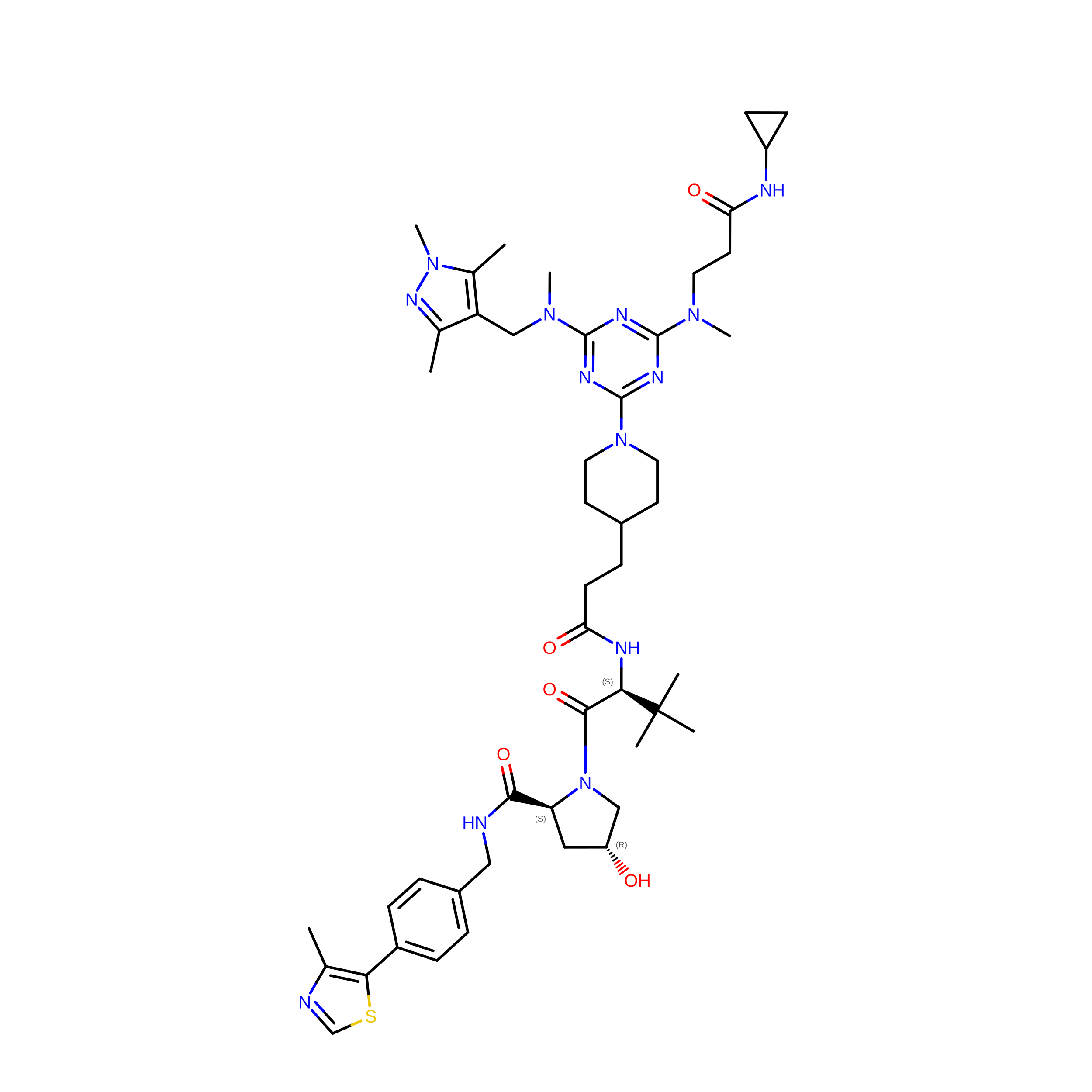
8EWV | pdb_00008ewv

DNA-encoded library (DEL)-enabled discovery of proximity inducing small molecules


Experimental Data Snapshot

  • Method: X-RAY DIFFRACTION
  • Resolution: 3.40 Å
  • R-Value Free: 
    0.324 (Depositor), 0.322 (DCC) 
  • R-Value Work: 
    0.280 (Depositor), 0.280 (DCC) 
  • R-Value Observed: 
    0.283 (Depositor) 

Starting Model: experimental
View more details

wwPDB Validation 3D Report Full Report

Validation slider image for 8EWV

Ligand Structure Quality Assessment 


This is version 1.3 of the entry. See complete history

Literature

DNA-encoded library-enabled discovery of proximity-inducing small molecules.

Mason, J.W.Chow, Y.T.Hudson, L.Tutter, A.Michaud, G.Westphal, M.V.Shu, W.Ma, X.Tan, Z.Y.Coley, C.W.Clemons, P.A.Bonazzi, S.Berst, F.Briner, K.Liu, S.Zecri, F.J.Schreiber, S.L.

(2024) Nat Chem Biol 20: 170-179

  • DOI: https://doi.org/10.1038/s41589-023-01458-4
  • Primary Citation Related Structures: 
    8EWV

  • PubMed Abstract: 

    Small molecules that induce protein-protein associations represent powerful tools to modulate cell circuitry. We sought to develop a platform for the direct discovery of compounds able to induce association of any two preselected proteins, using the E3 ligase von Hippel-Lindau (VHL) and bromodomains as test systems. Leveraging the screening power of DNA-encoded libraries (DELs), we synthesized ~1 million DNA-encoded compounds that possess a VHL-targeting ligand, a variety of connectors and a diversity element generated by split-and-pool combinatorial chemistry. By screening our DEL against bromodomains in the presence and absence of VHL, we could identify VHL-bound molecules that simultaneously bind bromodomains. For highly barcode-enriched library members, ternary complex formation leading to bromodomain degradation was confirmed in cells. Furthermore, a ternary complex crystal structure was obtained for our most enriched library member with BRD4 BD1 and a VHL complex. Our work provides a foundation for adapting DEL screening to the discovery of proximity-inducing small molecules.


  • Organizational Affiliation
    • Chemical Biology and Therapeutics Science, Broad Institute, Cambridge, MA, USA.

Macromolecule Content 

  • Total Structure Weight: 352.46 kDa 
  • Atom Count: 22,123 
  • Modeled Residue Count: 2,682 
  • Deposited Residue Count: 3,018 
  • Unique protein chains: 4

Macromolecules

Find similar proteins by:|  3D Structure
Entity ID: 1
MoleculeChains  Sequence LengthOrganismDetailsImage
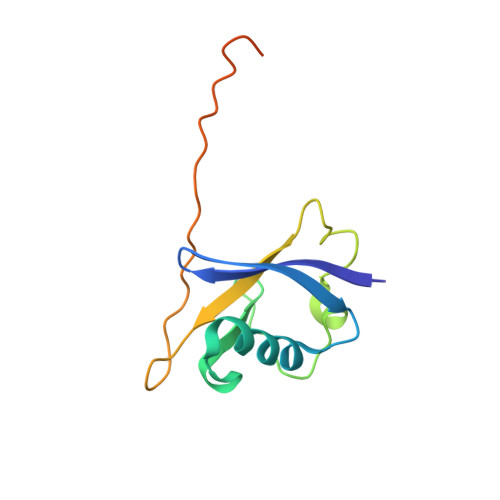
Elongin-B
A, E, I, M, Q
A, E, I, M, Q, U
118Homo sapiensMutation(s): 0 
Gene Names: ELOBTCEB2
UniProt & NIH Common Fund Data Resources
Find proteins for Q15370 (Homo sapiens)
Explore Q15370 
Go to UniProtKB:  Q15370
PHAROS:  Q15370
GTEx:  ENSG00000103363 
Entity Groups
Sequence Clusters30% Identity50% Identity70% Identity90% Identity95% Identity100% Identity
UniProt GroupQ15370
Sequence Annotations
Expand
Reference Sequence
Find similar proteins by:|  3D Structure
Entity ID: 2
MoleculeChains  Sequence LengthOrganismDetailsImage
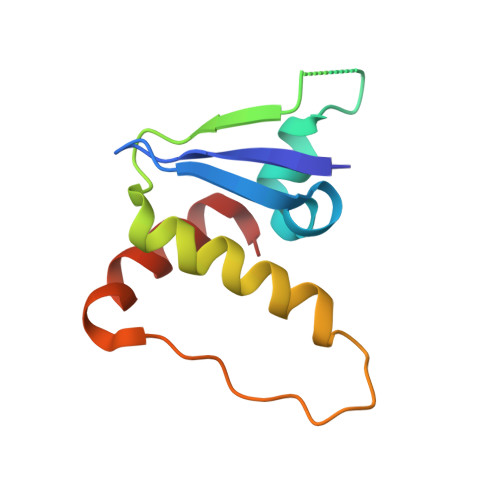
Elongin-C
B, F, J, N, R
B, F, J, N, R, V
96Homo sapiensMutation(s): 0 
Gene Names: ELOCTCEB1
UniProt & NIH Common Fund Data Resources
Find proteins for Q15369 (Homo sapiens)
Explore Q15369 
Go to UniProtKB:  Q15369
PHAROS:  Q15369
GTEx:  ENSG00000154582 
Entity Groups
Sequence Clusters30% Identity50% Identity70% Identity90% Identity95% Identity100% Identity
UniProt GroupQ15369
Sequence Annotations
Expand
Reference Sequence
Find similar proteins by:|  3D Structure
Entity ID: 3
MoleculeChains  Sequence LengthOrganismDetailsImage
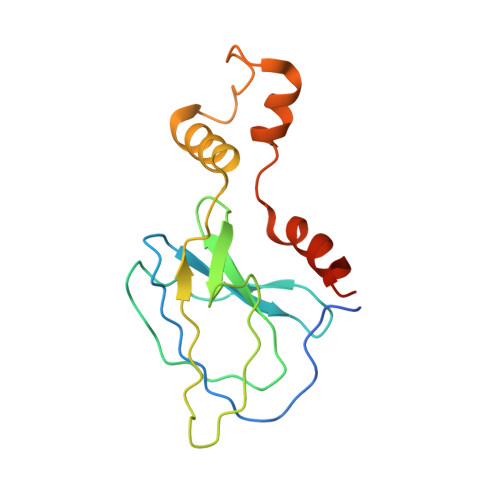
von Hippel-Lindau disease tumor suppressor
C, G, K, O, S
C, G, K, O, S, W
162Homo sapiensMutation(s): 0 
Gene Names: VHL
UniProt & NIH Common Fund Data Resources
Find proteins for P40337 (Homo sapiens)
Explore P40337 
Go to UniProtKB:  P40337
PHAROS:  P40337
GTEx:  ENSG00000134086 
Entity Groups
Sequence Clusters30% Identity50% Identity70% Identity90% Identity95% Identity100% Identity
UniProt GroupP40337
Sequence Annotations
Expand
Reference Sequence
Find similar proteins by:|  3D Structure
Entity ID: 4
MoleculeChains  Sequence LengthOrganismDetailsImage
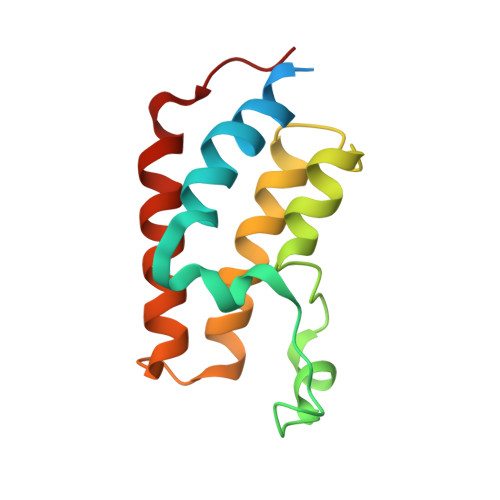
Bromodomain-containing protein 4
D, H, L, P, T
D, H, L, P, T, X
127Homo sapiensMutation(s): 0 
Gene Names: BRD4HUNK1
UniProt & NIH Common Fund Data Resources
Find proteins for O60885 (Homo sapiens)
Explore O60885 
Go to UniProtKB:  O60885
PHAROS:  O60885
GTEx:  ENSG00000141867 
Entity Groups
Sequence Clusters30% Identity50% Identity70% Identity90% Identity95% Identity100% Identity
UniProt GroupO60885
Sequence Annotations
Expand
Reference Sequence

Experimental Data & Validation

Experimental Data

  • Method: X-RAY DIFFRACTION
  • Resolution: 3.40 Å
  • R-Value Free:  0.324 (Depositor), 0.322 (DCC) 
  • R-Value Work:  0.280 (Depositor), 0.280 (DCC) 
  • R-Value Observed: 0.283 (Depositor) 
Space Group: P 21 21 21
Unit Cell:
Length ( Å )Angle ( ˚ )
a = 110.485α = 90
b = 164.048β = 90
c = 256.202γ = 90
Software Package:
Software NamePurpose
PHENIXrefinement
PHENIXrefinement
XDSdata reduction
pointlessdata scaling
AMoREphasing

Structure Validation

View Full Validation Report


Ligand Structure Quality Assessment 


Entry History 

& Funding Information

Deposition Data


Funding OrganizationLocationGrant Number
National Institutes of Health/National Institute of General Medical Sciences (NIH/NIGMS)United StatesR35GM127045

Revision History  (Full details and data files)

  • Version 1.0: 2023-10-04
    Type: Initial release
  • Version 1.1: 2023-11-15
    Changes: Database references
  • Version 1.2: 2024-02-14
    Changes: Database references
  • Version 1.3: 2026-03-04
    Changes: Refinement description, Structure summary