7LL3 | pdb_00007ll3

S-adenosylmethionine synthetase co-crystallized with UppNHp


Experimental Data Snapshot

  • Method: X-RAY DIFFRACTION
  • Resolution: 2.24 Å
  • R-Value Free: 
    0.234 (Depositor), 0.237 (DCC) 
  • R-Value Work: 
    0.211 (Depositor), 0.217 (DCC) 
  • R-Value Observed: 
    0.213 (Depositor) 

Starting Model: experimental
View more details

wwPDB Validation 3D Report Full Report

Validation slider image for 7LL3

Ligand Structure Quality Assessment 


This is version 1.2 of the entry. See complete history

Literature

Substrate Dynamics Contribute to Enzymatic Specificity in Human and Bacterial Methionine Adenosyltransferases.

Gade, M.Tan, L.L.Damry, A.M.Sandhu, M.Brock, J.S.Delaney, A.Villar-Briones, A.Jackson, C.J.Laurino, P.

(2021) JACS Au 1: 2349-2360

  • DOI: https://doi.org/10.1021/jacsau.1c00464
  • Primary Citation Related Structures: 
    7LL3, 7LNH, 7LNN, 7LO2, 7LOO, 7LOW, 7LOZ

  • PubMed Abstract: 

    Protein conformational changes can facilitate the binding of noncognate substrates and underlying promiscuous activities. However, the contribution of substrate conformational dynamics to this process is comparatively poorly understood. Here, we analyze human (hMAT2A) and Escherichia coli (eMAT) methionine adenosyltransferases that have identical active sites but different substrate specificity. In the promiscuous hMAT2A, noncognate substrates bind in a stable conformation to allow catalysis. In contrast, noncognate substrates sample stable productive binding modes less frequently in eMAT owing to altered mobility in the enzyme active site. Different cellular concentrations of substrates likely drove the evolutionary divergence of substrate specificity in these orthologues. The observation of catalytic promiscuity in hMAT2A led to the detection of a new human metabolite, methyl thioguanosine, that is produced at elevated levels in a cancer cell line. This work establishes that identical active sites can result in different substrate specificity owing to the effects of substrate and enzyme dynamics.


  • Organizational Affiliation
    • Protein Engineering and Evolution Unit, Okinawa Institute of Science and Technology Graduate University, 1919-1 Tancha, Onna 904-0495, Okinawa, Japan.

Macromolecule Content 

  • Total Structure Weight: 85.35 kDa 
  • Atom Count: 6,069 
  • Modeled Residue Count: 755 
  • Deposited Residue Count: 768 
  • Unique protein chains: 1

Macromolecules

Find similar proteins by:|  3D Structure
Entity ID: 1
MoleculeChains  Sequence LengthOrganismDetailsImage
S-adenosylmethionine synthase
A, B
384Escherichia coli 908573Mutation(s): 0 
Gene Names: metKHMPREF1611_00479
EC: 2.5.1.6

Small Molecules

Ligands 4 Unique
IDChains Name / Formula / InChI Key2D Diagram3D Interactions
UNP
(Subject of Investigation/LOI)

Query on UNP


Download:Ideal Coordinates CCD File
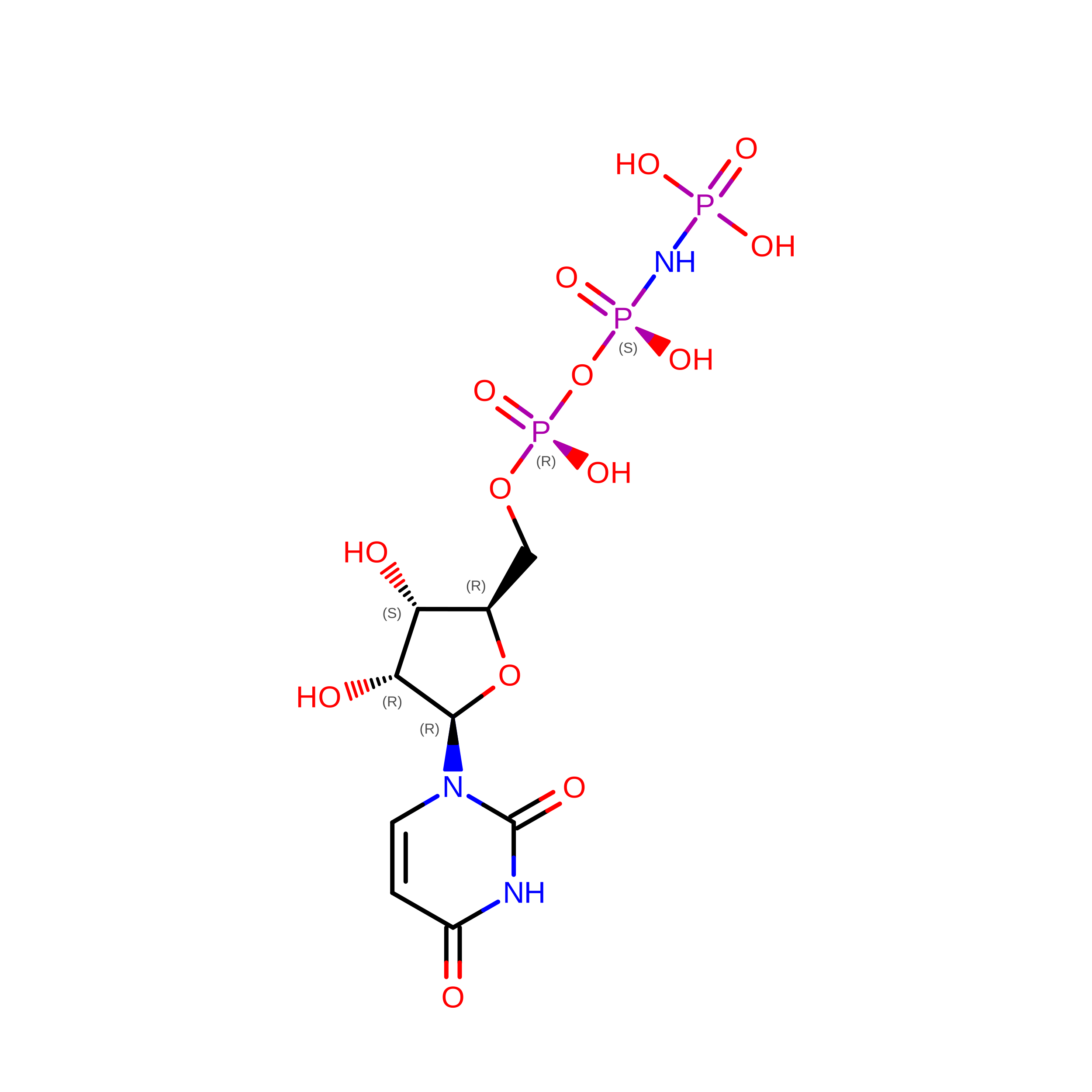
F [auth A]5'-O-[(R)-hydroxy{[(S)-hydroxy(phosphonoamino)phosphoryl]oxy}phosphoryl]uridine
C9 H16 N3 O14 P3
MCBVWUSULWKVON-XVFCMESISA-N
PPK

Query on PPK


Download:Ideal Coordinates CCD File
G [auth A],
L [auth B]
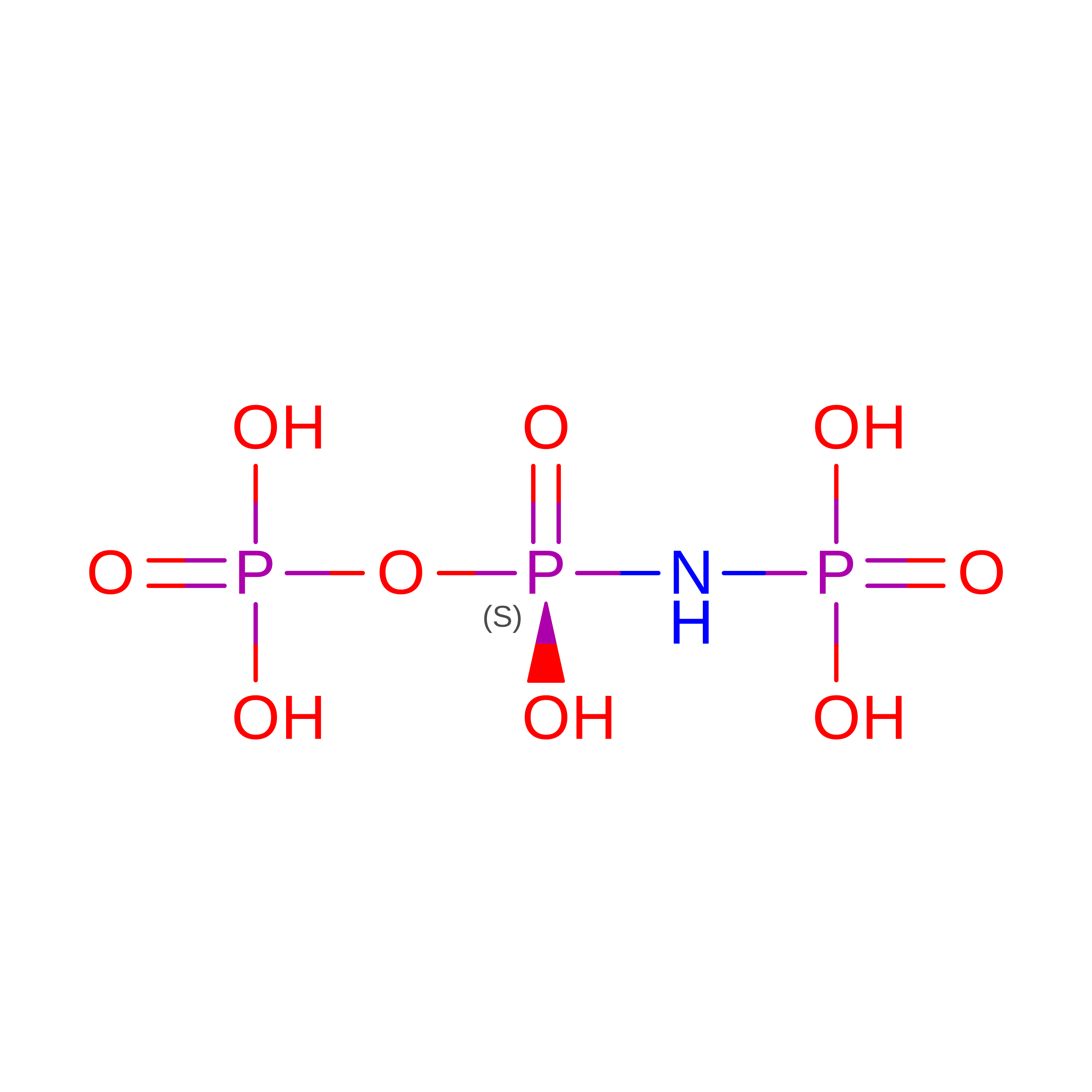
(DIPHOSPHONO)AMINOPHOSPHONIC ACID
H6 N O9 P3
PELPUMGXMYVGSQ-UHFFFAOYSA-N
EDO

Query on EDO


Download:Ideal Coordinates CCD File
C [auth A],
D [auth A],
E [auth A],
J [auth B],
K [auth B]
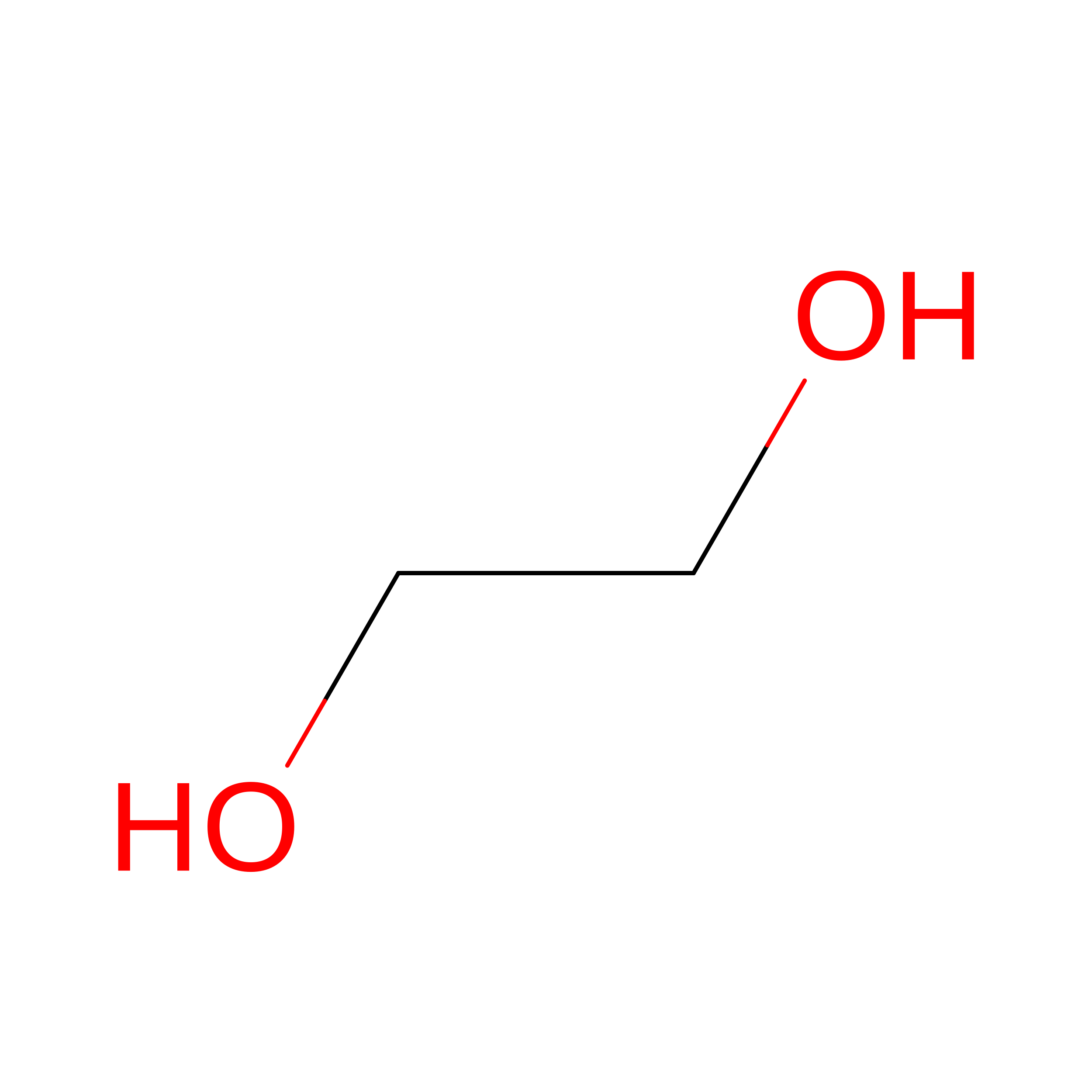
1,2-ETHANEDIOL
C2 H6 O2
LYCAIKOWRPUZTN-UHFFFAOYSA-N
MG

Query on MG


Download:Ideal Coordinates CCD File
H [auth A],
I [auth A]
MAGNESIUM ION
Mg
JLVVSXFLKOJNIY-UHFFFAOYSA-N

Experimental Data & Validation

Experimental Data

  • Method: X-RAY DIFFRACTION
  • Resolution: 2.24 Å
  • R-Value Free:  0.234 (Depositor), 0.237 (DCC) 
  • R-Value Work:  0.211 (Depositor), 0.217 (DCC) 
  • R-Value Observed: 0.213 (Depositor) 
Space Group: P 61 2 2
Unit Cell:
Length ( Å )Angle ( ˚ )
a = 123.655α = 90
b = 123.655β = 90
c = 289.409γ = 120
Software Package:
Software NamePurpose
PHENIXrefinement
XDSdata reduction
SCALAdata scaling
PHASERphasing

Structure Validation

View Full Validation Report


Ligand Structure Quality Assessment 


Entry History 

Deposition Data

Revision History  (Full details and data files)

  • Version 1.0: 2021-03-31
    Type: Initial release
  • Version 1.1: 2022-03-02
    Changes: Database references
  • Version 1.2: 2023-10-18
    Changes: Data collection, Refinement description