6SF0 | pdb_00006sf0

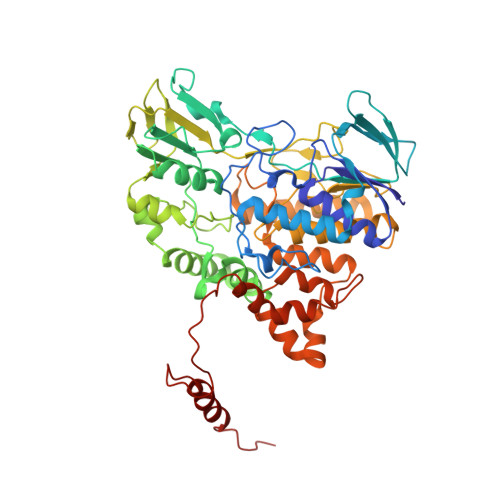
Crystal Structure of Ancestral Flavin-containing monooxygenase (FMO) 2 in the presence of NADP+


Experimental Data Snapshot

  • Method: X-RAY DIFFRACTION
  • Resolution: 3.01 Å
  • R-Value Free: 
    0.285 (Depositor), 0.285 (DCC) 
  • R-Value Work: 
    0.211 (Depositor), 0.215 (DCC) 
  • R-Value Observed: 
    0.214 (Depositor) 

Starting Model: experimental
View more details

wwPDB Validation 3D Report Full Report

Validation slider image for 6SF0

Ligand Structure Quality Assessment 


This is version 1.3 of the entry. See complete history

Literature

Ancestral-sequence reconstruction unveils the structural basis of function in mammalian FMOs.

Nicoll, C.R.Bailleul, G.Fiorentini, F.Mascotti, M.L.Fraaije, M.W.Mattevi, A.

(2020) Nat Struct Mol Biol 27: 14-24

  • DOI: https://doi.org/10.1038/s41594-019-0347-2
  • Primary Citation Related Structures: 
    6SE3, 6SEK, 6SEM, 6SF0

  • PubMed Abstract: 

    Flavin-containing monooxygenases (FMOs) are ubiquitous in all domains of life and metabolize a myriad of xenobiotics, including toxins, pesticides and drugs. However, despite their pharmacological importance, structural information remains bereft. To further our understanding behind their biochemistry and diversity, we used ancestral-sequence reconstruction, kinetic and crystallographic techniques to scrutinize three ancient mammalian FMOs: AncFMO2, AncFMO3-6 and AncFMO5. Remarkably, all AncFMOs could be crystallized and were structurally resolved between 2.7- and 3.2-Å resolution. These crystal structures depict the unprecedented topology of mammalian FMOs. Each employs extensive membrane-binding features and intricate substrate-profiling tunnel networks through a conspicuous membrane-adhering insertion. Furthermore, a glutamate-histidine switch is speculated to induce the distinctive Baeyer-Villiger oxidation activity of FMO5. The AncFMOs exhibited catalysis akin to human FMOs and, with sequence identities between 82% and 92%, represent excellent models. Our study demonstrates the power of ancestral-sequence reconstruction as a strategy for the crystallization of proteins.


  • Organizational Affiliation
    • Department of Biology and Biotechnology "Lazzaro Spallanzani", University of Pavia, Pavia, Italy.

Macromolecule Content 

  • Total Structure Weight: 251.3 kDa 
  • Atom Count: 17,541 
  • Modeled Residue Count: 2,120 
  • Deposited Residue Count: 2,140 
  • Unique protein chains: 1

Macromolecules

Find similar proteins by:|  3D Structure
Entity ID: 1
MoleculeChains  Sequence LengthOrganismDetailsImage
Ancestral Flavin-containing monooxygenase (FMO) 2A [auth B],
B [auth A],
C,
D
535synthetic constructMutation(s): 0 

Small Molecules

Ligands 3 Unique
IDChains Name / Formula / InChI Key2D Diagram3D Interactions
FAD

Query on FAD


Download:Ideal Coordinates CCD File
E [auth B],
G [auth A],
I [auth C],
K [auth D]
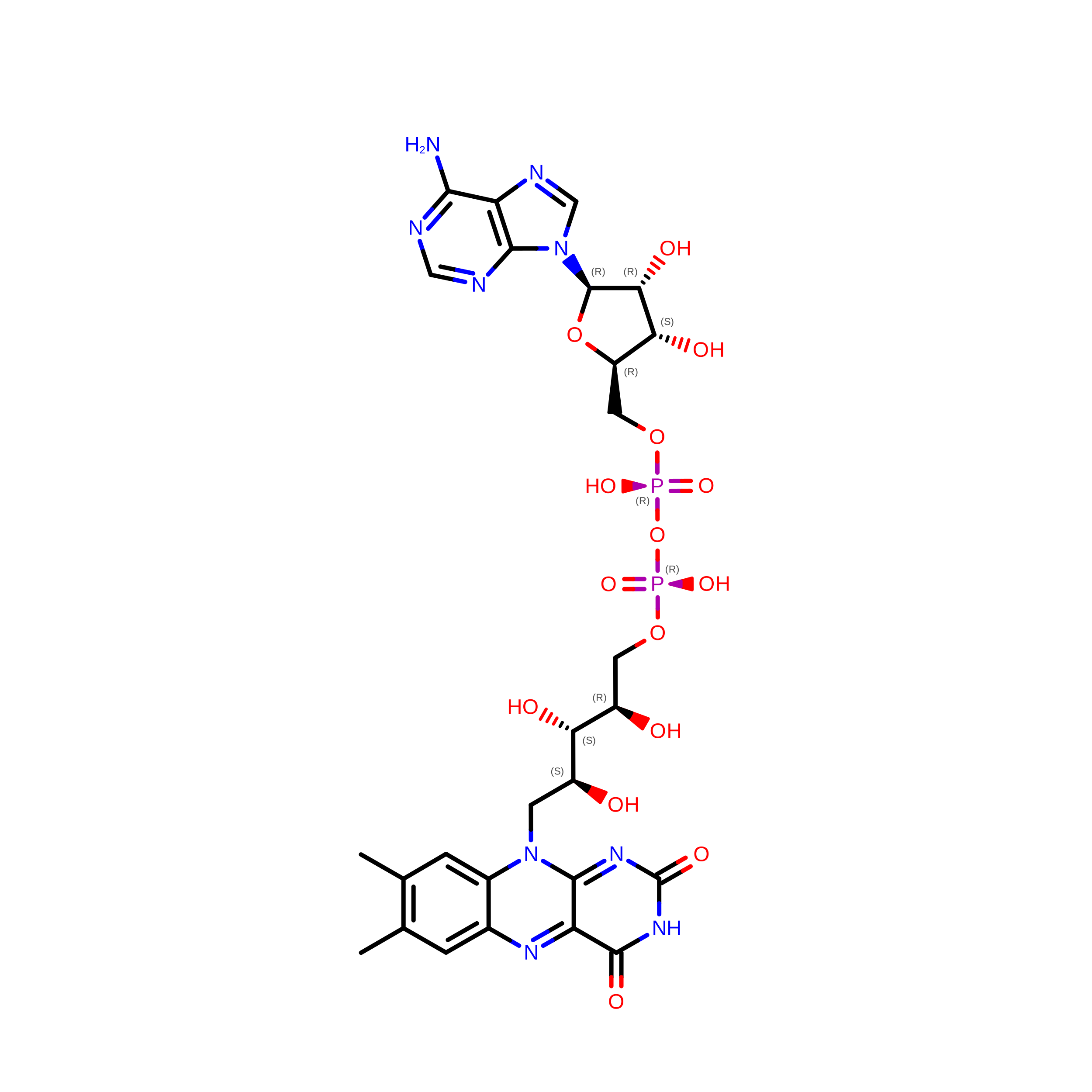
FLAVIN-ADENINE DINUCLEOTIDE
C27 H33 N9 O15 P2
VWWQXMAJTJZDQX-UYBVJOGSSA-N
NAP

Query on NAP


Download:Ideal Coordinates CCD File
F [auth B],
H [auth A],
J [auth C],
L [auth D]
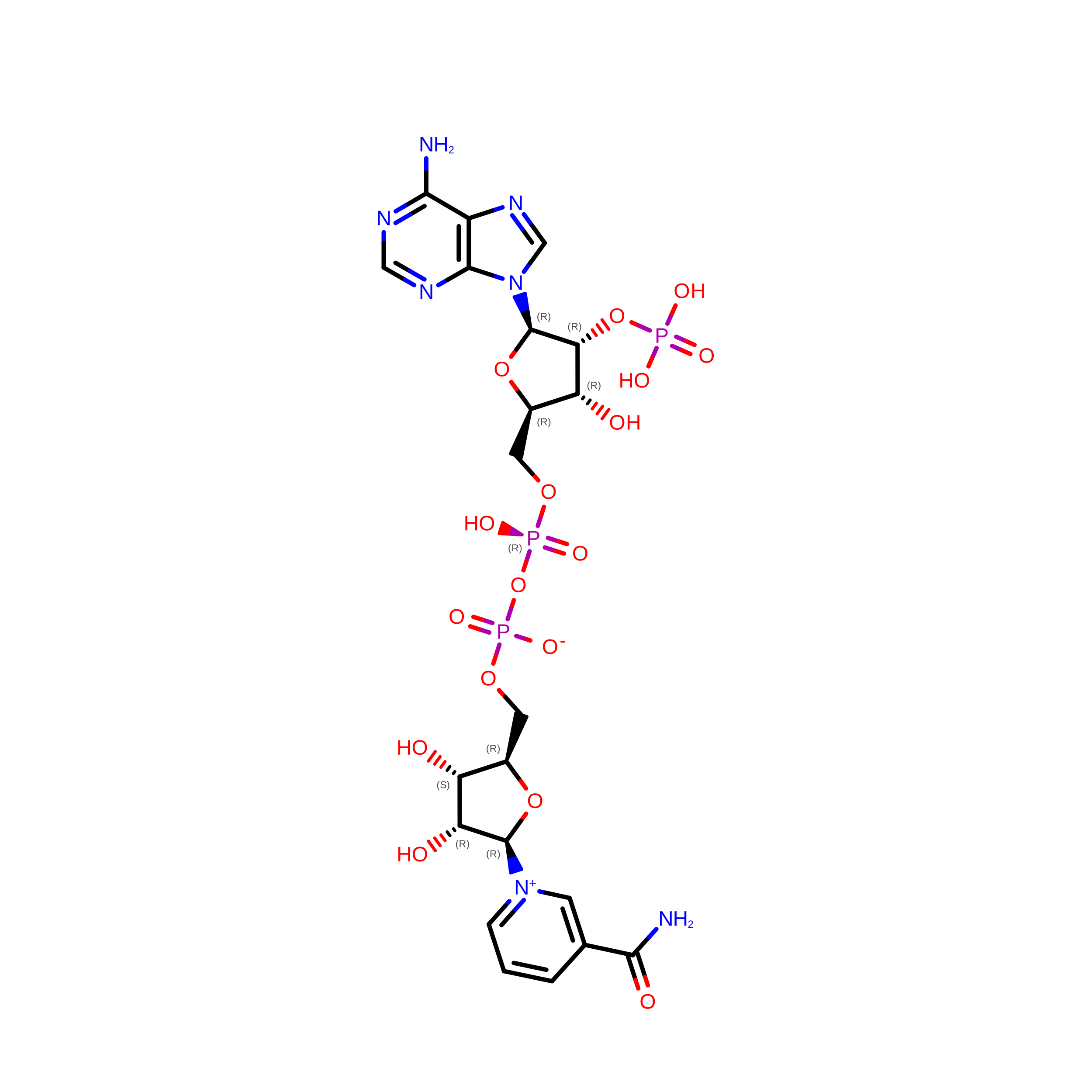
NADP NICOTINAMIDE-ADENINE-DINUCLEOTIDE PHOSPHATE
C21 H28 N7 O17 P3
XJLXINKUBYWONI-NNYOXOHSSA-N
MA4

Query on MA4


Download:Ideal Coordinates CCD File
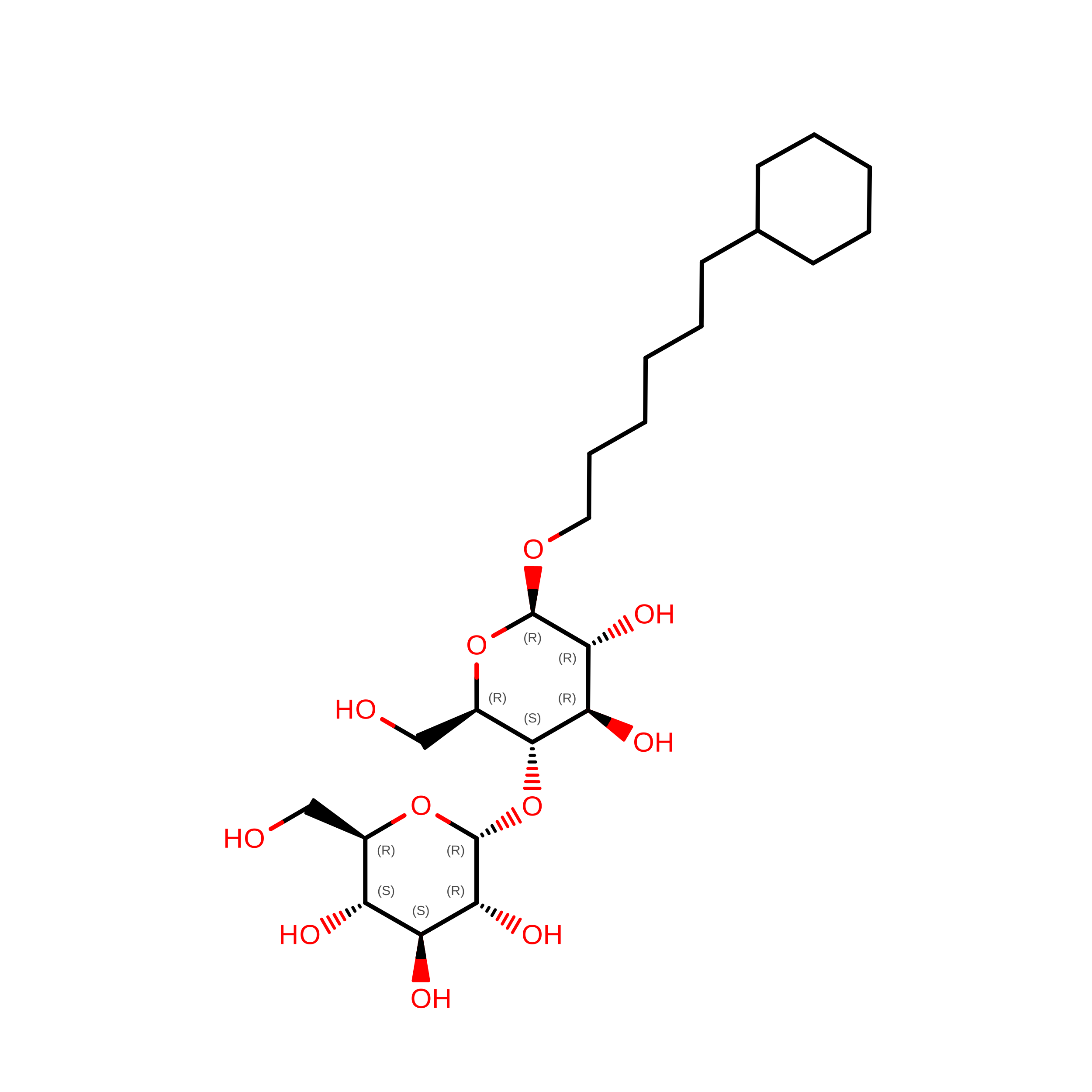
M [auth D]CYCLOHEXYL-HEXYL-BETA-D-MALTOSIDE
C24 H44 O11
WUCWJXGMSXTDAV-QKMCSOCLSA-N

Experimental Data & Validation

Experimental Data

  • Method: X-RAY DIFFRACTION
  • Resolution: 3.01 Å
  • R-Value Free:  0.285 (Depositor), 0.285 (DCC) 
  • R-Value Work:  0.211 (Depositor), 0.215 (DCC) 
  • R-Value Observed: 0.214 (Depositor) 
Space Group: C 1 2 1
Unit Cell:
Length ( Å )Angle ( ˚ )
a = 153.75α = 90
b = 148.678β = 97.08
c = 139.119γ = 90
Software Package:
Software NamePurpose
REFMACrefinement
XDSdata reduction
Aimlessdata scaling
PHASERphasing

Structure Validation

View Full Validation Report


Ligand Structure Quality Assessment 


Entry History 

& Funding Information

Deposition Data


Funding OrganizationLocationGrant Number
European Commission722390

Revision History  (Full details and data files)

  • Version 1.0: 2019-12-25
    Type: Initial release
  • Version 1.1: 2020-01-01
    Changes: Database references
  • Version 1.2: 2020-01-22
    Changes: Database references
  • Version 1.3: 2024-01-24
    Changes: Data collection, Database references, Refinement description