6IV6 | pdb_00006iv6

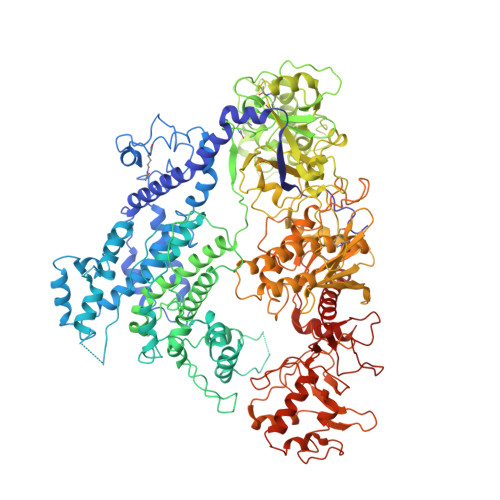
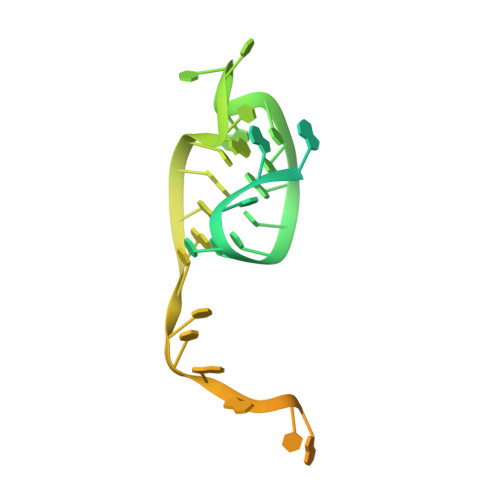
Cryo-EM structure of AcrVA5-acetylated MbCas12a in complex with crRNA


Experimental Data Snapshot

  • Method: ELECTRON MICROSCOPY
  • Resolution: 3.60 Å
  • Aggregation State: PARTICLE 
  • Reconstruction Method: SINGLE PARTICLE 

wwPDB Validation 3D Report Full Report

Validation slider image for 6IV6

This is version 1.4 of the entry. See complete history

Literature

An anti-CRISPR protein disables type V Cas12a by acetylation.

Dong, L.Guan, X.Li, N.Zhang, F.Zhu, Y.Ren, K.Yu, L.Zhou, F.Han, Z.Gao, N.Huang, Z.

(2019) Nat Struct Mol Biol 26: 308-314

  • DOI: https://doi.org/10.1038/s41594-019-0206-1
  • Primary Citation Related Structures: 
    6IUF, 6IV6

  • PubMed Abstract: 

    Phages use anti-CRISPR proteins to deactivate the CRISPR-Cas system. The mechanisms for the inhibition of type I and type II systems by anti-CRISPRs have been elucidated. However, it has remained unknown how the type V CRISPR-Cas12a (Cpf1) system is inhibited by anti-CRISPRs. Here we identify the anti-CRISPR protein AcrVA5 and report the mechanisms by which it inhibits CRISPR-Cas12a. Our structural and biochemical data show that AcrVA5 functions as an acetyltransferase to modify Moraxella bovoculi (Mb) Cas12a at Lys635, a residue that is required for recognition of the protospacer-adjacent motif. The AcrVA5-mediated modification of MbCas12a results in complete loss of double-stranded DNA (dsDNA)-cleavage activity. In contrast, the Lys635Arg mutation renders MbCas12a completely insensitive to inhibition by AcrVA5. A cryo-EM structure of the AcrVA5-acetylated MbCas12a reveals that Lys635 acetylation provides sufficient steric hindrance to prevent dsDNA substrates from binding to the Cas protein. Our study reveals an unprecedented mechanism of CRISPR-Cas inhibition and suggests an evolutionary arms race between phages and bacteria.


  • Organizational Affiliation
    • HIT Center for Life Sciences, School of Life Science and Technology, Harbin Institute of Technology, Harbin, China.

Macromolecule Content 

  • Total Structure Weight: 163.93 kDa 
  • Atom Count: 10,158 
  • Modeled Residue Count: 1,235 
  • Deposited Residue Count: 1,320 
  • Unique protein chains: 1
  • Unique nucleic acid chains: 1

Macromolecules


Find similar proteins by:|  3D Structure
Entity ID: 1
MoleculeChains  Sequence LengthOrganismDetailsImage
nuclease1,261Moraxella bovoculiMutation(s): 0 
Gene Names: AAX07_00205
Find similar nucleic acids by:  (by identity cutoff) 
Entity ID: 2
MoleculeChains LengthOrganismImage
RNA (59-MER)B [auth G]59synthetic construct
Sequence Annotations
Expand
Reference Sequence

Small Molecules

Modified Residues  1 Unique
IDChains TypeFormula2D DiagramParent
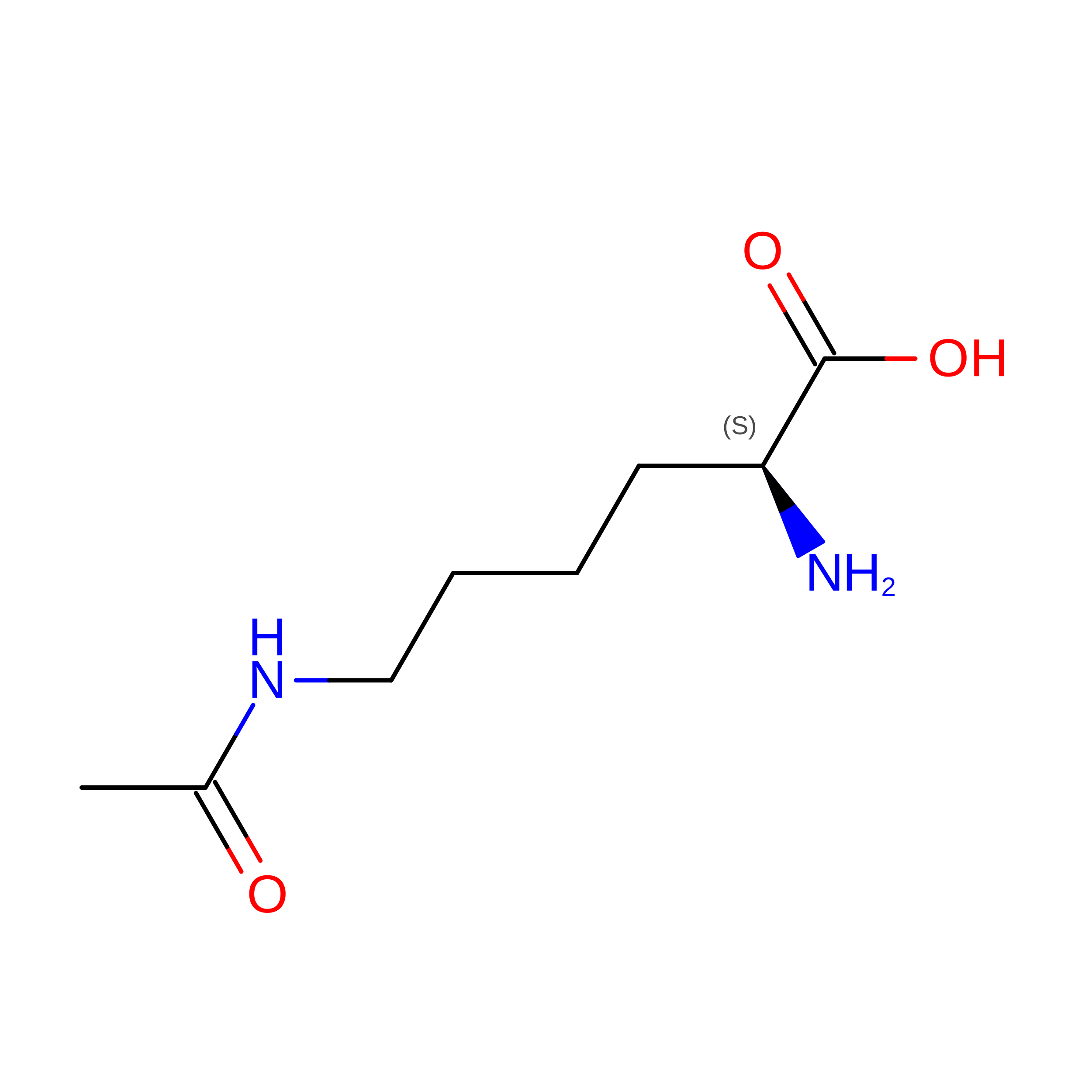
ALY
Query on ALY
A
L-PEPTIDE LINKINGC8 H16 N2 O3LYS

Experimental Data & Validation

Experimental Data

  • Method: ELECTRON MICROSCOPY
  • Resolution: 3.60 Å
  • Aggregation State: PARTICLE 
  • Reconstruction Method: SINGLE PARTICLE 
EM Software:
TaskSoftware PackageVersion
MODEL REFINEMENTPHENIX

Structure Validation

View Full Validation Report


Entry History 

& Funding Information

Deposition Data


Funding OrganizationLocationGrant Number
National Natural Science Foundation of ChinaChina31825008
National Natural Science Foundation of ChinaChina31422014

Revision History  (Full details and data files)

  • Version 1.0: 2019-04-10
    Type: Initial release
  • Version 1.1: 2019-04-17
    Changes: Data collection, Database references
  • Version 1.2: 2019-11-06
    Changes: Data collection, Other
  • Version 1.3: 2024-10-09
    Changes: Data collection, Database references, Structure summary
  • Version 1.4: 2025-07-02
    Changes: Data collection