6GXV | pdb_00006gxv

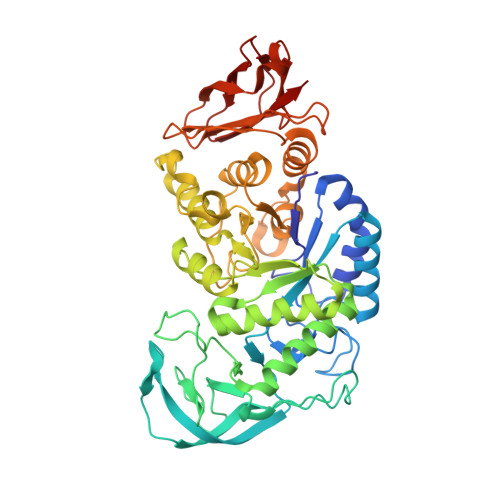
Amylase in complex with acarbose


Experimental Data Snapshot

  • Method: X-RAY DIFFRACTION
  • Resolution: 2.07 Å
  • R-Value Free: 
    0.176 (Depositor), 0.185 (DCC) 
  • R-Value Work: 
    0.138 (Depositor), 0.150 (DCC) 
  • R-Value Observed: 
    0.140 (Depositor) 

Starting Model: experimental
View more details

wwPDB Validation 3D Report Full Report

Validation slider image for 6GXV

Ligand Structure Quality Assessment 


This is version 2.1 of the entry. See complete history

Literature

The structure of the AliC GH13 alpha-amylase from Alicyclobacillus sp. reveals the accommodation of starch branching points in the alpha-amylase family.

Agirre, J.Moroz, O.Meier, S.Brask, J.Munch, A.Hoff, T.Andersen, C.Wilson, K.S.Davies, G.J.

(2019) Acta Crystallogr D Struct Biol 75: 1-7

  • DOI: https://doi.org/10.1107/S2059798318014900
  • Primary Citation Related Structures: 
    6GXV, 6GYA

  • PubMed Abstract: 

    α-Amylases are glycoside hydrolases that break the α-1,4 bonds in starch and related glycans. The degradation of starch is rendered difficult by the presence of varying degrees of α-1,6 branch points and their possible accommodation within the active centre of α-amylase enzymes. Given the myriad industrial uses for starch and thus also for α-amylase-catalysed starch degradation and modification, there is considerable interest in how different α-amylases might accommodate these branches, thus impacting on the potential processing of highly branched post-hydrolysis remnants (known as limit dextrins) and societal applications. Here, it was sought to probe the branch-point accommodation of the Alicyclobacillus sp. CAZy family GH13 α-amylase AliC, prompted by the observation of a molecule of glucose in a position that may represent a branch point in an acarbose complex solved at 2.1 Å resolution. Limit digest analysis by two-dimensional NMR using both pullulan (a regular linear polysaccharide of α-1,4, α-1,4, α-1,6 repeating trisaccharides) and amylopectin starch showed how the Alicyclobacillus sp. enzyme could accept α-1,6 branches in at least the -2, +1 and +2 subsites, consistent with the three-dimensional structures with glucosyl moieties in the +1 and +2 subsites and the solvent-exposure of the -2 subsite 6-hydroxyl group. Together, the work provides a rare insight into branch-point acceptance in these industrial catalysts.


  • Organizational Affiliation
    • York Structural Biology Laboratory, Department of Chemistry, The University of York, York YO10 5DD, England.

Macromolecule Content 

  • Total Structure Weight: 112.28 kDa 
  • Atom Count: 9,098 
  • Modeled Residue Count: 962 
  • Deposited Residue Count: 968 
  • Unique protein chains: 1

Macromolecules

Find similar proteins by:|  3D Structure
Entity ID: 1
MoleculeChains  Sequence LengthOrganismDetailsImage
A-amylase
A, B
484Alicyclobacillus sp.Mutation(s): 0 

Oligosaccharides

Help  
Entity ID: 2
MoleculeChains Length2D Diagram GlycosylationD Interactions
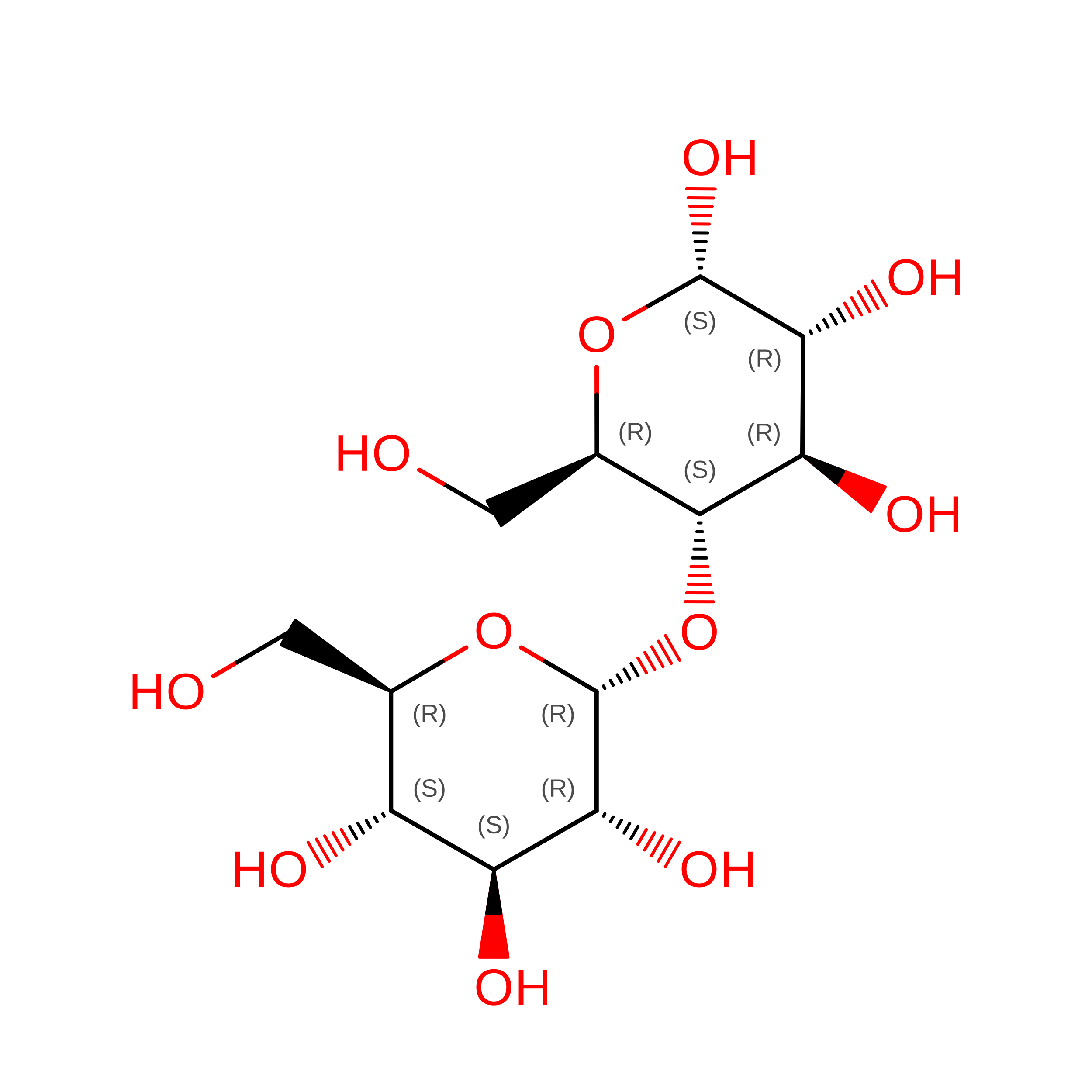
alpha-D-glucopyranose-(1-4)-alpha-D-glucopyranose
C, D
2N/A
Glycosylation Resources
GlyTouCan: G07411ON
GlyCosmos: G07411ON
Entity ID: 3
MoleculeChains Length2D Diagram GlycosylationD Interactions
4,6-dideoxy-4-{[(1S,4R,5S,6S)-4,5,6-trihydroxy-3-(hydroxymethyl)cyclohex-2-en-1-yl]amino}-alpha-D-glucopyranose-(1-4)-alpha-D-glucopyranose-(1-4)-4,6-dideoxy-4-{[(1S,4R,5S,6S)-4,5,6-trihydroxy-3-(hydroxymethyl)cyclohex-2-en-1-yl]amino}-alpha-D-glucopyranose-(1-4)-alpha-D-glucopyranose
E, F
4N/AN/A
Glycosylation Resources
GlyTouCan: G53811MA
GlyCosmos: G53811MA

Small Molecules

Ligands 4 Unique
IDChains Name / Formula / InChI Key2D Diagram3D Interactions
BGC

Query on BGC


Download:Ideal Coordinates CCD File
L [auth A],
N [auth A],
O [auth B],
Q [auth B]
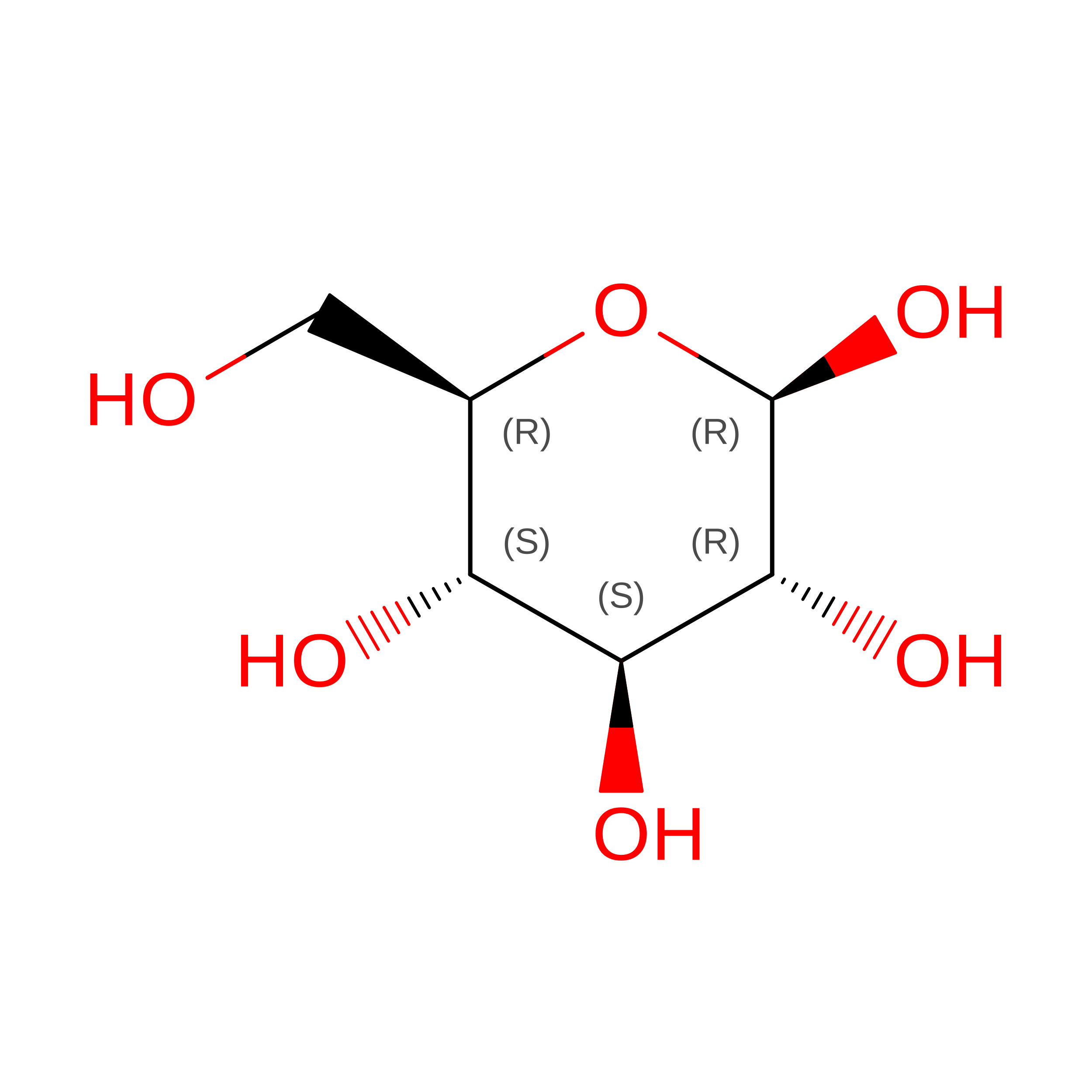
beta-D-glucopyranose
C6 H12 O6
WQZGKKKJIJFFOK-VFUOTHLCSA-N
GLC

Query on GLC


Download:Ideal Coordinates CCD File
K [auth A],
M [auth A],
P [auth B],
V [auth B]
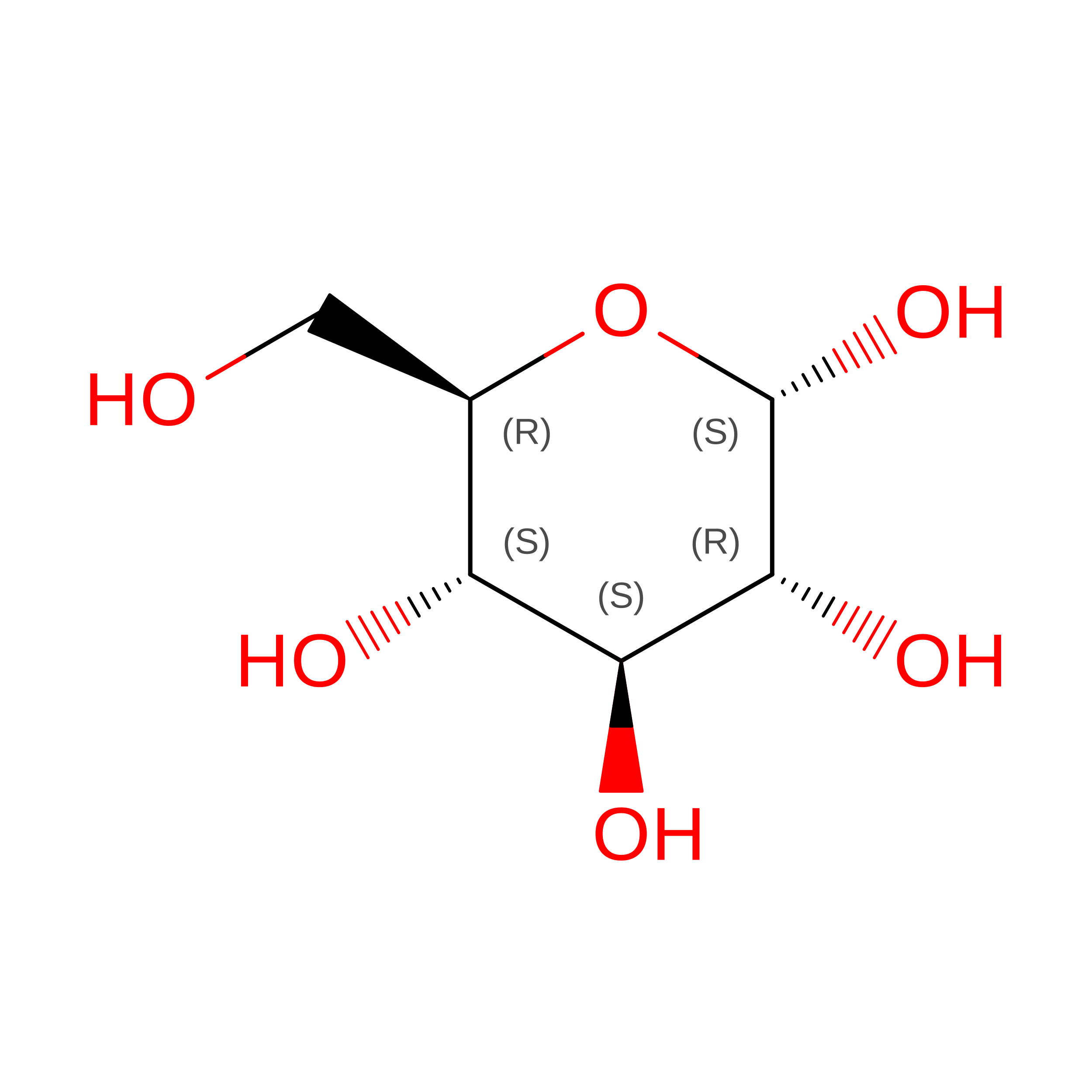
alpha-D-glucopyranose
C6 H12 O6
WQZGKKKJIJFFOK-DVKNGEFBSA-N
CA

Query on CA


Download:Ideal Coordinates CCD File
G [auth A]
I [auth A]
J [auth A]
R [auth B]
T [auth B]
G [auth A],
I [auth A],
J [auth A],
R [auth B],
T [auth B],
U [auth B]
CALCIUM ION
Ca
BHPQYMZQTOCNFJ-UHFFFAOYSA-N
NA

Query on NA


Download:Ideal Coordinates CCD File
H [auth A],
S [auth B]
SODIUM ION
Na
FKNQFGJONOIPTF-UHFFFAOYSA-N

Biologically Interesting Molecules (External Reference) 

1 Unique

Experimental Data & Validation

Experimental Data

  • Method: X-RAY DIFFRACTION
  • Resolution: 2.07 Å
  • R-Value Free:  0.176 (Depositor), 0.185 (DCC) 
  • R-Value Work:  0.138 (Depositor), 0.150 (DCC) 
  • R-Value Observed: 0.140 (Depositor) 
Space Group: P 41 21 2
Unit Cell:
Length ( Å )Angle ( ˚ )
a = 180.9α = 90
b = 180.9β = 90
c = 77.85γ = 90
Software Package:
Software NamePurpose
REFMACrefinement
Aimlessdata scaling
BUCCANEERmodel building
MOLREPphasing
Cootmodel building

Structure Validation

View Full Validation Report


Ligand Structure Quality Assessment 


Entry History 

Deposition Data

Revision History  (Full details and data files)

  • Version 1.0: 2019-01-23
    Type: Initial release
  • Version 1.1: 2019-05-22
    Changes: Data collection, Database references, Source and taxonomy, Structure summary
  • Version 1.2: 2019-05-29
    Changes: Data collection, Source and taxonomy
  • Version 1.3: 2019-08-21
    Changes: Data collection
  • Version 2.0: 2020-07-29
    Type: Remediation
    Reason: Carbohydrate remediation
    Changes: Atomic model, Data collection, Derived calculations, Non-polymer description, Structure summary
  • Version 2.1: 2024-01-17
    Changes: Data collection, Database references, Derived calculations, Refinement description, Structure summary