6BTH | pdb_00006bth

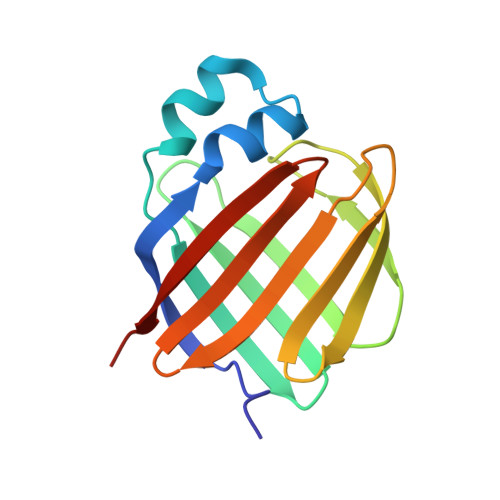
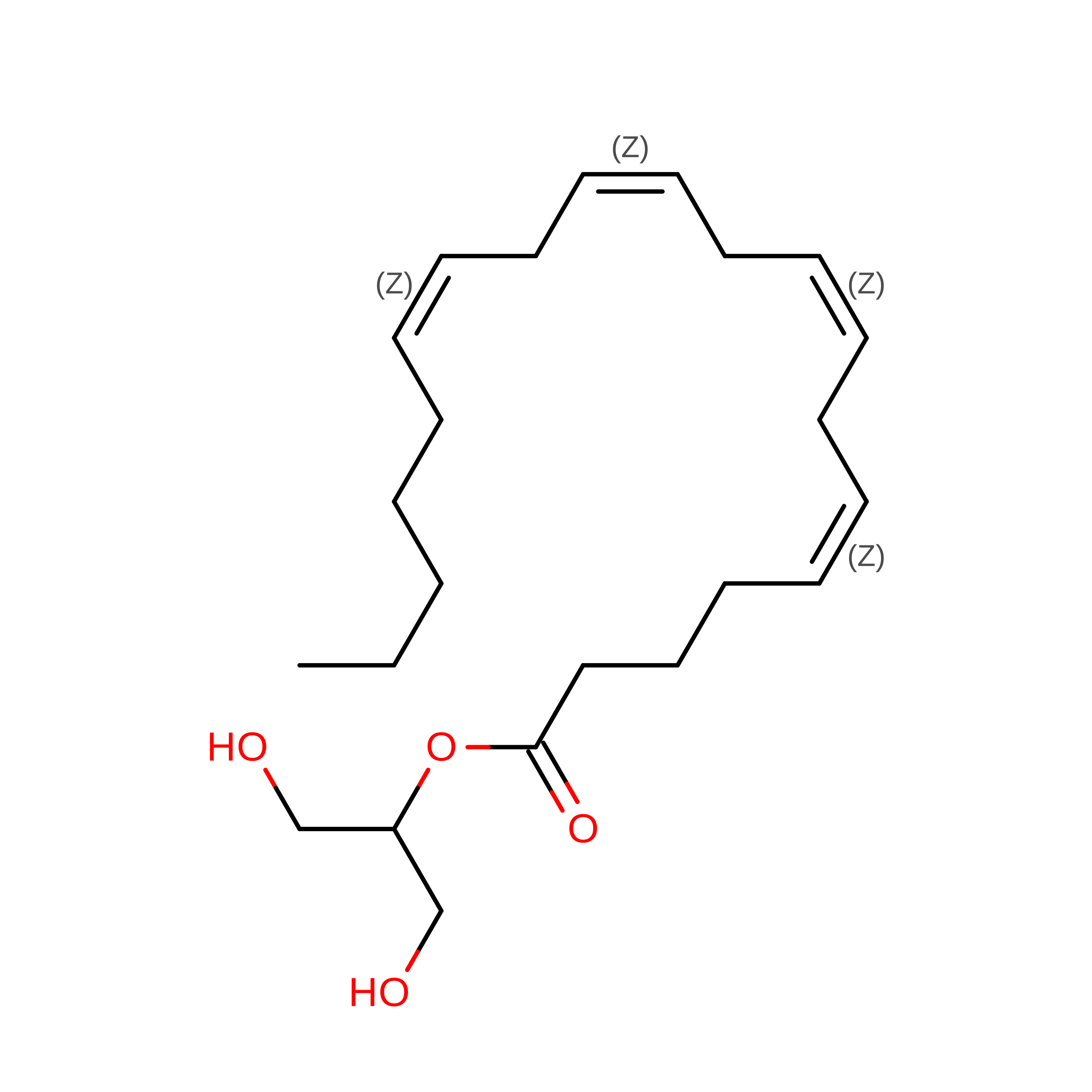
Crystal structure of human cellular retinol binding protein 2 (CRBP2) in complex with 2-arachidonoylglycerol (2-AG)


Experimental Data Snapshot

  • Method: X-RAY DIFFRACTION
  • Resolution: 1.35 Å
  • R-Value Free: 
    0.164 (Depositor), 0.176 (DCC) 
  • R-Value Work: 
    0.126 (Depositor), 0.140 (DCC) 
  • R-Value Observed: 
    0.128 (Depositor) 

Starting Model: experimental
View more details

wwPDB Validation 3D Report Full Report

Validation slider image for 6BTH

Ligand Structure Quality Assessment 


This is version 1.3 of the entry. See complete history

Literature

Retinol-binding protein 2 (RBP2) binds monoacylglycerols and modulates gut endocrine signaling and body weight.

Lee, S.A.Yang, K.J.Z.Brun, P.J.Silvaroli, J.A.Yuen, J.J.Shmarakov, I.Jiang, H.Feranil, J.B.Li, X.Lackey, A.I.Krezel, W.Leibel, R.L.Libien, J.Storch, J.Golczak, M.Blaner, W.S.

(2020) Sci Adv 6: eaay8937-eaay8937

  • DOI: https://doi.org/10.1126/sciadv.aay8937
  • Primary Citation Related Structures: 
    6BTH, 6BTI

  • PubMed Abstract: 

    Expressed in the small intestine, retinol-binding protein 2 (RBP2) facilitates dietary retinoid absorption. Rbp2 -deficient ( Rbp2 -/- ) mice fed a chow diet exhibit by 6-7 months-of-age higher body weights, impaired glucose metabolism, and greater hepatic triglyceride levels compared to controls. These phenotypes are also observed when young Rbp2 -/- mice are fed a high fat diet. Retinoids do not account for the phenotypes. Rather, RBP2 is a previously unidentified monoacylglycerol (MAG)-binding protein, interacting with the endocannabinoid 2-arachidonoylglycerol (2-AG) and other MAGs with affinities comparable to retinol. X-ray crystallographic studies show that MAGs bind in the retinol binding pocket. When challenged with an oil gavage, Rbp2 -/- mice show elevated mucosal levels of 2-MAGs. This is accompanied by significantly elevated blood levels of the gut hormone GIP (glucose-dependent insulinotropic polypeptide). Thus, RBP2, in addition to facilitating dietary retinoid absorption, modulates MAG metabolism and likely signaling, playing a heretofore unknown role in systemic energy balance.


  • Organizational Affiliation
    • Department of Medicine, Institute of Human Nutrition, College of Physicians and Surgeons, Columbia University, New York, NY, USA.

Macromolecule Content 

  • Total Structure Weight: 33.47 kDa 
  • Atom Count: 2,893 
  • Modeled Residue Count: 272 
  • Deposited Residue Count: 276 
  • Unique protein chains: 1

Macromolecules

Find similar proteins by:|  3D Structure
Entity ID: 1
MoleculeChains  Sequence LengthOrganismDetailsImage
Retinol-binding protein 2
A, B
138Homo sapiensMutation(s): 0 
Gene Names: RBP2CRBP2
UniProt & NIH Common Fund Data Resources
Find proteins for P50120 (Homo sapiens)
Explore P50120 
Go to UniProtKB:  P50120
PHAROS:  P50120
GTEx:  ENSG00000114113 
Entity Groups
Sequence Clusters30% Identity50% Identity70% Identity90% Identity95% Identity100% Identity
UniProt GroupP50120
Sequence Annotations
Expand
Reference Sequence

Experimental Data & Validation

Experimental Data

  • Method: X-RAY DIFFRACTION
  • Resolution: 1.35 Å
  • R-Value Free:  0.164 (Depositor), 0.176 (DCC) 
  • R-Value Work:  0.126 (Depositor), 0.140 (DCC) 
  • R-Value Observed: 0.128 (Depositor) 
Space Group: P 21 21 21
Unit Cell:
Length ( Å )Angle ( ˚ )
a = 58.138α = 90
b = 67.328β = 90
c = 87.319γ = 90
Software Package:
Software NamePurpose
PHENIXrefinement
XDSdata reduction
SCALAdata scaling
PHASERphasing

Structure Validation

View Full Validation Report


Ligand Structure Quality Assessment 


Entry History 

& Funding Information

Deposition Data


Funding OrganizationLocationGrant Number
National Institutes of Health/National Eye Institute (NIH/NEI)United StatesR01-EY023948

Revision History  (Full details and data files)

  • Version 1.0: 2018-12-12
    Type: Initial release
  • Version 1.1: 2019-12-18
    Changes: Author supporting evidence
  • Version 1.2: 2020-05-20
    Changes: Database references
  • Version 1.3: 2023-10-04
    Changes: Data collection, Database references, Refinement description