6B3P | pdb_00006b3p

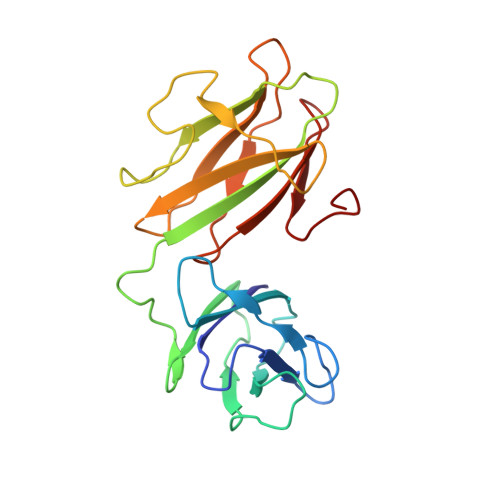
Crystal structure of CBMbc (family CBM26) from Eubacterium rectale Amy13K in Complex with Maltoheptaose


Experimental Data Snapshot

  • Method: X-RAY DIFFRACTION
  • Resolution: 2.01 Å
  • R-Value Free: 
    0.196 (Depositor), 0.201 (DCC) 
  • R-Value Work: 
    0.184 (Depositor), 0.190 (DCC) 
  • R-Value Observed: 
    0.184 (Depositor) 

Starting Model: experimental
View more details

wwPDB Validation 3D Report Full Report

Validation slider image for 6B3P

This is version 3.1 of the entry. See complete history

Literature

Novel carbohydrate binding modules in the surface anchored alpha-amylase of Eubacterium rectale provide a molecular rationale for the range of starches used by this organism in the human gut.

Cockburn, D.W.Suh, C.Medina, K.P.Duvall, R.M.Wawrzak, Z.Henrissat, B.Koropatkin, N.M.

(2018) Mol Microbiol 107: 249-264

  • DOI: https://doi.org/10.1111/mmi.13881
  • Primary Citation Related Structures: 
    6AZ5, 6B15, 6B3P

  • PubMed Abstract: 

    Gut bacteria recognize accessible glycan substrates within a complex environment. Carbohydrate binding modules (CBMs) of cell surface glycoside hydrolases often drive binding to the target substrate. Eubacterium rectale, an important butyrate-producing organism in the gut, consumes a limited range of substrates, including starch. Host consumption of resistant starch increases the abundance of E. rectale in the intestine, likely because it successfully captures the products of resistant starch degradation by other bacteria. Here, we demonstrate that the cell wall anchored starch-degrading α-amylase, Amy13K of E. rectale harbors five CBMs that all target starch with differing specificities. Intriguingly these CBMs efficiently bind to both regular and high amylose corn starch (a type of resistant starch), but have almost no affinity for potato starch (another type of resistant starch). Removal of these CBMs from Amy13K reduces the activity level of the enzyme toward corn starches by ∼40-fold, down to the level of activity toward potato starch, suggesting that the CBMs facilitate activity on corn starch and allow its utilization in vivo. The specificity of the Amy13K CBMs provides a molecular rationale for why E. rectale is able to only use certain starch types without the aid of other organisms.


  • Organizational Affiliation
    • Department of Microbiology and Immunology, University of Michigan Medical School, Ann Arbor, MI 48109, USA.

Macromolecule Content 

  • Total Structure Weight: 50.12 kDa 
  • Atom Count: 4,079 
  • Modeled Residue Count: 418 
  • Deposited Residue Count: 418 
  • Unique protein chains: 1

Macromolecules

Find similar proteins by:|  3D Structure
Entity ID: 1
MoleculeChains  Sequence LengthOrganismDetailsImage
Amy13K
A, B
209Agathobacter rectalis M104/1Mutation(s): 0 
Gene Names: ERE_20420

Oligosaccharides

Help  
Entity ID: 2
MoleculeChains Length2D Diagram GlycosylationD Interactions
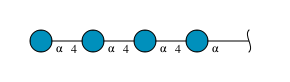
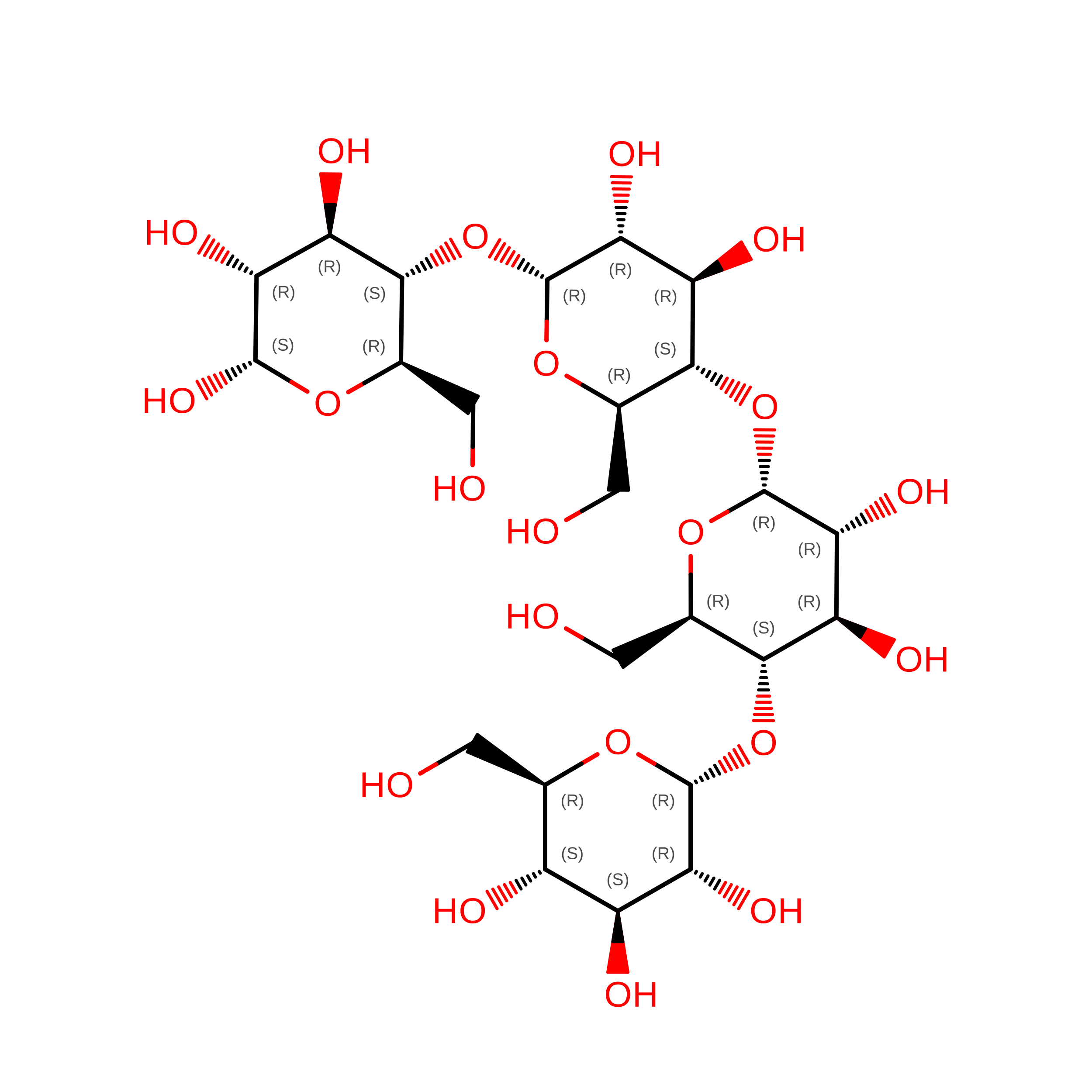
alpha-D-glucopyranose-(1-4)-alpha-D-glucopyranose-(1-4)-alpha-D-glucopyranose-(1-4)-alpha-D-glucopyranose
C, F
4N/A
Glycosylation Resources
GlyTouCan: G87171PZ
GlyCosmos: G87171PZ
GlyGen: G87171PZ
Entity ID: 3
MoleculeChains Length2D Diagram GlycosylationD Interactions
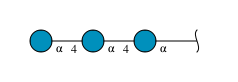
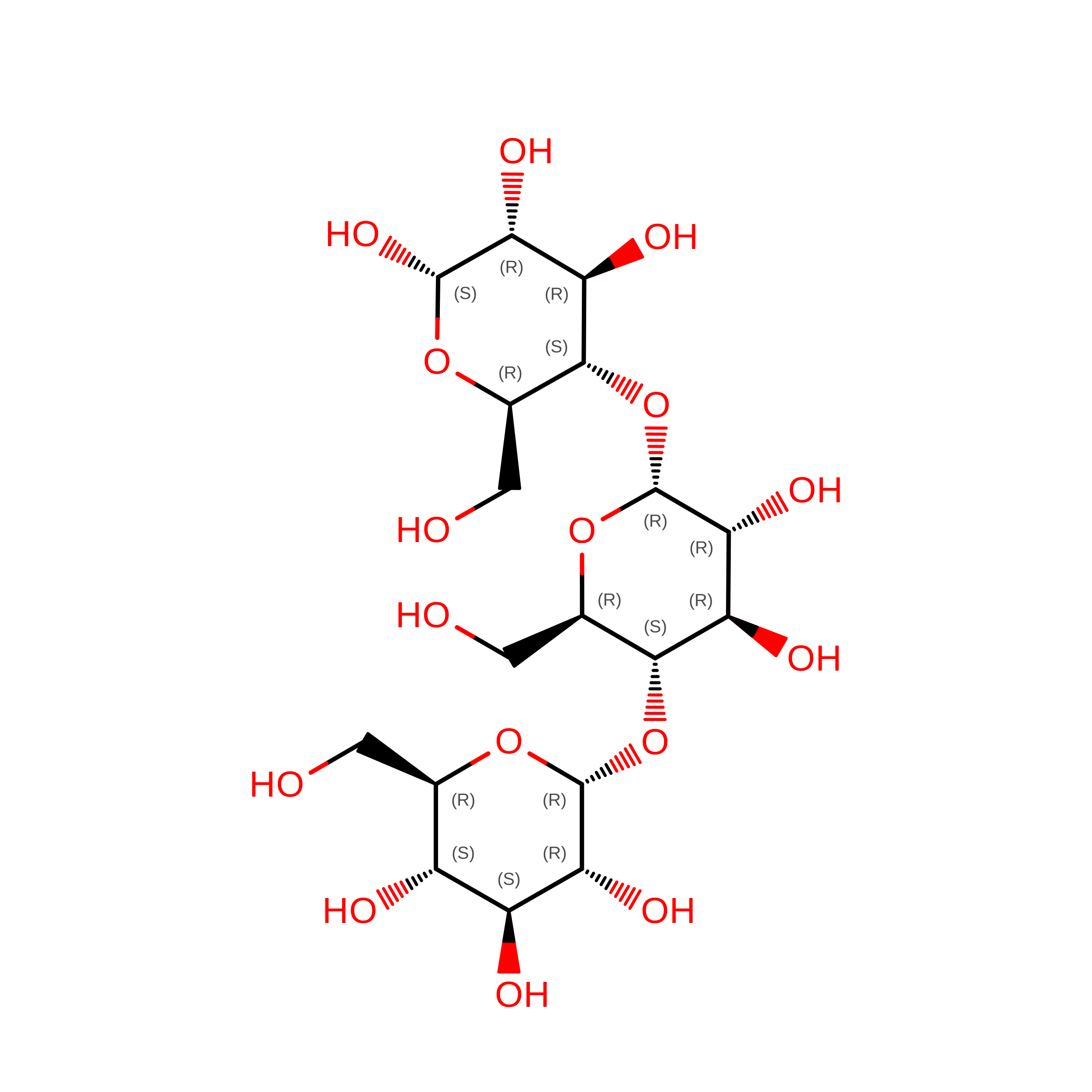
alpha-D-glucopyranose-(1-4)-alpha-D-glucopyranose-(1-4)-alpha-D-glucopyranose
D, E
3N/A
Glycosylation Resources
GlyTouCan: G96370VA
GlyCosmos: G96370VA
GlyGen: G96370VA

Small Molecules

Ligands 2 Unique
IDChains Name / Formula / InChI Key2D Diagram3D Interactions
EDO

Query on EDO


Download:Ideal Coordinates CCD File
AA [auth B]
BA [auth B]
CA [auth B]
DA [auth B]
EA [auth B]
AA [auth B],
BA [auth B],
CA [auth B],
DA [auth B],
EA [auth B],
G [auth A],
H [auth A],
I [auth A],
J [auth A],
K [auth A],
L [auth A],
M [auth A],
N [auth A],
X [auth B],
Y [auth B],
Z [auth B]
1,2-ETHANEDIOL
C2 H6 O2
LYCAIKOWRPUZTN-UHFFFAOYSA-N
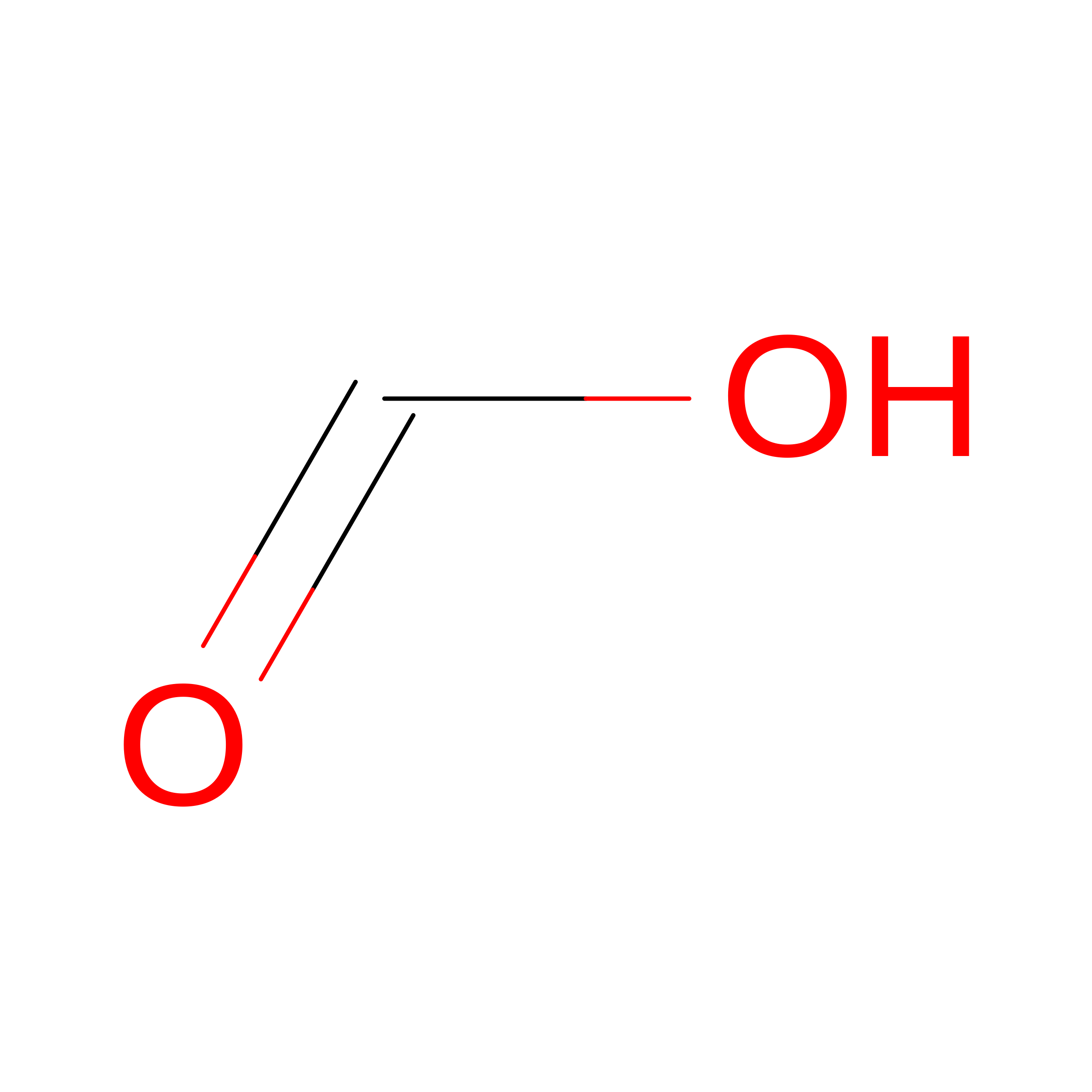
FMT

Query on FMT


Download:Ideal Coordinates CCD File
FA [auth B]
GA [auth B]
HA [auth B]
IA [auth B]
JA [auth B]
FA [auth B],
GA [auth B],
HA [auth B],
IA [auth B],
JA [auth B],
KA [auth B],
LA [auth B],
MA [auth B],
NA [auth B],
O [auth A],
OA [auth B],
P [auth A],
Q [auth A],
R [auth A],
S [auth A],
T [auth A],
U [auth A],
V [auth A],
W [auth A]
FORMIC ACID
C H2 O2
BDAGIHXWWSANSR-UHFFFAOYSA-N

Experimental Data & Validation

Experimental Data

  • Method: X-RAY DIFFRACTION
  • Resolution: 2.01 Å
  • R-Value Free:  0.196 (Depositor), 0.201 (DCC) 
  • R-Value Work:  0.184 (Depositor), 0.190 (DCC) 
  • R-Value Observed: 0.184 (Depositor) 
Space Group: P 65 2 2
Unit Cell:
Length ( Å )Angle ( ˚ )
a = 134.2α = 90
b = 134.2β = 90
c = 231.13γ = 120
Software Package:
Software NamePurpose
PHENIXrefinement
iMOSFLMdata reduction
Aimlessdata scaling
PHASERphasing

Structure Validation

View Full Validation Report


Entry History 

& Funding Information

Deposition Data


Funding OrganizationLocationGrant Number
University of Michigan Gastrointestinal Peptides Research CenterUnited StatesDK034933
Department of Energy (DOE, United States)United StatesDE-AC02-06CH11357
Michigan Economic Development Corporation and the Michigan Technology Tri-CorridorUnited States085P1000817

Revision History  (Full details and data files)

  • Version 1.0: 2017-11-29
    Type: Initial release
  • Version 1.1: 2017-12-06
    Changes: Author supporting evidence
  • Version 1.2: 2018-01-17
    Changes: Database references
  • Version 1.3: 2019-12-04
    Changes: Author supporting evidence, Data collection
  • Version 2.0: 2020-02-19
    Changes: Atomic model, Data collection, Derived calculations, Refinement description, Structure summary
  • Version 3.0: 2020-07-29
    Type: Remediation
    Reason: Carbohydrate remediation
    Changes: Advisory, Atomic model, Data collection, Derived calculations, Structure summary
  • Version 3.1: 2023-10-04
    Changes: Data collection, Database references, Derived calculations, Refinement description, Structure summary