5KDQ | pdb_00005kdq

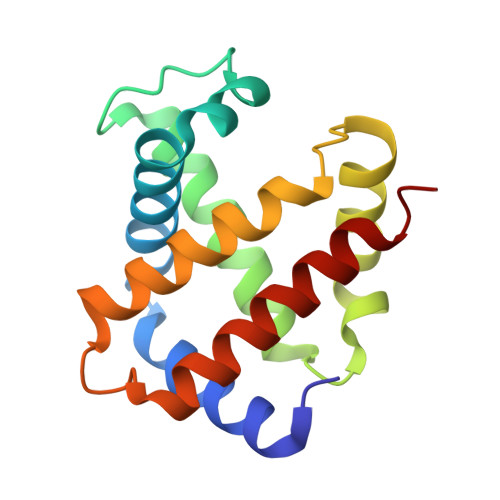
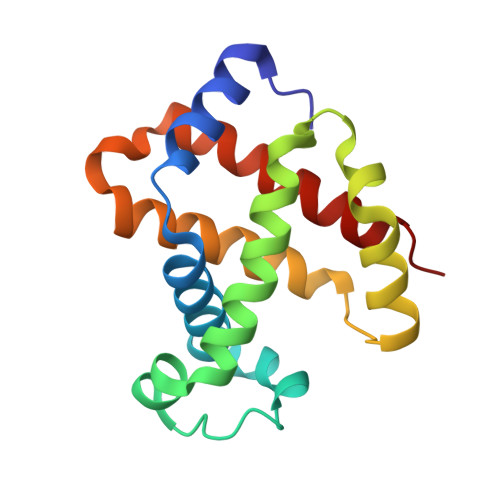
Deoxyhemoglobin in Complex with an Aryloxyalkanoic acid

  • Classification: OXYGEN TRANSPORT
  • Organism(s): Homo sapiens
  • Expression System: Homo sapiens
  • Mutation(s): No 

  • Deposited: 2016-06-08 Released: 2016-06-22 
  • Deposition Author(s): Ahmed, M.H., Omar, A.M., Safo, M.K.
  • Funding Organization(s): MAARIFAH, National Institutes of Health/National Institute on Minority Health and Health Disparities (NIH/NIMHD), National Institutes of Health/National Heart, Lung, and Blood Institute (NIH/NHLBI), National Institutes of Health/National Cancer Institute (NIH/NCI)

Experimental Data Snapshot

  • Method: X-RAY DIFFRACTION
  • Resolution: 2.15 Å
  • R-Value Free: 
    0.257 (Depositor), 0.249 (DCC) 
  • R-Value Work: 
    0.192 (Depositor), 0.186 (DCC) 
  • R-Value Observed: 
    0.196 (Depositor) 

Starting Model: experimental
View more details

wwPDB Validation 3D Report Full Report

Validation slider image for 5KDQ

Ligand Structure Quality Assessment 


This is version 1.4 of the entry. See complete history

Literature

Aryloxyalkanoic Acids as Non-Covalent Modifiers of the Allosteric Properties of Hemoglobin.

Omar, A.M.Mahran, M.A.Ghatge, M.S.Bamane, F.H.Ahmed, M.H.El-Araby, M.E.Abdulmalik, O.Safo, M.K.

(2016) Molecules 21

  • DOI: https://doi.org/10.3390/molecules21081057
  • Primary Citation Related Structures: 
    5KDQ

  • PubMed Abstract: 

    Hemoglobin (Hb) modifiers that stereospecifically inhibit sickle hemoglobin polymer formation and/or allosterically increase Hb affinity for oxygen have been shown to prevent the primary pathophysiology of sickle cell disease (SCD), specifically, Hb polymerization and red blood cell sickling. Several such compounds are currently being clinically studied for the treatment of SCD. Based on the previously reported non-covalent Hb binding characteristics of substituted aryloxyalkanoic acids that exhibited antisickling properties, we designed, synthesized and evaluated 18 new compounds (KAUS II series) for enhanced antisickling activities. Surprisingly, select test compounds showed no antisickling effects or promoted erythrocyte sickling. Additionally, the compounds showed no significant effect on Hb oxygen affinity (or in some cases, even decreased the affinity for oxygen). The X-ray structure of deoxygenated Hb in complex with a prototype compound, KAUS-23, revealed that the effector bound in the central water cavity of the protein, providing atomic level explanations for the observed functional and biological activities. Although the structural modification did not lead to the anticipated biological effects, the findings provide important direction for designing candidate antisickling agents, as well as a framework for novel Hb allosteric effectors that conversely, decrease the protein affinity for oxygen for potential therapeutic use for hypoxic- and/or ischemic-related diseases.


  • Organizational Affiliation
    • Department of Pharmaceutical Chemistry, Faculty of Pharmacy, King Abdulaziz University, Alsulaymanyah, Jeddah 21589, Saudi Arabia. asmansour@kau.edu.sa.

Macromolecule Content 

  • Total Structure Weight: 65 kDa 
  • Atom Count: 4,954 
  • Modeled Residue Count: 574 
  • Deposited Residue Count: 574 
  • Unique protein chains: 2

Macromolecules

Find similar proteins by:|  3D Structure
Entity ID: 1
MoleculeChains  Sequence LengthOrganismDetailsImage
Hemoglobin subunit alpha
A, C
141Homo sapiensMutation(s): 0 
Gene Names: HBA1HBA2
UniProt & NIH Common Fund Data Resources
Find proteins for P69905 (Homo sapiens)
Explore P69905 
Go to UniProtKB:  P69905
Entity Groups
Sequence Clusters30% Identity50% Identity70% Identity90% Identity95% Identity100% Identity
UniProt GroupP69905
Sequence Annotations
Expand
Reference Sequence
Find similar proteins by:|  3D Structure
Entity ID: 2
MoleculeChains  Sequence LengthOrganismDetailsImage
Hemoglobin subunit beta
B, D
146Homo sapiensMutation(s): 0 
Gene Names: HBB
UniProt & NIH Common Fund Data Resources
Find proteins for P68871 (Homo sapiens)
Explore P68871 
Go to UniProtKB:  P68871
PHAROS:  P68871
GTEx:  ENSG00000244734 
Entity Groups
Sequence Clusters30% Identity50% Identity70% Identity90% Identity95% Identity100% Identity
UniProt GroupP68871
Sequence Annotations
Expand
Reference Sequence

Small Molecules

Ligands 3 Unique
IDChains Name / Formula / InChI Key2D Diagram3D Interactions
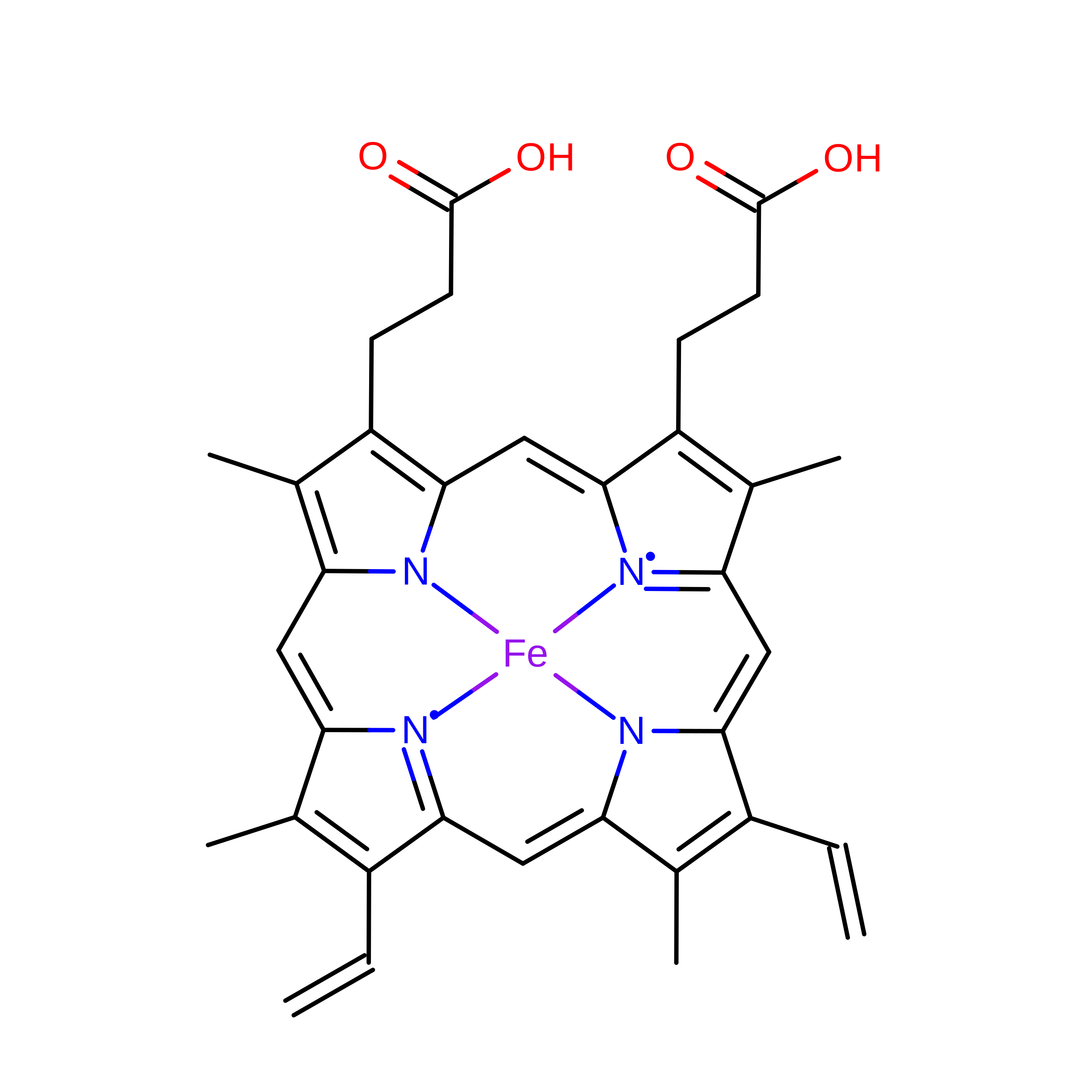
HEM

Query on HEM


Download:Ideal Coordinates CCD File
E [auth A],
H [auth B],
I [auth C],
K [auth D]
PROTOPORPHYRIN IX CONTAINING FE
C34 H32 Fe N4 O4
KABFMIBPWCXCRK-RGGAHWMASA-L
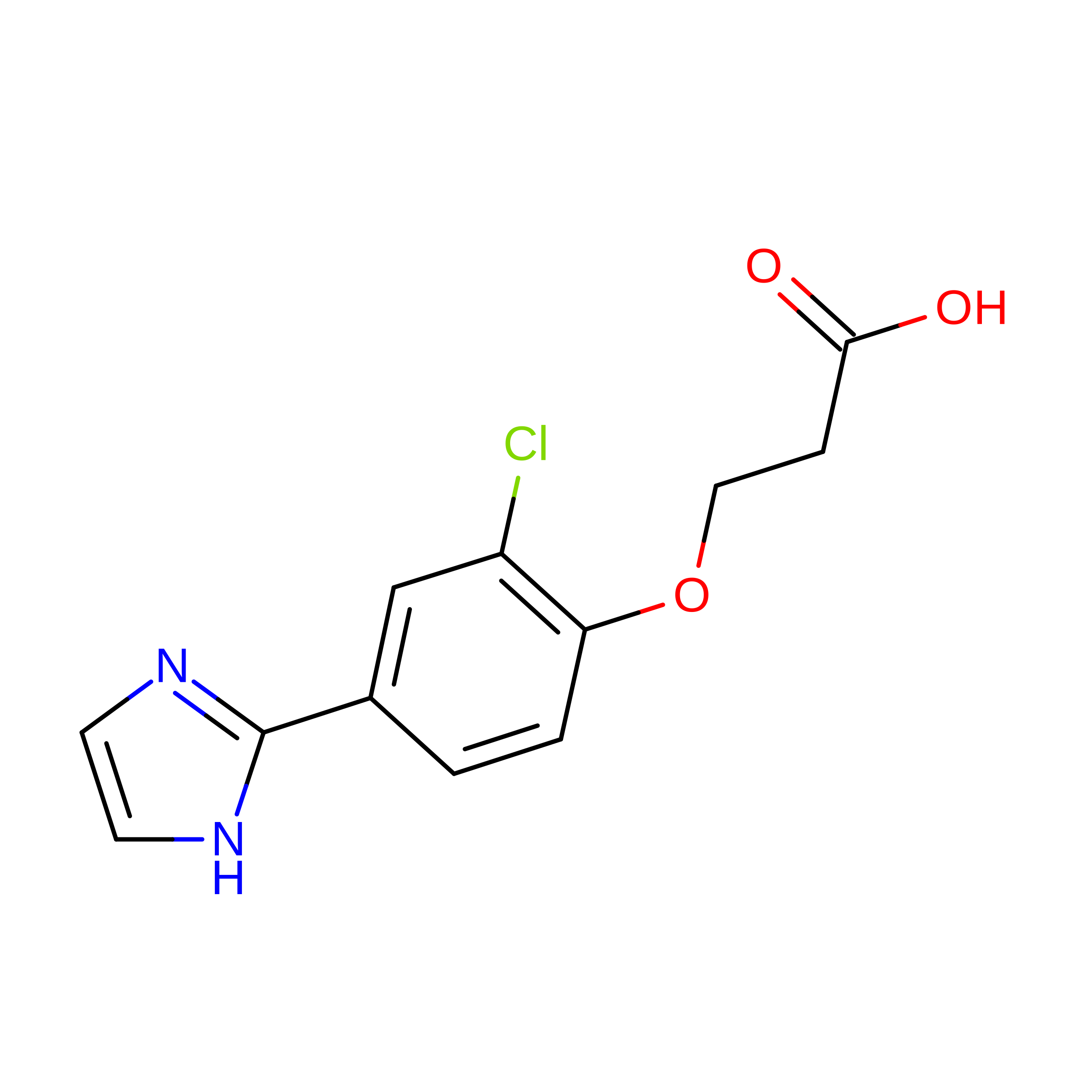
KOH

Query on KOH


Download:Ideal Coordinates CCD File
J [auth C]3-[2-chloranyl-4-(1~{H}-imidazol-2-yl)phenoxy]propanoic acid
C12 H11 Cl N2 O3
JDFUCVHWLSVLIA-UHFFFAOYSA-N
PO4

Query on PO4


Download:Ideal Coordinates CCD File
F [auth A],
G [auth A]
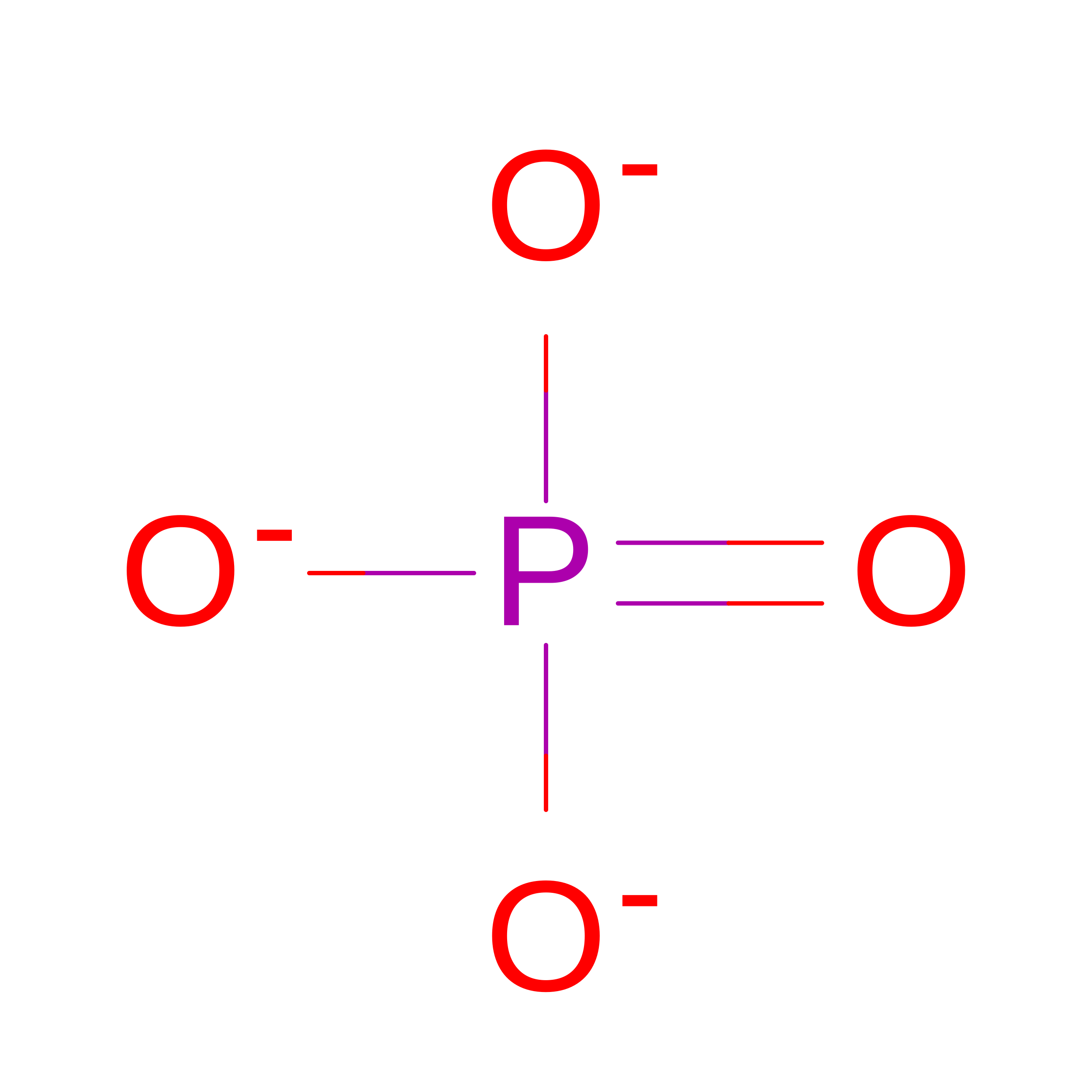
PHOSPHATE ION
O4 P
NBIIXXVUZAFLBC-UHFFFAOYSA-K

Experimental Data & Validation

Experimental Data

  • Method: X-RAY DIFFRACTION
  • Resolution: 2.15 Å
  • R-Value Free:  0.257 (Depositor), 0.249 (DCC) 
  • R-Value Work:  0.192 (Depositor), 0.186 (DCC) 
  • R-Value Observed: 0.196 (Depositor) 
Space Group: P 1 21 1
Unit Cell:
Length ( Å )Angle ( ˚ )
a = 62.222α = 90
b = 80.83β = 80.77
c = 53.397γ = 90
Software Package:
Software NamePurpose
PHENIXrefinement
d*TREKdata reduction
d*TREKdata scaling
PHENIXphasing

Structure Validation

View Full Validation Report


Ligand Structure Quality Assessment 


Entry History 

& Funding Information

Deposition Data


Funding OrganizationLocationGrant Number
MAARIFAHSaudi ArabiaBIO1253-03-10
National Institutes of Health/National Institute on Minority Health and Health Disparities (NIH/NIMHD)United StatesMD009124
National Institutes of Health/National Heart, Lung, and Blood Institute (NIH/NHLBI)United StatesK01HL103186
National Institutes of Health/National Cancer Institute (NIH/NCI)United StatesCA16059

Revision History  (Full details and data files)

  • Version 1.0: 2016-06-22
    Type: Initial release
  • Version 1.1: 2016-08-31
    Changes: Database references
  • Version 1.2: 2017-09-20
    Changes: Author supporting evidence, Derived calculations
  • Version 1.3: 2019-12-04
    Changes: Author supporting evidence
  • Version 1.4: 2023-09-27
    Changes: Data collection, Database references, Refinement description