5IDB | pdb_00005idb

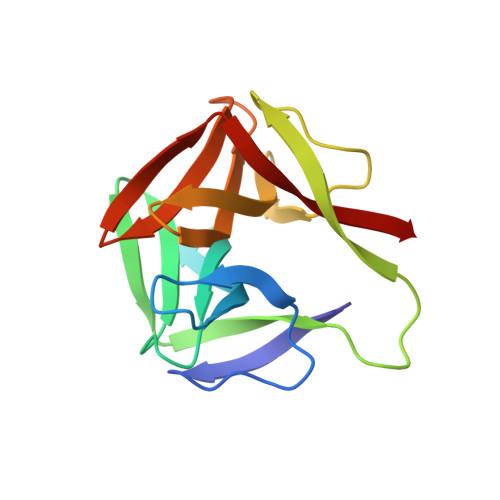
Crystal structure of CGL1 from Crassostrea gigas, mannose-bound form (CGL1/MAN2)


Experimental Data Snapshot

  • Method: X-RAY DIFFRACTION
  • Resolution: 1.00 Å
  • R-Value Free: 
    0.144 (Depositor), 0.144 (DCC) 
  • R-Value Work: 
    0.122 (Depositor), 0.123 (DCC) 
  • R-Value Observed: 
    0.123 (Depositor) 

wwPDB Validation 3D Report Full Report

Validation slider image for 5IDB

Ligand Structure Quality Assessment 


This is version 1.4 of the entry. See complete history

Literature

Identification, Characterization, and X-ray Crystallographic Analysis of a Novel Type of Mannose-Specific Lectin CGL1 from the Pacific Oyster Crassostrea gigas.

Unno, H.Matsuyama, K.Tsuji, Y.Goda, S.Hiemori, K.Tateno, H.Hirabayashi, J.Hatakeyama, T.

(2016) Sci Rep 6: 29135-29135

  • DOI: https://doi.org/10.1038/srep29135
  • Primary Citation Related Structures: 
    5ID8, 5IDA, 5IDB

  • PubMed Abstract: 

    A novel mannose-specific lectin, named CGL1 (15.5 kDa), was isolated from the oyster Crassostrea gigas. Characterization of CGL1 involved isothermal titration calorimetry (ITC), glycoconjugate microarray, and frontal affinity chromatography (FAC). This analysis revealed that CGL1 has strict specificity for the mannose monomer and for high mannose-type N-glycans (HMTGs). Primary structure of CGL1 did not show any homology with known lectins but did show homology with proteins of the natterin family. Crystal structure of the CGL1 revealed a unique homodimer in which each protomer was composed of 2 domains related by a pseudo two-fold axis. Complex structures of CGL1 with mannose molecules showed that residues have 8 hydrogen bond interactions with O1, O2, O3, O4, and O5 hydroxyl groups of mannose. The complex interactions that are not observed with other mannose-binding lectins revealed the structural basis for the strict specificity for mannose. These characteristics of CGL1 may be helpful as a research tool and for clinical applications.


  • Organizational Affiliation
    • Graduate School of Engineering, Nagasaki University, 1-14 Bunkyo-machi, Nagasaki 852-8521, Japan.

Macromolecule Content 

  • Total Structure Weight: 32.1 kDa 
  • Atom Count: 2,744 
  • Modeled Residue Count: 284 
  • Deposited Residue Count: 284 
  • Unique protein chains: 1

Macromolecules

Find similar proteins by:|  3D Structure
Entity ID: 1
MoleculeChains  Sequence LengthOrganismDetailsImage
Natterin-3A [auth B],
B [auth A]
142Magallana gigasMutation(s): 0 
Gene Names: CGI_10011001CGI_10018577
UniProt
Find proteins for K1QRB6 (Magallana gigas)
Explore K1QRB6 
Go to UniProtKB:  K1QRB6
Entity Groups
Sequence Clusters30% Identity50% Identity70% Identity90% Identity95% Identity100% Identity
UniProt GroupK1QRB6
Sequence Annotations
Expand
Reference Sequence

Small Molecules

Ligands 3 Unique
IDChains Name / Formula / InChI Key2D Diagram3D Interactions
NHE

Query on NHE


Download:Ideal Coordinates CCD File
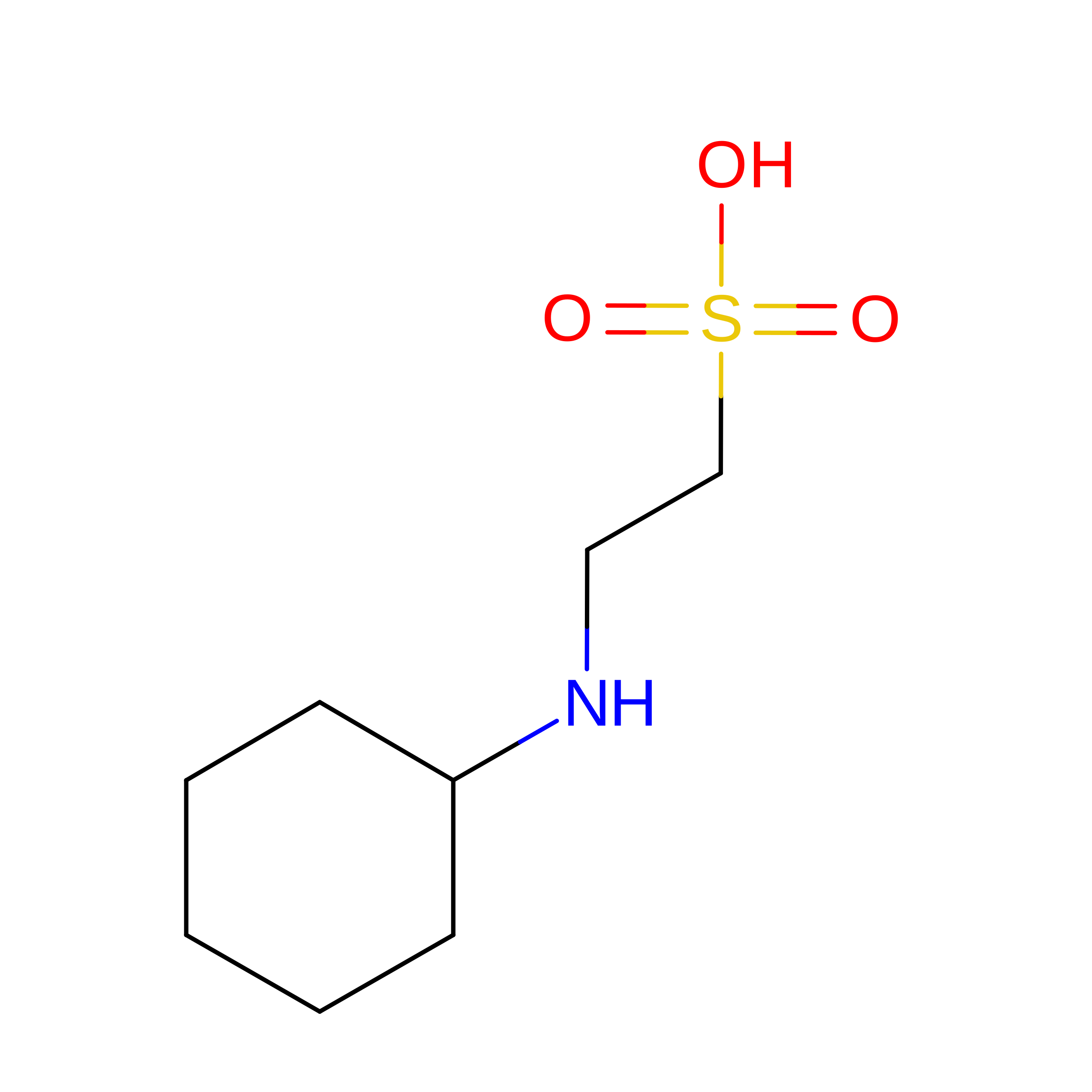
I [auth A]2-[N-CYCLOHEXYLAMINO]ETHANE SULFONIC ACID
C8 H17 N O3 S
MKWKNSIESPFAQN-UHFFFAOYSA-N
MAN

Query on MAN


Download:Ideal Coordinates CCD File
D [auth B],
G [auth A]
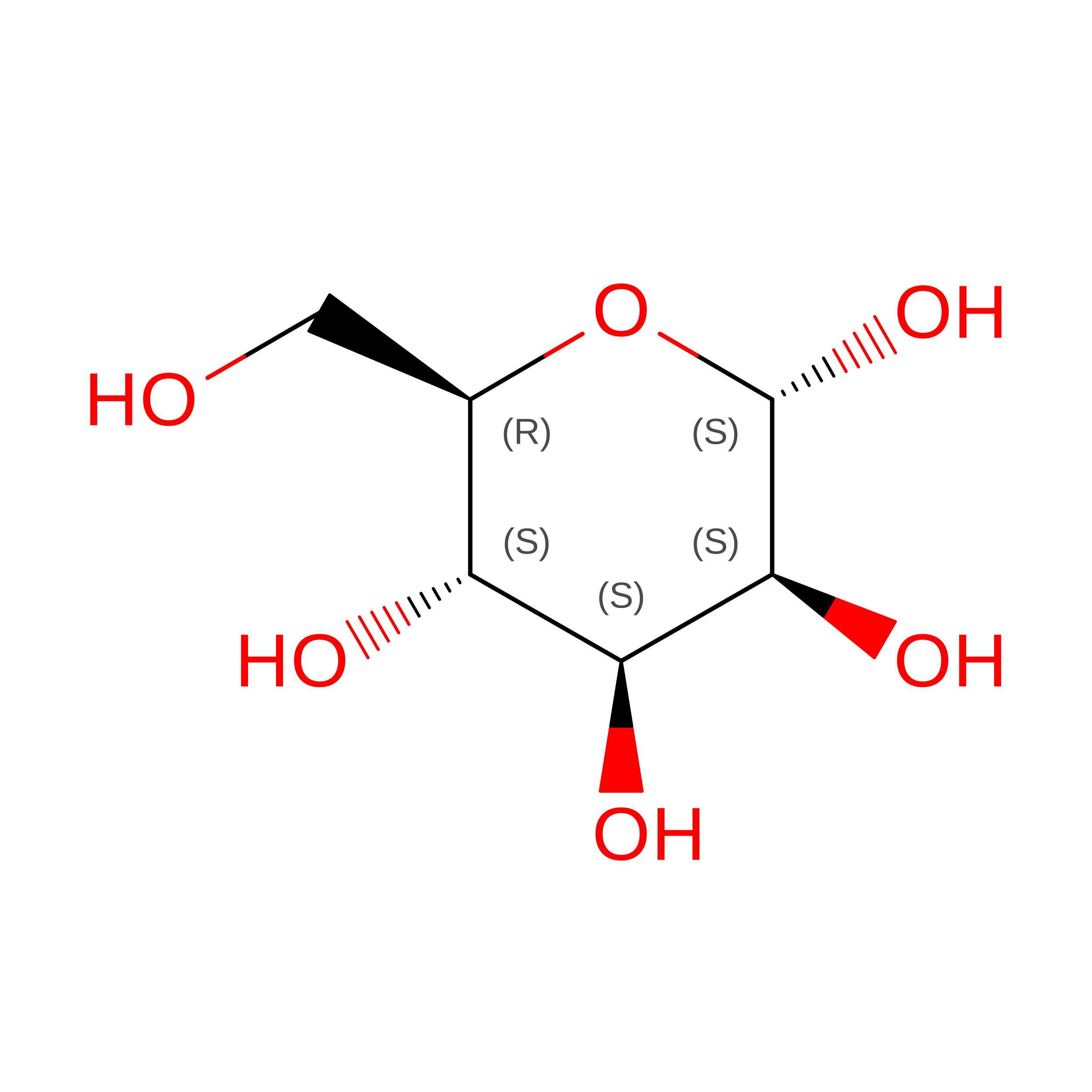
alpha-D-mannopyranose
C6 H12 O6
WQZGKKKJIJFFOK-PQMKYFCFSA-N
BMA

Query on BMA


Download:Ideal Coordinates CCD File
C [auth B],
E [auth B],
F [auth A],
H [auth A]
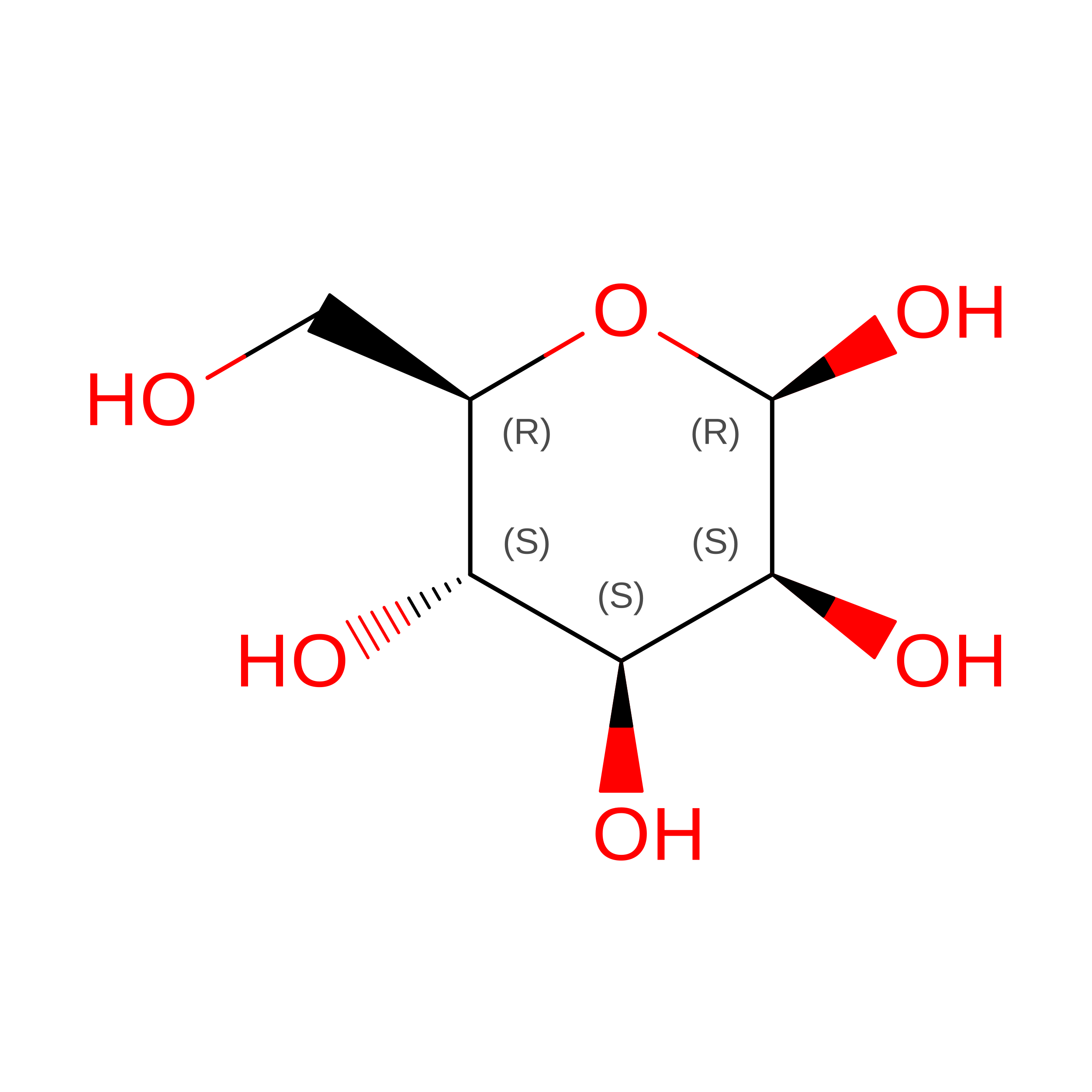
beta-D-mannopyranose
C6 H12 O6
WQZGKKKJIJFFOK-RWOPYEJCSA-N

Experimental Data & Validation

Experimental Data

  • Method: X-RAY DIFFRACTION
  • Resolution: 1.00 Å
  • R-Value Free:  0.144 (Depositor), 0.144 (DCC) 
  • R-Value Work:  0.122 (Depositor), 0.123 (DCC) 
  • R-Value Observed: 0.123 (Depositor) 
Space Group: P 21 21 21
Unit Cell:
Length ( Å )Angle ( ˚ )
a = 57.32α = 90
b = 57.93β = 90
c = 80.38γ = 90
Software Package:
Software NamePurpose
REFMACrefinement
HKL-2000data reduction
HKL-2000data scaling

Structure Validation

View Full Validation Report


Ligand Structure Quality Assessment 


Entry History 

Deposition Data

  • Released Date: 2016-07-06 
  • Deposition Author(s): Unno, H.

Revision History  (Full details and data files)

  • Version 1.0: 2016-07-06
    Type: Initial release
  • Version 1.1: 2016-08-03
    Changes: Database references
  • Version 1.2: 2020-02-19
    Changes: Data collection, Derived calculations
  • Version 1.3: 2020-07-29
    Type: Remediation
    Reason: Carbohydrate remediation
    Changes: Data collection, Derived calculations, Structure summary
  • Version 1.4: 2024-03-20
    Changes: Data collection, Database references, Structure summary