5B7J | pdb_00005b7j

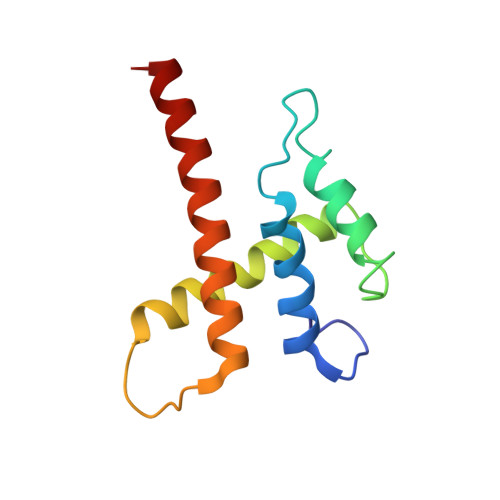
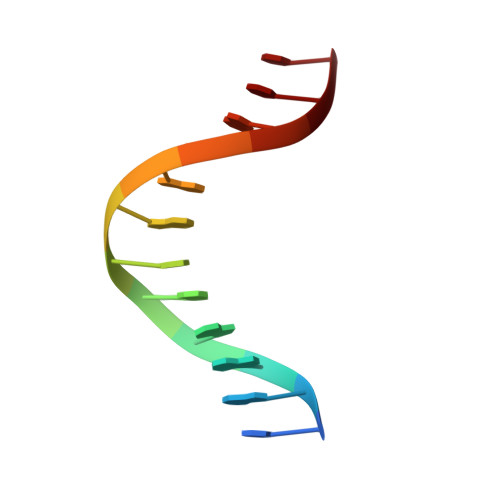
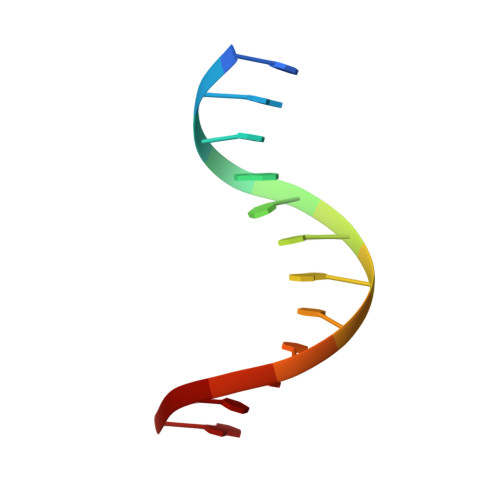
Structure model of Sap1-DNA complex


Experimental Data Snapshot

  • Method: SOLUTION NMR
  • Conformers Calculated: 200 
  • Conformers Submitted: 20 
  • Selection Criteria: structures with the lowest energy 

wwPDB Validation 3D Report Full Report

Validation slider image for 5B7J

This is version 1.2 of the entry. See complete history. 

Literature

Sap1 is a replication-initiation factor essential for the assembly of pre-replicative complex in the fission yeast Schizosaccharomyces pombe

Guan, L., He, P., Yang, F., Zhang, Y., Hu, Y., Ding, J., Hua, Y., Zhang, Y., Ye, Q., Hu, J., Wang, T., Jin, C., Kong, D.

(2017) J Biol Chem 292: 6056-6075

  • DOI: https://doi.org/10.1074/jbc.M116.767806
  • Primary Citation Related Structures: 
    5B7J, 5JDK

  • PubMed Abstract: 

    A central step in the initiation of chromosomal DNA replication in eukaryotes is the assembly of pre-replicative complex (pre-RC) at late M and early G 1 phase of the cell cycles. Since 1973, four proteins or protein complexes, including cell division control protein 6 (Cdc6)/Cdc18, minichromosome maintenance protein complex, origin recognition complex (ORC), and Cdt1, are known components of the pre-RC. Previously, we reported that a non-ORC protein binds to the essential element Δ9 of the Schizosaccharomyces pombe DNA-replication origin ARS3001. In this study, we identified that the non-ORC protein is Sap1. Like ORC, Sap1 binds to DNA origins during cell growth cycles. But unlike ORC, which binds to asymmetric AT-rich sequences through its nine AT-hook motifs, Sap1 preferentially binds to a DNA sequence of 5'-(A/T) n (C/G)(A/T) 9-10 (G/C)(A/T) n -3' ( n ≥ 1). We also found that Sap1 and ORC physically interact. We further demonstrated that Sap1 is required for the assembly of the pre-RC because of its essential role in recruiting Cdc18 to DNA origins. Thus, we conclude that Sap1 is a replication-initiation factor that directly participates in the assembly of the pre-RC. DNA-replication origins in fission yeast are defined by possessing two essential elements with one bound by ORC and the other by Sap1.


  • Organizational Affiliation: 
    • From the Peking-Tsinghua Center for Life Sciences, National Laboratory of Protein and Plant Gene Research, College of Life Sciences.

Macromolecule Content 

  • Total Structure Weight: 20.57 kDa 
  • Atom Count: 1,412 
  • Modeled Residue Count: 135 
  • Deposited Residue Count: 135 
  • Unique protein chains: 1
  • Unique nucleic acid chains: 2

Macromolecules


Find similar proteins by:|  3D Structure
Entity ID: 1
MoleculeChains  Sequence LengthOrganismDetailsImage
Switch-activating protein 1111Schizosaccharomyces pombe 972h-Mutation(s): 0 
Gene Names: sap1, SPCC1672.02c
UniProt
Find proteins for P40847 (Schizosaccharomyces pombe (strain 972 / ATCC 24843))
Explore P40847 
Go to UniProtKB:  P40847
Entity Groups
Sequence Clusters30% Identity50% Identity70% Identity90% Identity95% Identity100% Identity
UniProt GroupP40847
Sequence Annotations
Expand
Reference Sequence
Find similar nucleic acids by:  Sequence
Entity ID: 2
MoleculeChains LengthOrganismImage
DNA (5'-D(*CP*AP*AP*AP*AP*CP*AP*AP*TP*AP*TP*T)-3')12Schizosaccharomyces pombe
Sequence Annotations
Expand
Reference Sequence
Find similar nucleic acids by:  Sequence
Entity ID: 3
MoleculeChains LengthOrganismImage
DNA (5'-D(*AP*AP*TP*AP*TP*TP*GP*TP*TP*TP*TP*G)-3')12Schizosaccharomyces pombe
Sequence Annotations
Expand
Reference Sequence

Experimental Data & Validation

Experimental Data

  • Method: SOLUTION NMR
  • Conformers Calculated: 200 
  • Conformers Submitted: 20 
  • Selection Criteria: structures with the lowest energy 

Structure Validation

View Full Validation Report


Entry History 

Deposition Data

Revision History  (Full details and data files)

  • Version 1.0: 2017-02-22
    Type: Initial release
  • Version 1.1: 2017-05-24
    Changes: Database references
  • Version 1.2: 2024-05-01
    Changes: Data collection, Database references