4RA5 | pdb_00004ra5

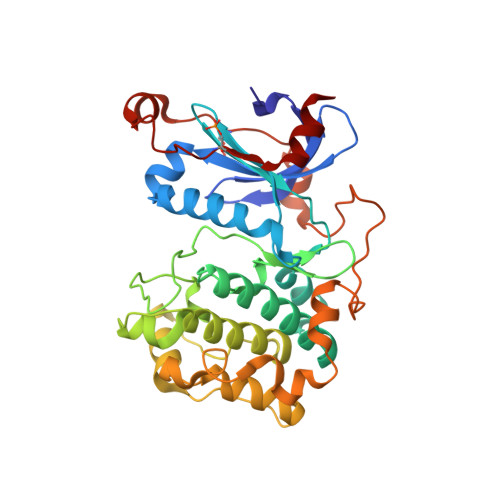
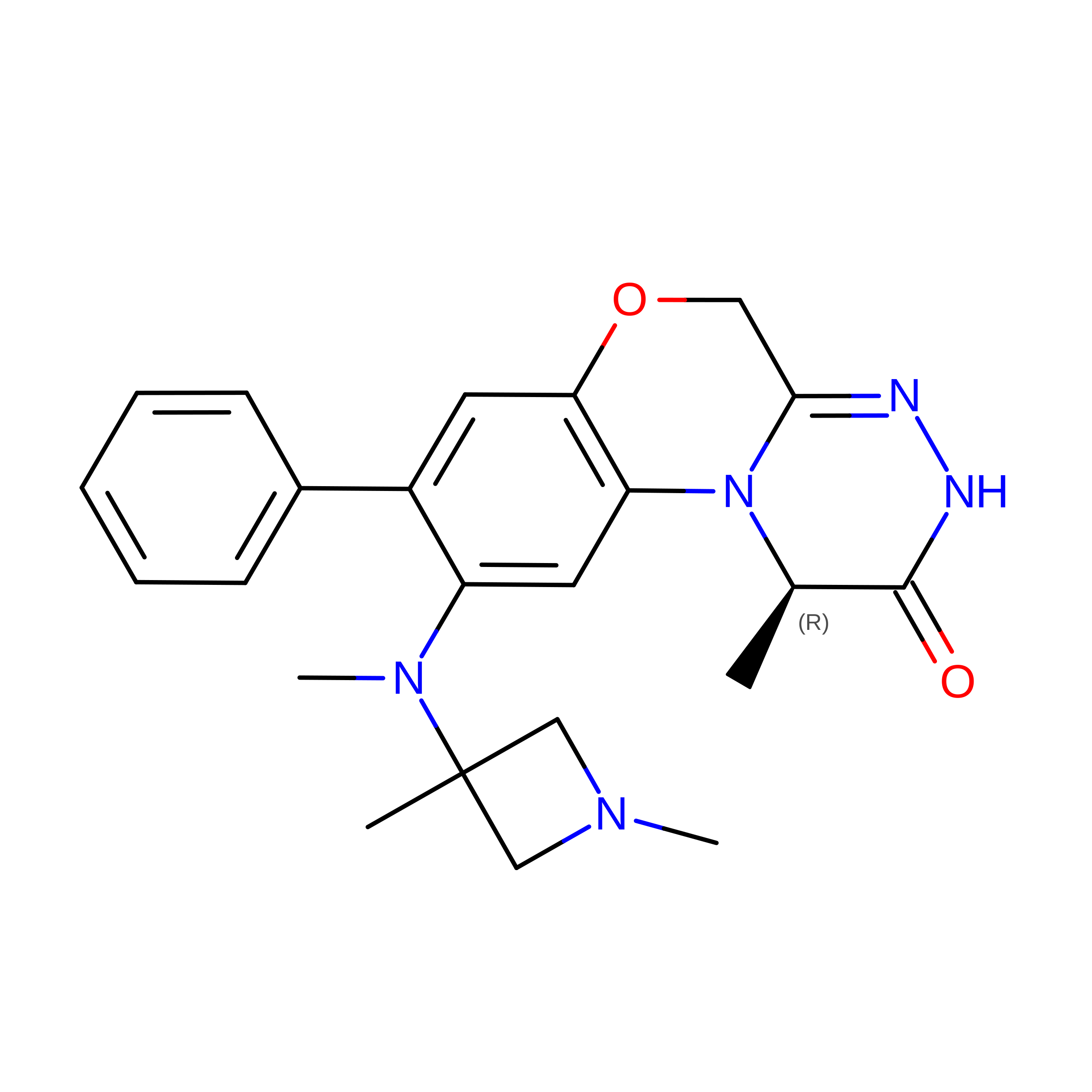
Human Protein Kinase C THETA IN COMPLEX WITH LIGAND COMPOUND 11a (6-[(1,3-Dimethyl-azetidin-3-yl)-methyl-amino]-4(R)-methyl-7-phenyl-2,10-dihydro-9-oxa-1,2,4a-triaza-phenanthren-3-one)


Experimental Data Snapshot

  • Method: X-RAY DIFFRACTION
  • Resolution: 2.61 Å
  • R-Value Free: 
    0.277 (Depositor), 0.252 (DCC) 
  • R-Value Work: 
    0.228 (Depositor) 
  • R-Value Observed: 
    0.230 (Depositor) 

wwPDB Validation 3D Report Full Report

Validation slider image for 4RA5

Ligand Structure Quality Assessment 


This is version 1.2 of the entry. See complete history

Literature

Optimized Protein Kinase C theta (PKC theta ) Inhibitors Reveal Only Modest Anti-inflammatory Efficacy in a Rodent Model of Arthritis.

George, D.M.Breinlinger, E.C.Argiriadi, M.A.Zhang, Y.Wang, J.Bansal-Pakala, P.Duignan, D.B.Honore, P.Lang, Q.Mittelstadt, S.Rundell, L.Schwartz, A.Sun, J.Edmunds, J.J.

(2015) J Med Chem 58: 333-346

  • DOI: https://doi.org/10.1021/jm5013006
  • Primary Citation Related Structures: 
    4RA4, 4RA5

  • PubMed Abstract: 

    We previously demonstrated that selective inhibition of protein kinase Cθ (PKCθ) with triazinone 1 resulted in dose-dependent reduction of paw swelling in a mouse model of arthritis.1,2 However, a high concentration was required for efficacy, thus providing only a minimal safety window. Herein we describe a strategy to deliver safer compounds based on the hypothesis that optimization of potency in concert with good oral pharmacokinetic (PK) properties would enable in vivo efficacy at reduced exposures, resulting in an improved safety window. Ultimately, transformation of 1 yielded analogues that demonstrated excellent potency and PK properties and fully inhibited IL-2 production in an acute model. In spite of good exposure, twice-a-day treatment with 17l in the glucose-6-phosphate isomerase chronic in vivo mouse model of arthritis yielded only moderate efficacy. On the basis of the exposure achieved, we conclude that PKCθ inhibition alone is insufficient for complete efficacy in this rodent arthritis model.


  • Organizational Affiliation
    • AbbVie Bioresearch Center , 381 Plantation Street, Worcester, Massachusetts 01605, United States.

Macromolecule Content 

  • Total Structure Weight: 80.15 kDa 
  • Atom Count: 5,520 
  • Modeled Residue Count: 646 
  • Deposited Residue Count: 668 
  • Unique protein chains: 1

Macromolecules

Find similar proteins by:|  3D Structure
Entity ID: 1
MoleculeChains  Sequence LengthOrganismDetailsImage
HUMAN PROTEIN KINASE C THETA
A, B
334Homo sapiensMutation(s): 2 
Gene Names: PRKCQPRKCT
EC: 2.7.11.13
UniProt & NIH Common Fund Data Resources
Find proteins for Q04759 (Homo sapiens)
Explore Q04759 
Go to UniProtKB:  Q04759
PHAROS:  Q04759
GTEx:  ENSG00000065675 
Entity Groups
Sequence Clusters30% Identity50% Identity70% Identity90% Identity95% Identity100% Identity
UniProt GroupQ04759
Sequence Annotations
Expand
Reference Sequence

Small Molecules

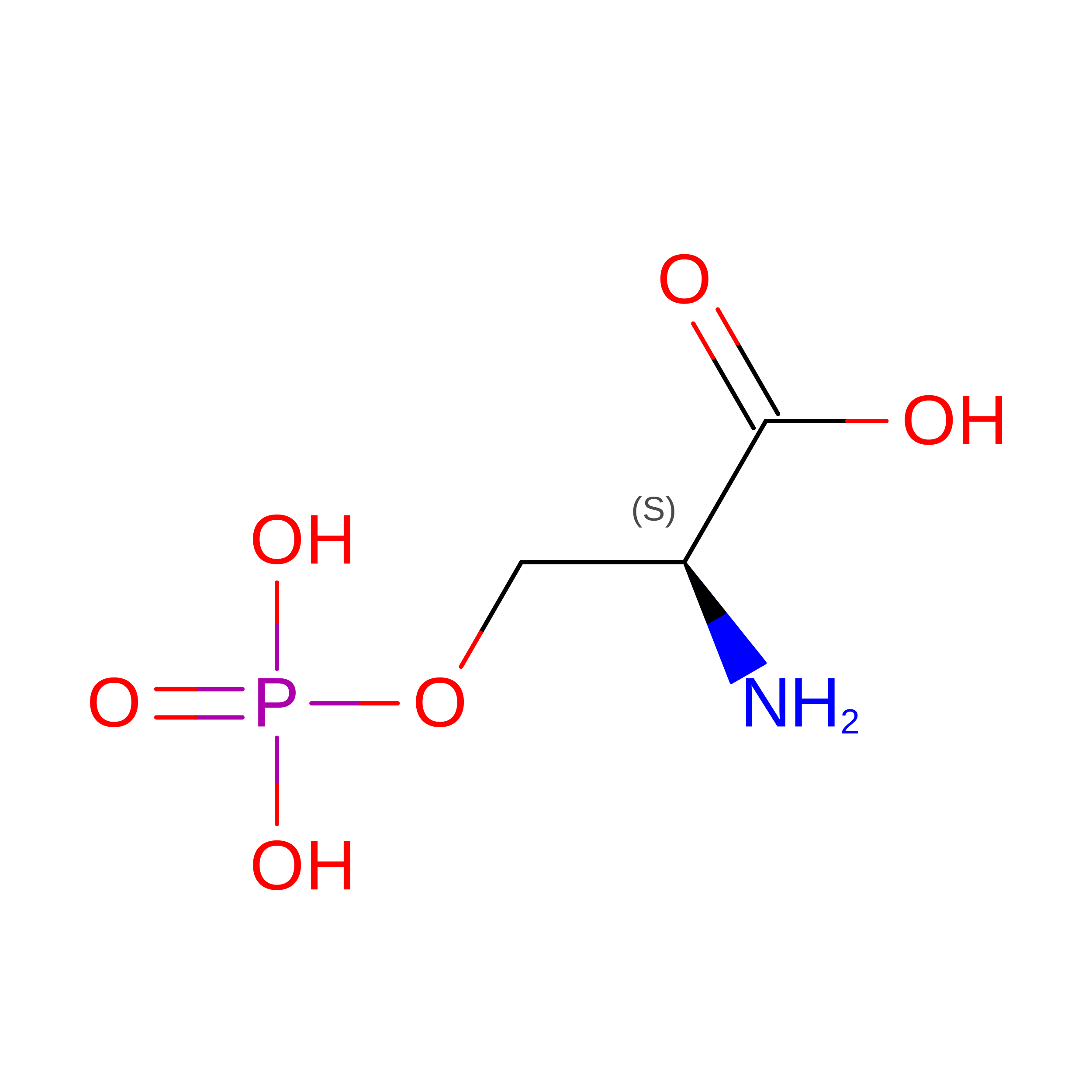
Modified Residues  1 Unique
IDChains TypeFormula2D DiagramParent
SEP
Query on SEP
A, B
L-PEPTIDE LINKINGC3 H8 N O6 PSER

Experimental Data & Validation

Experimental Data

  • Method: X-RAY DIFFRACTION
  • Resolution: 2.61 Å
  • R-Value Free:  0.277 (Depositor), 0.252 (DCC) 
  • R-Value Work:  0.228 (Depositor) 
  • R-Value Observed: 0.230 (Depositor) 
Space Group: P 21 21 21
Unit Cell:
Length ( Å )Angle ( ˚ )
a = 74.822α = 90
b = 77.026β = 90
c = 147.547γ = 90
Software Package:
Software NamePurpose
REFMACrefinement
XDSdata reduction
XSCALEdata scaling

Structure Validation

View Full Validation Report


Ligand Structure Quality Assessment 


Entry History 

Deposition Data

Revision History  (Full details and data files)

  • Version 1.0: 2014-10-08
    Type: Initial release
  • Version 1.1: 2015-02-04
    Changes: Database references
  • Version 1.2: 2024-11-06
    Changes: Data collection, Database references, Derived calculations, Structure summary