Download Mendeley
Structural, kinetic and proteomic characterization of acetyl phosphate-dependent bacterial protein acetylation.
Kuhn, M.L., Zemaitaitis, B., Hu, L.I., Sahu, A., Sorensen, D., Minasov, G., Lima, B.P., Scholle, M., Mrksich, M., Anderson, W.F., Gibson, B.W., Schilling, B., Wolfe, A.J.(2014) PLoS One 9: e94816-e94816
- PubMed: 24756028 Search on PubMedSearch on PubMed Central
- DOI: https://doi.org/10.1371/journal.pone.0094816
- Primary Citation Related Structures:
4K6A, 4MVA, 4MVJ - PubMed Abstract:
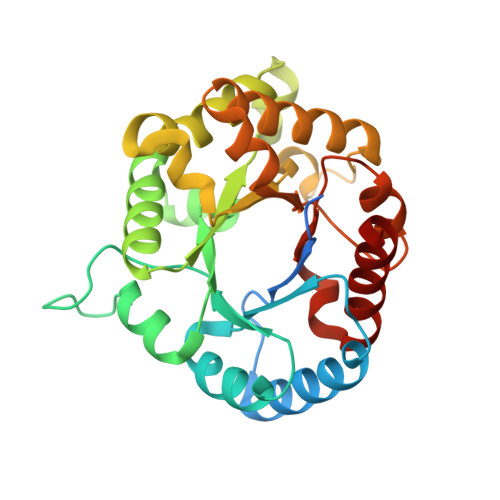
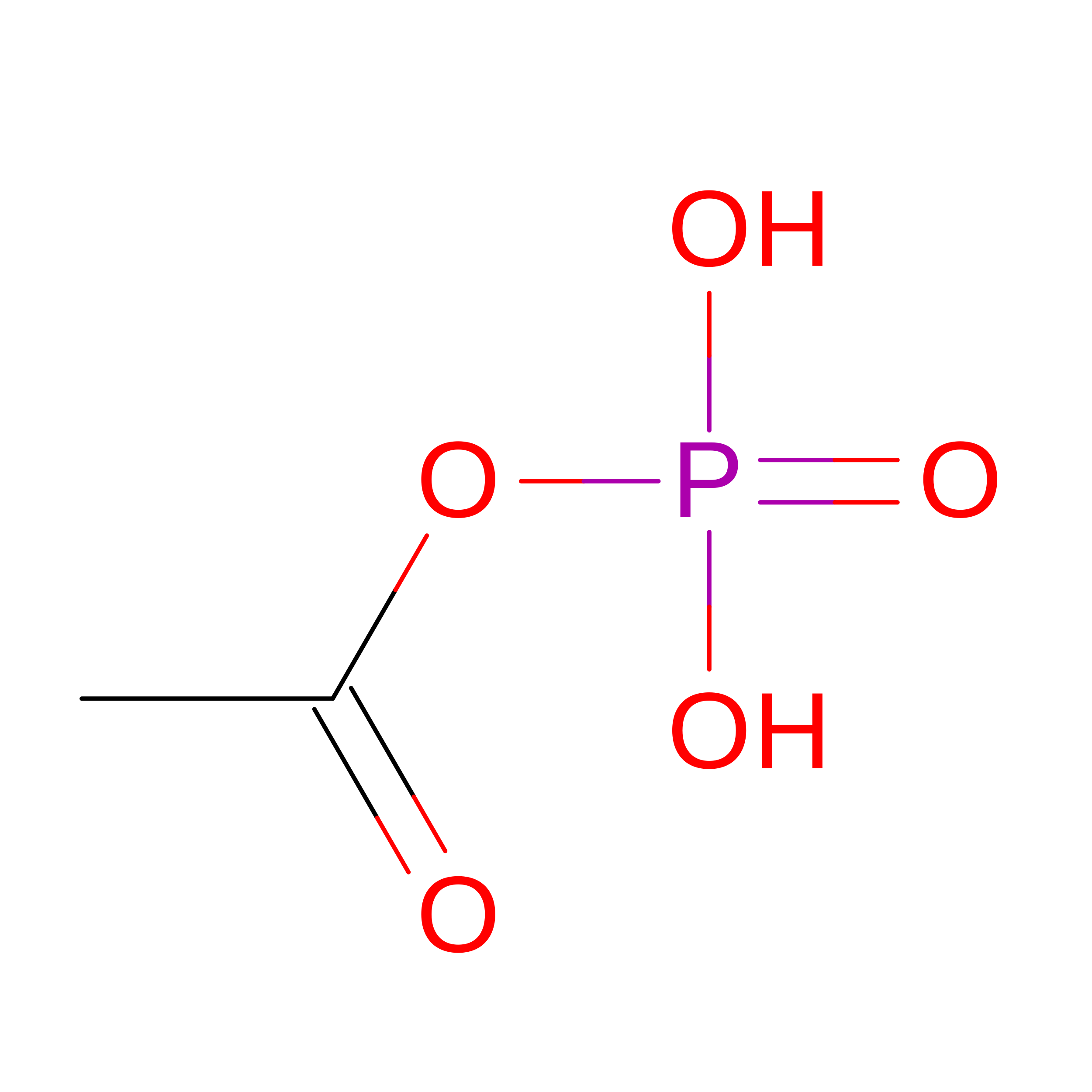
The emerging view of Nε-lysine acetylation in eukaryotes is of a relatively abundant post-translational modification (PTM) that has a major impact on the function, structure, stability and/or location of thousands of proteins involved in diverse cellular processes. This PTM is typically considered to arise by the donation of the acetyl group from acetyl-coenzyme A (acCoA) to the ε-amino group of a lysine residue that is reversibly catalyzed by lysine acetyltransferases and deacetylases. Here, we provide genetic, mass spectrometric, biochemical and structural evidence that Nε-lysine acetylation is an equally abundant and important PTM in bacteria. Applying a recently developed, label-free and global mass spectrometric approach to an isogenic set of mutants, we detected acetylation of thousands of lysine residues on hundreds of Escherichia coli proteins that participate in diverse and often essential cellular processes, including translation, transcription and central metabolism. Many of these acetylations were regulated in an acetyl phosphate (acP)-dependent manner, providing compelling evidence for a recently reported mechanism of bacterial Nε-lysine acetylation. These mass spectrometric data, coupled with observations made by crystallography, biochemistry, and additional mass spectrometry showed that this acP-dependent acetylation is both non-enzymatic and specific, with specificity determined by the accessibility, reactivity and three-dimensional microenvironment of the target lysine. Crystallographic evidence shows acP can bind to proteins in active sites and cofactor binding sites, but also potentially anywhere molecules with a phosphate moiety could bind. Finally, we provide evidence that acP-dependent acetylation can impact the function of critical enzymes, including glyceraldehyde-3-phosphate dehydrogenase, triosephosphate isomerase, and RNA polymerase.
- Center for Structural Genomics of Infectious Diseases, Department of Molecular Pharmacology and Biological Chemistry, Northwestern University Feinberg School of Medicine, Chicago, Illinois, United States of America.
Organizational Affiliation: