4C1W | pdb_00004c1w

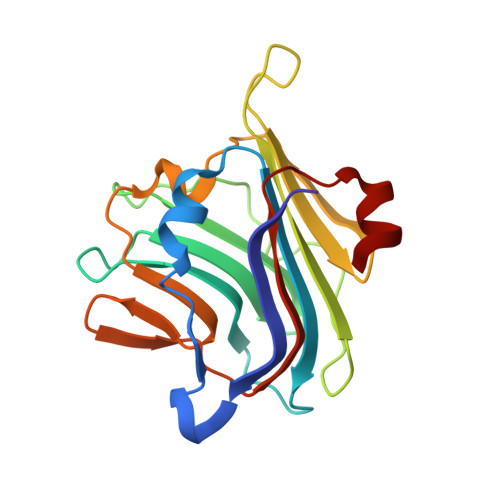
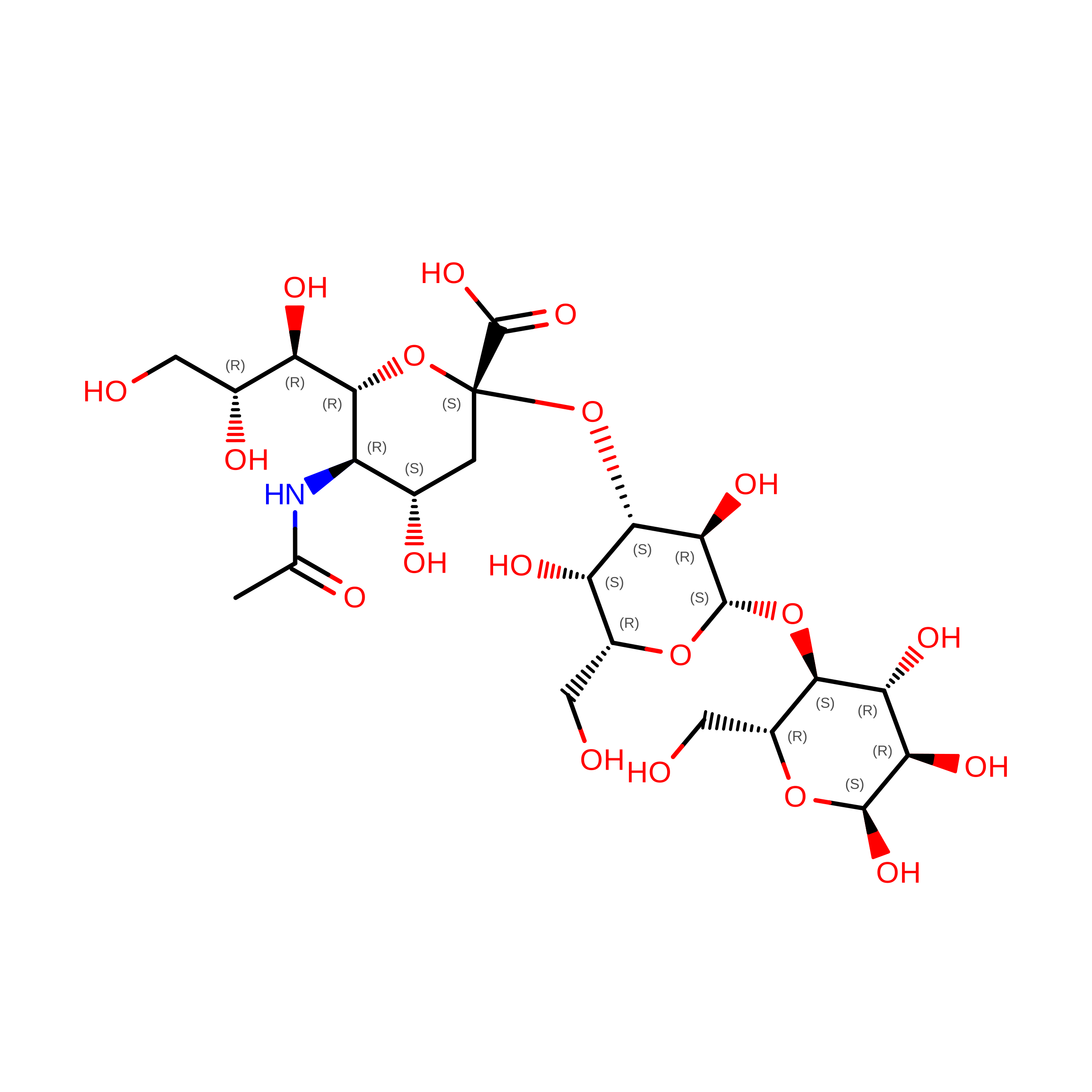
Carbohydrate binding domain from Streptococcus pneumoniae NanA sialidase complexed with 3'-sialyllactose


Experimental Data Snapshot

  • Method: X-RAY DIFFRACTION
  • Resolution: 1.84 Å
  • R-Value Free: 
    0.198 (Depositor), 0.195 (DCC) 
  • R-Value Work: 
    0.143 (Depositor), 0.141 (DCC) 
  • R-Value Observed: 
    0.145 (Depositor) 

wwPDB Validation 3D Report Full Report

Validation slider image for 4C1W

This is version 2.1 of the entry. See complete history

Literature

Prevention of Influenza by Targeting Host Receptors Using Engineered Proteins.

Connaris, H.Govorkova, E.A.Ligertwood, Y.Dutia, B.M.Yang, L.Tauber, S.Taylor, M.A.Alias, N.Hagan, R.Nash, A.A.Webster, R.G.Taylor, G.L.

(2014) Proc Natl Acad Sci U S A 111: 6401

  • DOI: https://doi.org/10.1073/pnas.1404205111
  • Primary Citation Related Structures: 
    4C1W

  • PubMed Abstract: 

    There is a need for new approaches for the control of influenza given the burden caused by annual seasonal outbreaks, the emergence of viruses with pandemic potential, and the development of resistance to current antiviral drugs. We show that multivalent biologics, engineered using carbohydrate-binding modules specific for sialic acid, mask the cell-surface receptor recognized by the influenza virus and protect mice from a lethal challenge with 2009 pandemic H1N1 influenza virus. The most promising biologic protects mice when given as a single 1-μg intranasal dose 7 d in advance of viral challenge. There also is sufficient virus replication to establish an immune response, potentially protecting the animal from future exposure to the virus. Furthermore, the biologics appear to stimulate inflammatory mediators, and this stimulation may contribute to their protective ability. Our results suggest that this host-targeted approach could provide a front-line prophylactic that has the potential to protect against any current and future influenza virus and possibly against other respiratory pathogens that use sialic acid as a receptor.


  • Organizational Affiliation
    • Biomedical Sciences Research Complex, University of St Andrews, North Haugh, St Andrews, Fife KY16 9ST, United Kingdom.

Macromolecule Content 

  • Total Structure Weight: 21.82 kDa 
  • Atom Count: 1,749 
  • Modeled Residue Count: 188 
  • Deposited Residue Count: 188 
  • Unique protein chains: 1

Macromolecules

Find similar proteins by:|  3D Structure
Entity ID: 1
MoleculeChains  Sequence LengthOrganismDetailsImage
NEURAMINIDASE188Streptococcus pneumoniaeMutation(s): 0 
EC: 3.2.1.18
UniProt
Find proteins for Q4LB86 (Streptococcus pneumoniae)
Explore Q4LB86 
Go to UniProtKB:  Q4LB86
Entity Groups
Sequence Clusters30% Identity50% Identity70% Identity90% Identity95% Identity100% Identity
UniProt GroupQ4LB86
Sequence Annotations
Expand
Reference Sequence

Oligosaccharides

Help  
Entity ID: 2
MoleculeChains Length2D Diagram GlycosylationD Interactions
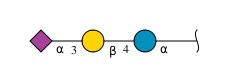
N-acetyl-alpha-neuraminic acid-(2-3)-beta-D-galactopyranose-(1-4)-alpha-D-glucopyranose
B
3N/A
Glycosylation Resources
GlyTouCan: G92323ZH
GlyCosmos: G92323ZH
GlyGen: G92323ZH

Small Molecules

Ligands 1 Unique
IDChains Name / Formula / InChI Key2D Diagram3D Interactions
TRS

Query on TRS


Download:Ideal Coordinates CCD File
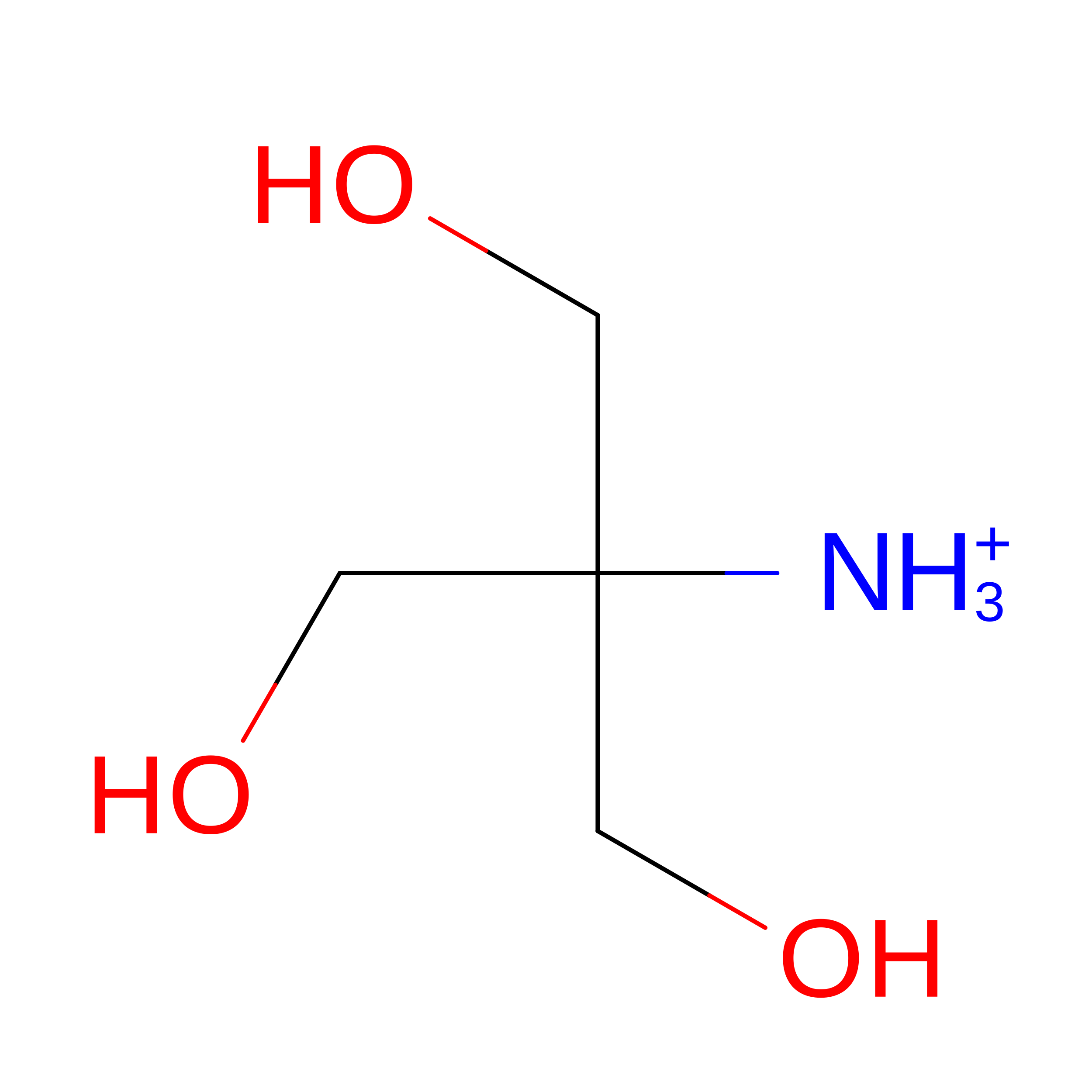
C [auth A]2-AMINO-2-HYDROXYMETHYL-PROPANE-1,3-DIOL
C4 H12 N O3
LENZDBCJOHFCAS-UHFFFAOYSA-O

Biologically Interesting Molecules (External Reference) 

1 Unique

Experimental Data & Validation

Experimental Data

  • Method: X-RAY DIFFRACTION
  • Resolution: 1.84 Å
  • R-Value Free:  0.198 (Depositor), 0.195 (DCC) 
  • R-Value Work:  0.143 (Depositor), 0.141 (DCC) 
  • R-Value Observed: 0.145 (Depositor) 
Space Group: P 1 21 1
Unit Cell:
Length ( Å )Angle ( ˚ )
a = 42.567α = 90
b = 44.517β = 97
c = 42.982γ = 90
Software Package:
Software NamePurpose
REFMACrefinement
HKL-2000data reduction
SCALEPACKdata scaling

Structure Validation

View Full Validation Report


Entry History 

Deposition Data

Revision History  (Full details and data files)

  • Version 1.0: 2014-08-27
    Type: Initial release
  • Version 2.0: 2020-07-29
    Type: Remediation
    Reason: Carbohydrate remediation
    Changes: Atomic model, Data collection, Derived calculations, Non-polymer description, Other, Structure summary
  • Version 2.1: 2024-05-08
    Changes: Data collection, Database references, Structure summary