4AAG | pdb_00004aag

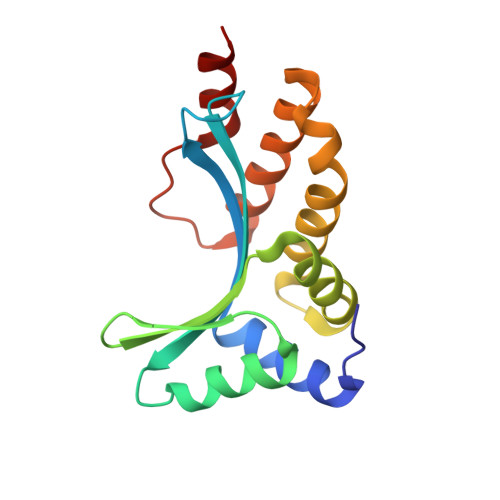
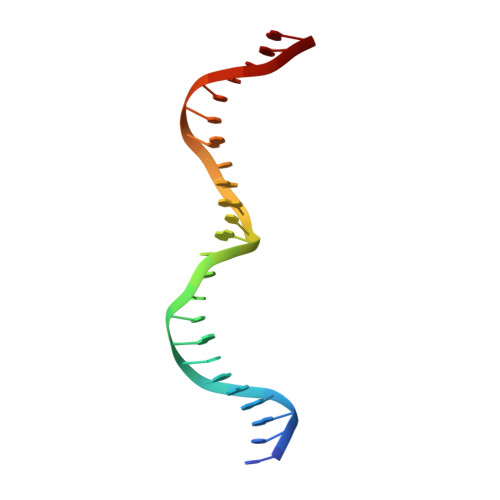
Crystal structure of the mutant D75N I-CreI in complex with its wild- type target in presence of Ca at the active site (The four central bases, 2NN region, are composed by GTAC from 5' to 3')


Experimental Data Snapshot

  • Method: X-RAY DIFFRACTION
  • Resolution: 2.80 Å
  • R-Value Free: 
    0.250 (Depositor), 0.243 (DCC) 
  • R-Value Work: 
    0.173 (Depositor), 0.168 (DCC) 
  • R-Value Observed: 
    0.181 (Depositor) 

Starting Model: experimental
View more details

wwPDB Validation 3D Report Full Report

Validation slider image for 4AAG

This is version 1.2 of the entry. See complete history. 

Literature

Non-Specific Protein-DNA Interactions Control I-Crei Target Binding and Cleavage.

Molina, R., Redondo, P., Stella, S., Marenchino, M., D'Abramo, M., Gervasio, F.L., Charles Epinat, J., Valton, J., Grizot, S., Duchateau, P., Prieto, J., Montoya, G.

(2012) Nucleic Acids Res 40: 6936

  • DOI: https://doi.org/10.1093/nar/gks320
  • Primary Citation Related Structures: 
    4AAB, 4AAD, 4AAE, 4AAF, 4AAG

  • PubMed Abstract: 

    Homing endonucleases represent protein scaffolds that provide powerful tools for genome manipulation, as these enzymes possess a very low frequency of DNA cleavage in eukaryotic genomes due to their high specificity. The basis of protein-DNA recognition must be understood to generate tailored enzymes that target the DNA at sites of interest. Protein-DNA interaction engineering of homing endonucleases has demonstrated the potential of these approaches to create new specific instruments to target genes for inactivation or repair. Protein-DNA interface studies have been focused mostly on specific contacts between amino acid side chains and bases to redesign the binding interface. However, it has been shown that 4 bp in the central DNA sequence of the 22-bp substrate of a homing endonuclease (I-CreI), which do not show specific protein-DNA interactions, is not devoid of content information. Here, we analyze the mechanism of target discrimination in this substrate region by the I-CreI protein, determining how it can occur independently of the specific protein-DNA interactions. Our data suggest the important role of indirect readout in this substrate region, opening the possibility for a fully rational search of new target sequences, thus improving the development of redesigned enzymes for therapeutic and biotechnological applications.


  • Organizational Affiliation: 
    • Structural Biology and Biocomputing Programme, Spanish National Cancer Research Centre (CNIO), Macromolecular Crystallography Group, Madrid, Spain.

Macromolecule Content 

  • Total Structure Weight: 49.85 kDa 
  • Atom Count: 3,479 
  • Modeled Residue Count: 352 
  • Deposited Residue Count: 352 
  • Unique protein chains: 1
  • Unique nucleic acid chains: 1

Macromolecules


Find similar proteins by:|  3D Structure
Entity ID: 1
MoleculeChains  Sequence LengthOrganismDetailsImage
DNA ENDONUCLEASE I-CREI
A, B
152Chlamydomonas reinhardtiiMutation(s): 1 
EC: 3.1
UniProt
Find proteins for P05725 (Chlamydomonas reinhardtii)
Explore P05725 
Go to UniProtKB:  P05725
Entity Groups
Sequence Clusters30% Identity50% Identity70% Identity90% Identity95% Identity100% Identity
UniProt GroupP05725
Sequence Annotations
Expand
Reference Sequence
Find similar nucleic acids by:  Sequence
Entity ID: 2
MoleculeChains LengthOrganismImage
5'-D(*TP*CP*AP*AP*AP*AP*CP*GP*TP*CP*GP*TP*AP*CP *GP*AP*CP*GP*TP*TP*TP*TP*GP*A)-3'C [auth E],
D [auth G]
24synthetic construct
Sequence Annotations
Expand
Reference Sequence

Experimental Data & Validation

Experimental Data

  • Method: X-RAY DIFFRACTION
  • Resolution: 2.80 Å
  • R-Value Free:  0.250 (Depositor), 0.243 (DCC) 
  • R-Value Work:  0.173 (Depositor), 0.168 (DCC) 
  • R-Value Observed: 0.181 (Depositor) 
Space Group: P 2 21 21
Unit Cell:
Length ( Å )Angle ( ˚ )
a = 47.469α = 90
b = 71.413β = 90
c = 171.214γ = 90
Software Package:
Software NamePurpose
PHENIXrefinement
XDSdata reduction
SCALAdata scaling
PHASERphasing

Structure Validation

View Full Validation Report


Entry History 

Revision History  (Full details and data files)

  • Version 1.0: 2012-05-02
    Type: Initial release
  • Version 1.1: 2012-08-22
    Changes: Data collection, Database references
  • Version 1.2: 2023-12-20
    Changes: Data collection, Database references, Derived calculations, Other, Refinement description