3NG4 | pdb_00003ng4

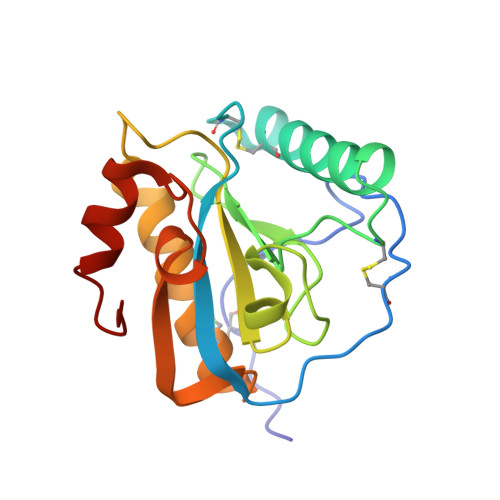
Ternary complex of peptidoglycan recognition protein (PGRP-S) with Maltose and N-Acetylglucosamine at 1.7 A Resolution


Experimental Data Snapshot

  • Method: X-RAY DIFFRACTION
  • Resolution: 1.73 Å
  • R-Value Free: 
    0.244 (Depositor), 0.248 (DCC) 
  • R-Value Work: 
    0.200 (Depositor), 0.204 (DCC) 
  • R-Value Observed: 
    0.203 (Depositor) 

Starting Model: experimental
View more details

wwPDB Validation 3D Report Full Report

Validation slider image for 3NG4

Ligand Structure Quality Assessment 


This is version 2.2 of the entry. See complete history

Literature

Multiligand specificity of pathogen-associated molecular pattern-binding site in peptidoglycan recognition protein

Sharma, P.Dube, D.Sinha, M.Mishra, B.Dey, S.Mal, G.Pathak, K.M.Kaur, P.Sharma, S.Singh, T.P.

(2011) J Biological Chem 286: 31723-31730

  • DOI: https://doi.org/10.1074/jbc.M111.264374
  • Primary Citation Related Structures: 
    3NG4, 3NW3

  • PubMed Abstract: 

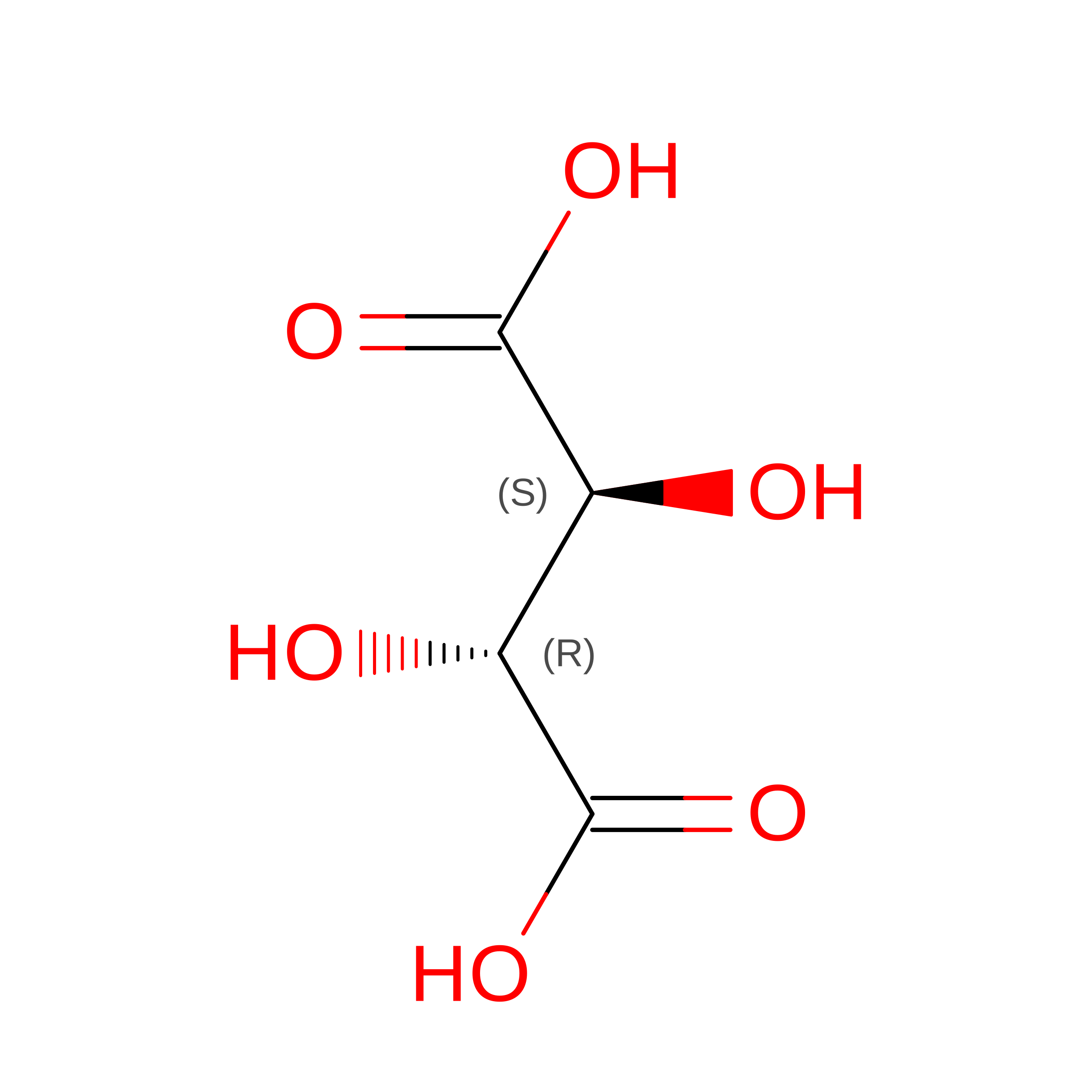
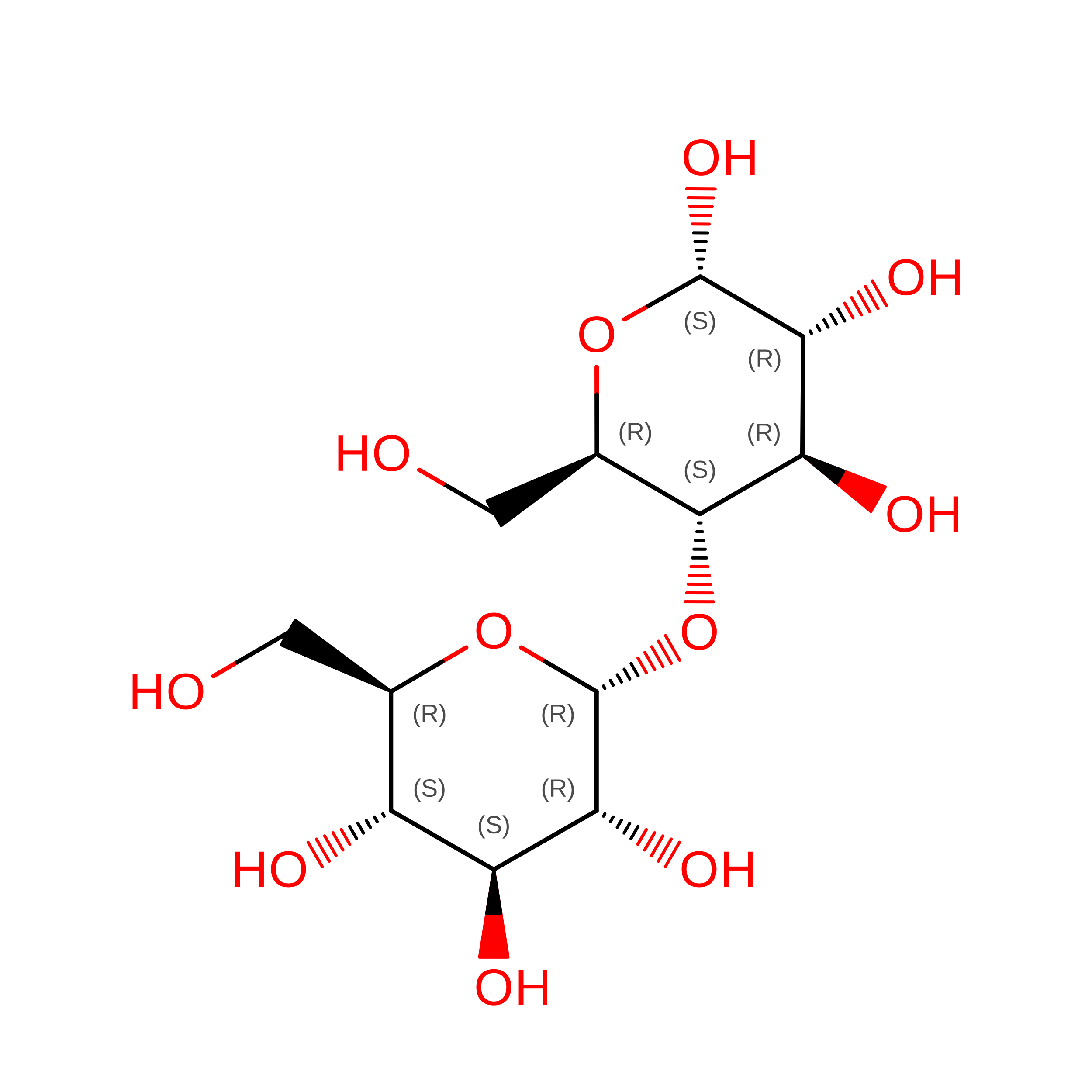
    The peptidoglycan recognition protein PGRP-S is an innate immunity molecule that specifically interacts with microbial peptidoglycans and other pathogen-associated molecular patterns. We report here two structures of the unique tetrameric camel PGRP-S (CPGRP-S) complexed with (i) muramyl dipeptide (MDP) at 2.5 Å resolution and (ii) GlcNAc and β-maltose at 1.7Å resolution. The binding studies carried out using surface plasmon resonance indicated that CPGRP-S binds to MDP with a dissociation constant of 10(-7) M, whereas the binding affinities for GlcNAc and β-maltose separately are in the range of 10(-4) M to 10(-5) M, whereas the dissociation constant for the mixture of GlcNAc and maltose was estimated to be 10(-6) M. The data from bacterial suspension culture experiments showed a significant inhibition of the growth of Staphylococcus aureus cells when CPGRP-S was added to culture medium. The ELISA experiment showed that the amount of MDP-induced production of TNF-α and IL-6 decreased considerably after the introduction of CPGRP-S. The crystal structure determinations of (i) a binary complex with MDP and (ii) a ternary complex with GlcNAc and β-maltose revealed that MDP, GlcNAc, and β-maltose bound to CPGRP-S in the ligand binding cleft, which is situated at the interface of molecules C and D of the homotetramer formed by four protein molecules A, B, C, and D. In the binary complex, the muramyl moiety of MDP is observed at the C-D interface, whereas the peptide chain protrudes into the center of tetramer. In the ternary complex, GlcNAc and β-maltose occupy distinct non-overlapping positions belonging to different subsites.


  • Organizational Affiliation
    • Department of Biophysics, All India Institute of Medical Sciences, New Delhi, India 110029.

Macromolecule Content 

  • Total Structure Weight: 76.85 kDa 
  • Atom Count: 6,135 
  • Modeled Residue Count: 684 
  • Deposited Residue Count: 684 
  • Unique protein chains: 1

Macromolecules

Find similar proteins by:|  3D Structure
Entity ID: 1
MoleculeChains  Sequence LengthOrganismDetailsImage
Peptidoglycan recognition protein 1
A, B, C, D
171Camelus dromedariusMutation(s): 0 
UniProt
Find proteins for Q9GK12 (Camelus dromedarius)
Explore Q9GK12 
Go to UniProtKB:  Q9GK12
Entity Groups
Sequence Clusters30% Identity50% Identity70% Identity90% Identity95% Identity100% Identity
UniProt GroupQ9GK12
Sequence Annotations
Expand
Reference Sequence

Oligosaccharides

Help  
Entity ID: 2
MoleculeChains Length2D Diagram GlycosylationD Interactions
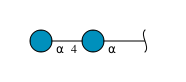
alpha-D-glucopyranose-(1-4)-alpha-D-glucopyranose
E
2N/A
Glycosylation Resources
GlyTouCan: G07411ON
GlyCosmos: G07411ON

Biologically Interesting Molecules (External Reference) 

1 Unique

Experimental Data & Validation

Experimental Data

  • Method: X-RAY DIFFRACTION
  • Resolution: 1.73 Å
  • R-Value Free:  0.244 (Depositor), 0.248 (DCC) 
  • R-Value Work:  0.200 (Depositor), 0.204 (DCC) 
  • R-Value Observed: 0.203 (Depositor) 
Space Group: I 2 2 2
Unit Cell:
Length ( Å )Angle ( ˚ )
a = 87.128α = 90
b = 100.784β = 90
c = 161.85γ = 90
Software Package:
Software NamePurpose
HKL-2000data collection
AMoREphasing
REFMACrefinement
HKL-2000data reduction
HKL-2000data scaling

Structure Validation

View Full Validation Report


Ligand Structure Quality Assessment 


Entry History 

Deposition Data

Revision History  (Full details and data files)

  • Version 1.0: 2010-07-14
    Type: Initial release
  • Version 1.1: 2011-07-13
    Changes: Version format compliance
  • Version 1.2: 2012-06-13
    Changes: Database references
  • Version 2.0: 2020-07-29
    Type: Remediation
    Reason: Carbohydrate remediation
    Changes: Atomic model, Data collection, Derived calculations, Non-polymer description, Structure summary
  • Version 2.1: 2023-11-01
    Changes: Data collection, Database references, Refinement description, Structure summary
  • Version 2.2: 2024-10-09
    Changes: Structure summary