3CZ7 | pdb_00003cz7

Molecular Basis for the Autoregulation of the Protein Acetyl Transferase Rtt109


Experimental Data Snapshot

  • Method: X-RAY DIFFRACTION
  • Resolution: 2.00 Å
  • R-Value Free: 
    0.189 (Depositor), 0.187 (DCC) 
  • R-Value Work: 
    0.156 (Depositor), 0.156 (DCC) 
  • R-Value Observed: 
    0.158 (Depositor) 

wwPDB Validation 3D Report Full Report

Validation slider image for 3CZ7

Ligand Structure Quality Assessment 


This is version 1.3 of the entry. See complete history

Literature

Molecular basis for the autoregulation of the protein acetyl transferase Rtt109

Stavropoulos, P.Nagy, V.Blobel, G.Hoelz, A.

(2008) Proc Natl Acad Sci U S A 105: 12236-12241

  • DOI: https://doi.org/10.1073/pnas.0805813105
  • Primary Citation Related Structures: 
    3CZ7

  • PubMed Abstract: 

    Rtt109 is a protein acetyltransferase (PAT) that is responsible for the acetylation of lysine-56 of histone 3 (H3K56) in yeast. H3K56 acetylation has been implicated in the weakening of the interaction between the histone core and the surrounding DNA in the nucleosomal particle. Rtt109, in cooperation with various histone chaperones, promotes genomic stability and is required for resistance to DNA damaging agents. Here, we present the crystal structure of Rtt109 in complex with acetyl-CoA at a 2.0-A resolution. Rtt109 consists of a core PAT domain, which binds the acetyl-CoA cofactor. A second domain, the activation domain, is tightly associated with the PAT domain. Autoacetylation of lysine-290 within the activation domain is required for stabilizing the interaction between the two domains and is essential for catalysis. Biochemical analysis demonstrates the requirement of a loop within the PAT domain for the binding of the histone chaperone Vps75, and mutational analysis identifies key residues for catalysis. We propose a model in which the autoacetylation of Rtt109 is crucial for the regulation of its catalytic activity.


  • Organizational Affiliation
    • Laboratory of Cell Biology, Rockefeller University and Howard Hughes Medical Institute, 1230 York Avenue, New York, NY 10065, USA.

Macromolecule Content 

  • Total Structure Weight: 42.99 kDa 
  • Atom Count: 3,287 
  • Modeled Residue Count: 364 
  • Deposited Residue Count: 364 
  • Unique protein chains: 1

Macromolecules

Find similar proteins by:|  3D Structure
Entity ID: 1
MoleculeChains  Sequence LengthOrganismDetailsImage
Regulator of Ty1 transposition protein 109364Saccharomyces cerevisiaeMutation(s): 0 
Gene Names: RTT109KIM2REM50
EC: 2.3.1.48
UniProt
Find proteins for Q07794 (Saccharomyces cerevisiae (strain ATCC 204508 / S288c))
Explore Q07794 
Go to UniProtKB:  Q07794
Entity Groups
Sequence Clusters30% Identity50% Identity70% Identity90% Identity95% Identity100% Identity
UniProt GroupQ07794
Sequence Annotations
Expand
Reference Sequence

Small Molecules

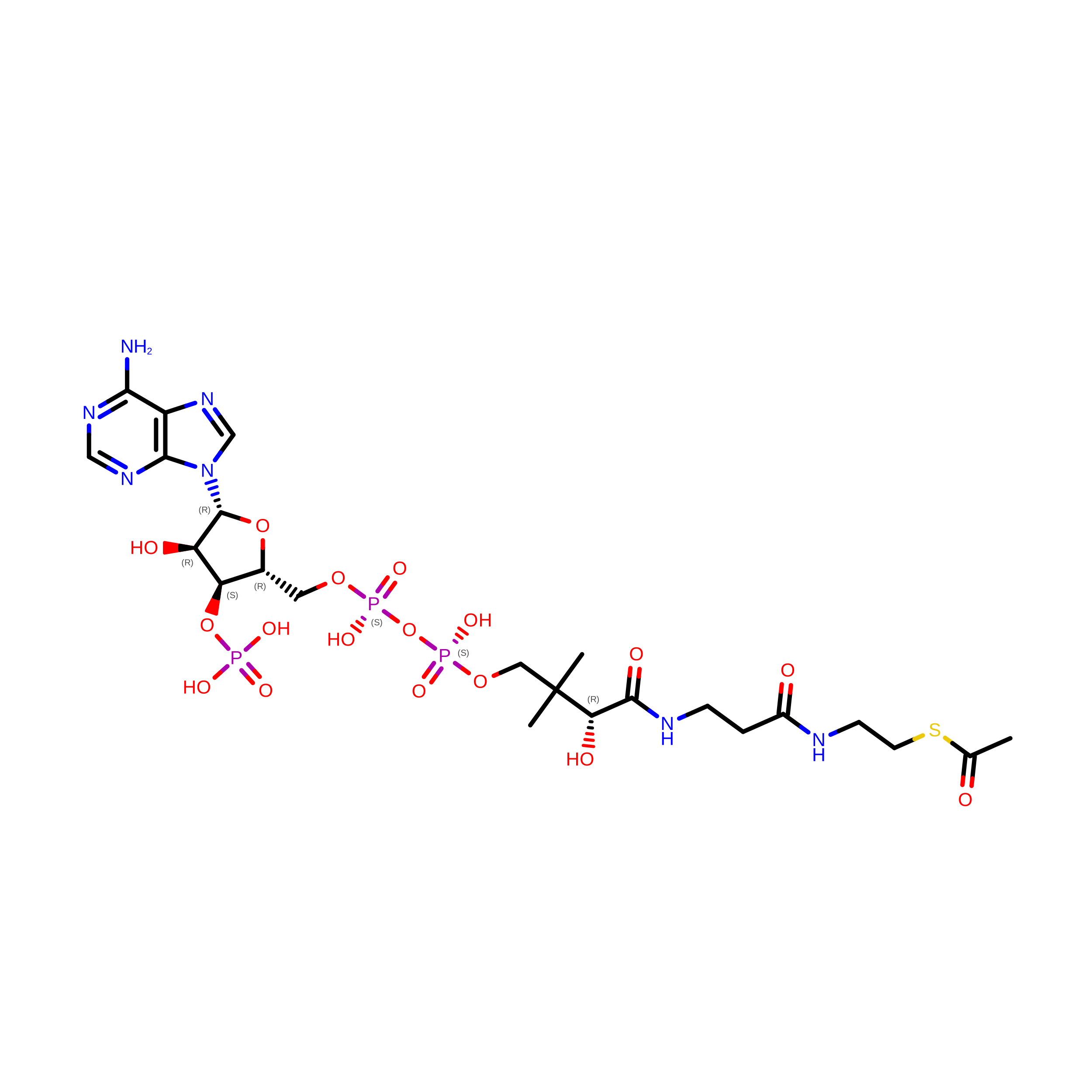
Ligands 1 Unique
IDChains Name / Formula / InChI Key2D Diagram3D Interactions
ACO

Query on ACO


Download:Ideal Coordinates CCD File
B [auth A]ACETYL COENZYME *A
C23 H38 N7 O17 P3 S
ZSLZBFCDCINBPY-ZSJPKINUSA-N
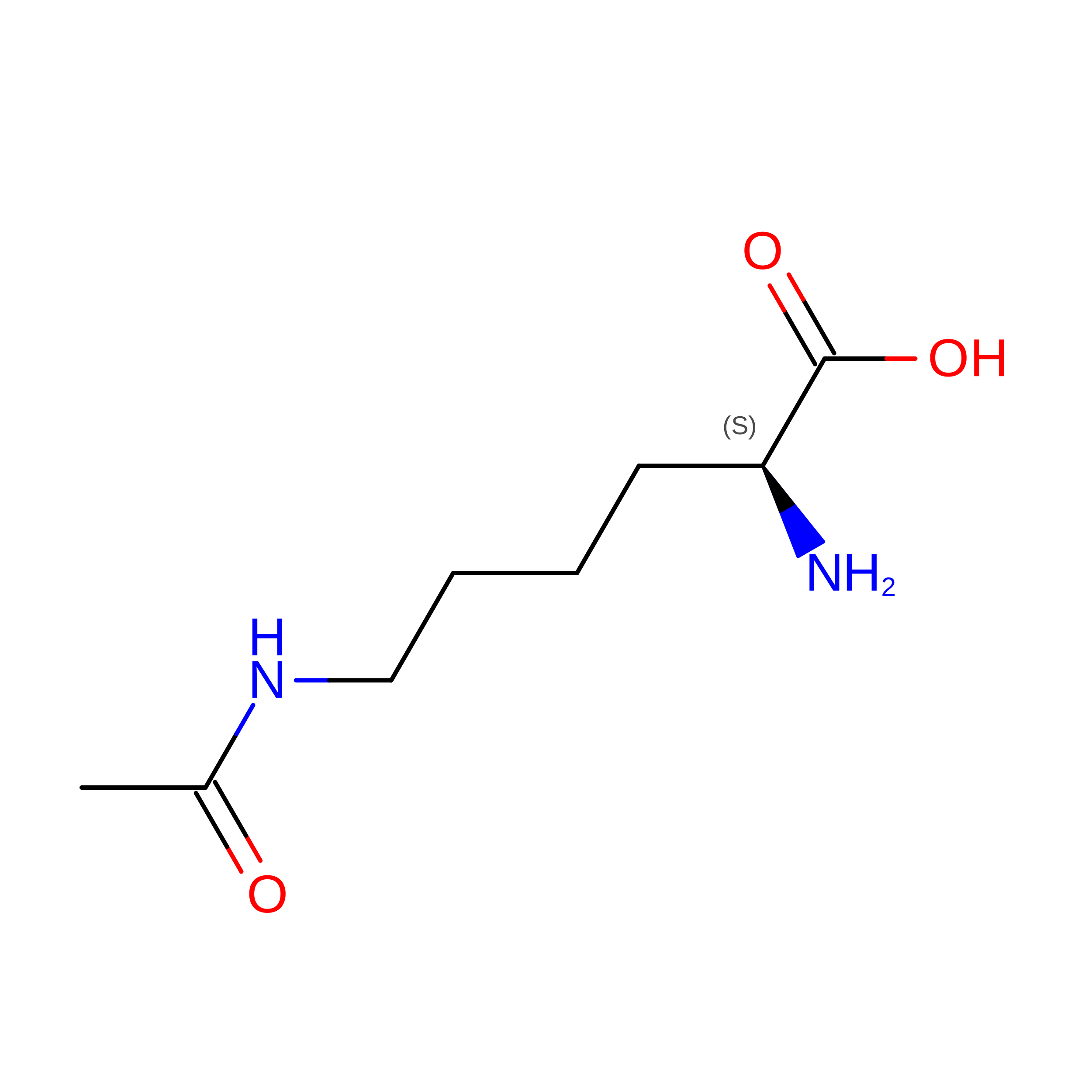
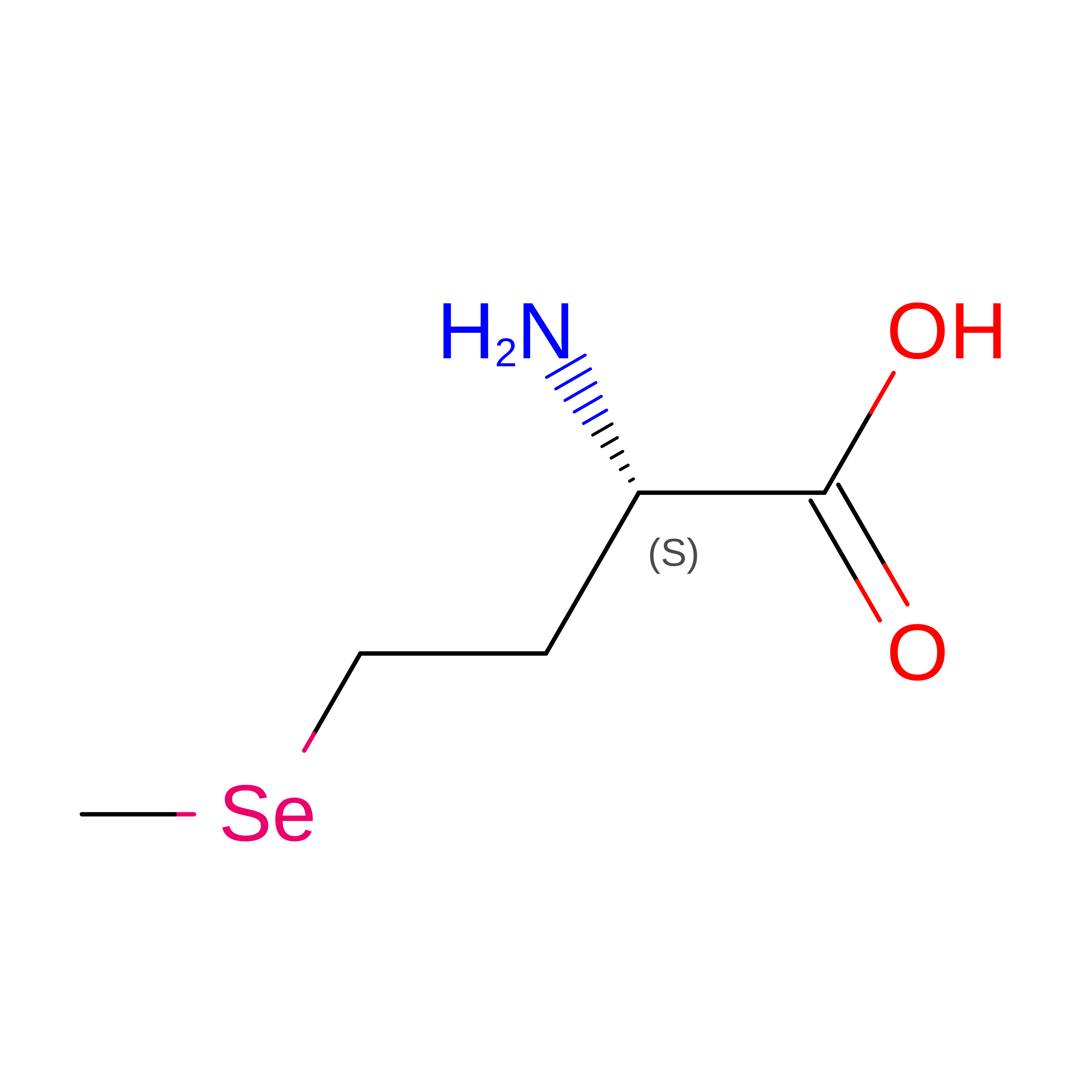
Modified Residues  2 Unique
IDChains TypeFormula2D DiagramParent
ALY
Query on ALY
A
L-PEPTIDE LINKINGC8 H16 N2 O3LYS
MSE
Query on MSE
A
L-PEPTIDE LINKINGC5 H11 N O2 SeMET

Experimental Data & Validation

Experimental Data

  • Method: X-RAY DIFFRACTION
  • Resolution: 2.00 Å
  • R-Value Free:  0.189 (Depositor), 0.187 (DCC) 
  • R-Value Work:  0.156 (Depositor), 0.156 (DCC) 
  • R-Value Observed: 0.158 (Depositor) 
Space Group: C 1 2 1
Unit Cell:
Length ( Å )Angle ( ˚ )
a = 120.782α = 90
b = 68.886β = 106.65
c = 55.241γ = 90
Software Package:
Software NamePurpose
REFMACrefinement

Structure Validation

View Full Validation Report


Ligand Structure Quality Assessment 


Entry History 

Deposition Data

Revision History  (Full details and data files)

  • Version 1.0: 2008-09-09
    Type: Initial release
  • Version 1.1: 2011-07-13
    Changes: Advisory, Version format compliance
  • Version 1.2: 2017-08-16
    Changes: Source and taxonomy
  • Version 1.3: 2024-11-13
    Changes: Data collection, Database references, Derived calculations, Structure summary