Download Mendeley
Pharmacological and x-ray structural characterization of a novel selective androgen receptor modulator: potent hyperanabolic stimulation of skeletal muscle with hypostimulation of prostate in rats.
Ostrowski, J., Kuhns, J.E., Lupisella, J.A., Manfredi, M.C., Beehler, B.C., Krystek, S.R., Bi, Y., Sun, C., Seethala, R., Golla, R., Sleph, P.G., Fura, A., An, Y., Kish, K.F., Sack, J.S., Mookhtiar, K.A., Grover, G.J., Hamann, L.G.(2007) Endocrinology 148: 4-12
- PubMed: 17008401 Search on PubMed
- DOI: https://doi.org/10.1210/en.2006-0843
- Primary Citation Related Structures:
2NW4 - PubMed Abstract:
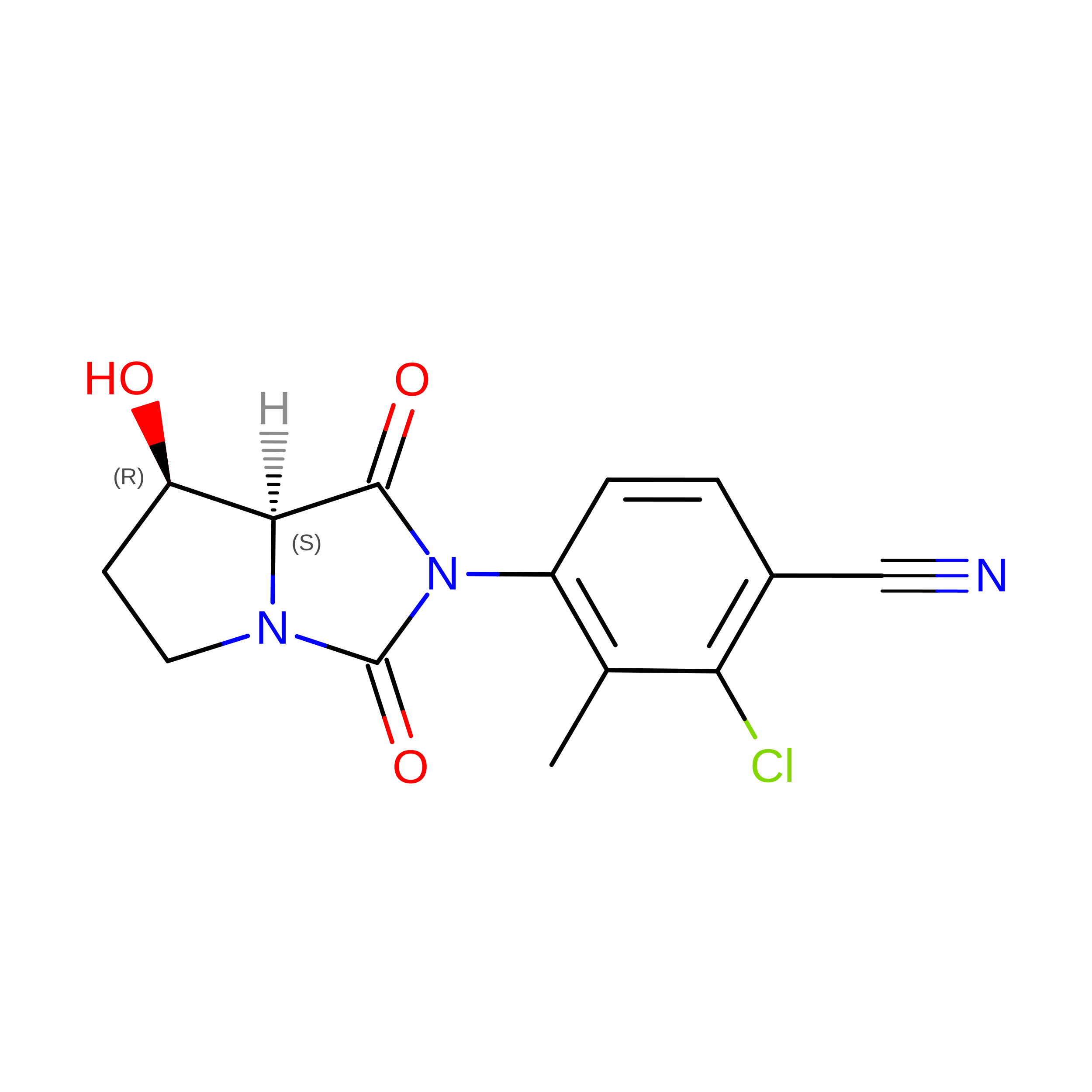
A novel, highly potent, orally active, nonsteroidal tissue selective androgen receptor (AR) modulator (BMS-564929) has been identified, and this compound has been advanced to clinical trials for the treatment of age-related functional decline. BMS-564929 is a subnanomolar AR agonist in vitro, is highly selective for the AR vs. other steroid hormone receptors, and exhibits no significant interactions with SHBG or aromatase. Dose response studies in castrated male rats show that BMS-564929 is substantially more potent than testosterone (T) in stimulating the growth of the levator ani muscle, and unlike T, highly selective for muscle vs. prostate. Key differences in the binding interactions of BMS-564929 with the AR relative to the native hormones were revealed through x-ray crystallography, including several unique contacts located in specific helices of the ligand binding domain important for coregulatory protein recruitment. Results from additional pharmacological studies effectively exclude alternative mechanistic contributions to the observed tissue selectivity of this unique, orally active androgen. Because concerns regarding the potential hyperstimulatory effects on prostate and an inconvenient route of administration are major drawbacks that limit the clinical use of T, the potent oral activity and tissue selectivity exhibited by BMS-564929 are expected to yield a clinical profile that provides the demonstrated beneficial effects of T in muscle and other tissues with a more favorable safety window.
- Department of Metabolic Diseases, Bristol-Myers Squibb, Pharmaceutical Research Institute, Princeton, NJ 08543, USA.
Organizational Affiliation: