2I0T | pdb_00002i0t

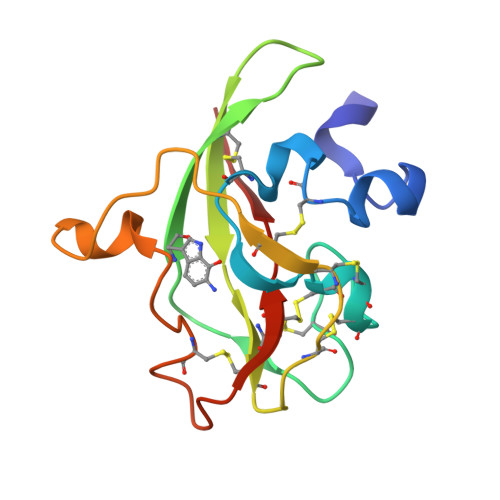
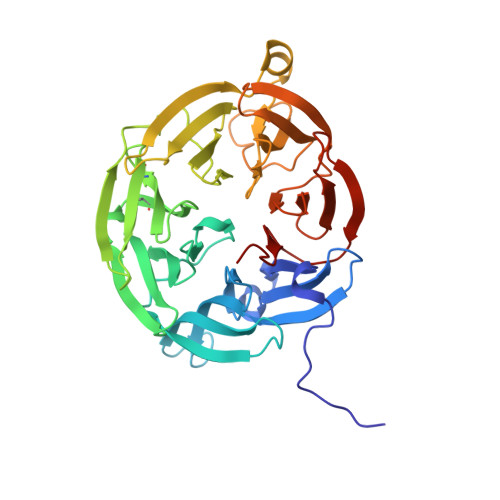
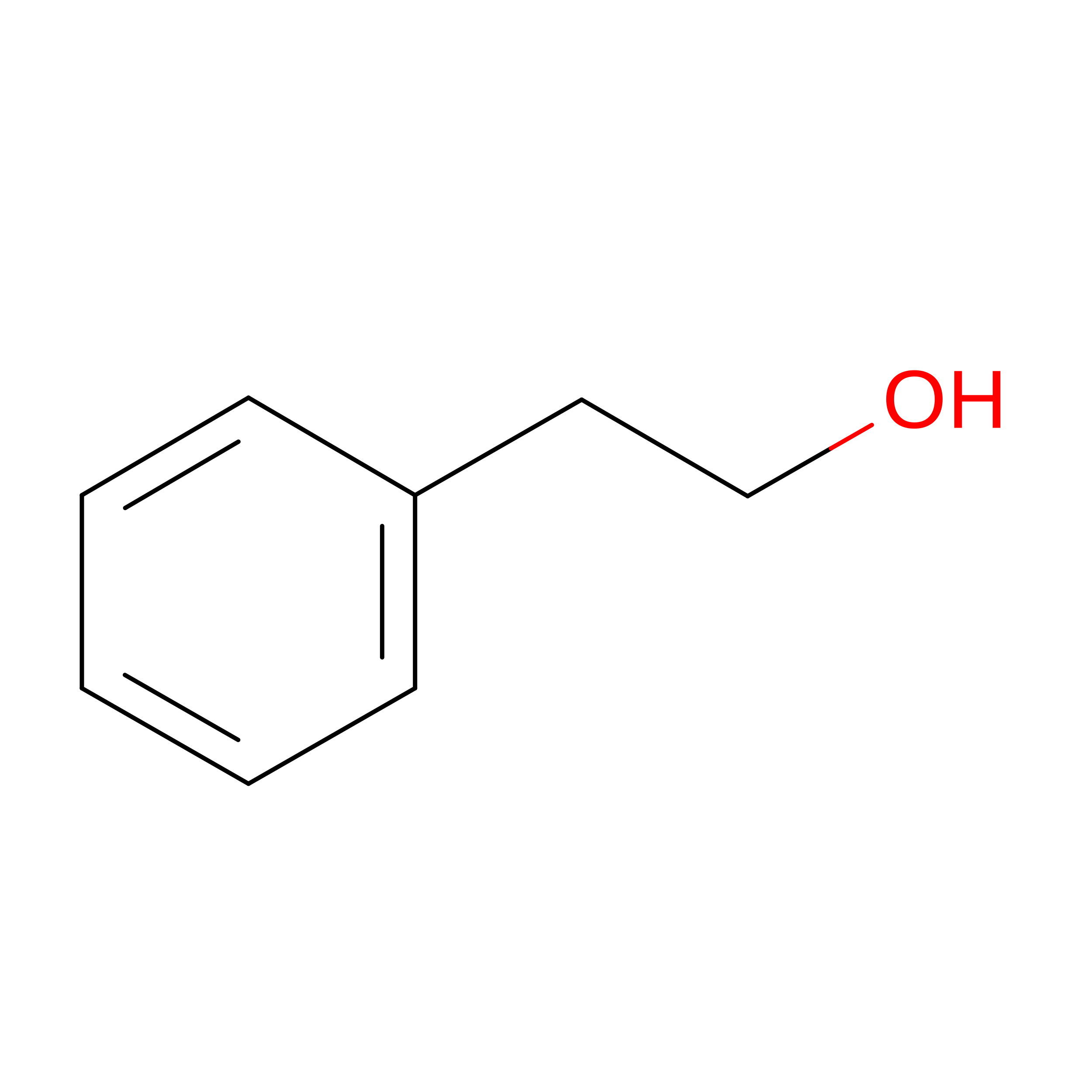
Crystal structure of phenylacetaldehyde derived R-carbinolamine adduct of aromatic amine dehydrogenase


Experimental Data Snapshot

  • Method: X-RAY DIFFRACTION
  • Resolution: 1.35 Å
  • R-Value Free: 
    0.175 (Depositor), 0.176 (DCC) 
  • R-Value Work: 
    0.152 (Depositor), 0.152 (DCC) 

wwPDB Validation 3D Report Full Report

Validation slider image for 2I0T

This is version 1.3 of the entry. See complete history

Literature

New insights into the reductive half-reaction mechanism of aromatic amine dehydrogenase revealed by reaction with carbinolamine substrates.

Roujeinikova, A.Hothi, P.Masgrau, L.Sutcliffe, M.J.Scrutton, N.S.Leys, D.

(2007) J Biological Chem 282: 23766-23777

  • DOI: https://doi.org/10.1074/jbc.M700677200
  • Primary Citation Related Structures: 
    2I0R, 2I0S, 2I0T, 2OIZ, 2OJY, 2OK4, 2OK6

  • PubMed Abstract: 

    Aromatic amine dehydrogenase uses a tryptophan tryptophylquinone (TTQ) cofactor to oxidatively deaminate primary aromatic amines. In the reductive half-reaction, a proton is transferred from the substrate C1 to betaAsp-128 O-2, in a reaction that proceeds by H-tunneling. Using solution studies, kinetic crystallography, and computational simulation we show that the mechanism of oxidation of aromatic carbinolamines is similar to amine oxidation, but that carbinolamine oxidation occurs at a substantially reduced rate. This has enabled us to determine for the first time the structure of the intermediate prior to the H-transfer/reduction step. The proton-betaAsp-128 O-2 distance is approximately 3.7A, in contrast to the distance of approximately 2.7A predicted for the intermediate formed with the corresponding primary amine substrate. This difference of approximately 1.0 A is due to an unexpected conformation of the substrate moiety, which is supported by molecular dynamic simulations and reflected in the approximately 10(7)-fold slower TTQ reduction rate with phenylaminoethanol compared with that with primary amines. A water molecule is observed near TTQ C-6 and is likely derived from the collapse of the preceding carbinolamine TTQ-adduct. We suggest this water molecule is involved in consecutive proton transfers following TTQ reduction, and is ultimately repositioned near the TTQ O-7 concomitant with protein rearrangement. For all carbinolamines tested, highly stable amide-TTQ adducts are formed following proton abstraction and TTQ reduction. Slow hydrolysis of the amide occurs after, rather than prior to, TTQ oxidation and leads ultimately to a carboxylic acid product.


  • Organizational Affiliation
    • Manchester Interdisciplinary Biocenter, University of Manchester, Manchester M17DN, United Kingdom.

Macromolecule Content 

  • Total Structure Weight: 107.21 kDa 
  • Atom Count: 8,970 
  • Modeled Residue Count: 963 
  • Deposited Residue Count: 966 
  • Unique protein chains: 2

Macromolecules

Find similar proteins by:|  3D Structure
Entity ID: 1
MoleculeChains  Sequence LengthOrganismDetailsImage
Aromatic amine dehydrogenaseA [auth D],
B [auth H]
122Alcaligenes faecalisMutation(s): 0 
EC: 1.4.99.4 (PDB Primary Data), 1.4.9.2 (UniProt)
UniProt
Find proteins for P84887 (Alcaligenes faecalis)
Explore P84887 
Go to UniProtKB:  P84887
Entity Groups
Sequence Clusters30% Identity50% Identity70% Identity90% Identity95% Identity100% Identity
UniProt GroupP84887
Sequence Annotations
Expand
Reference Sequence
Find similar proteins by:|  3D Structure
Entity ID: 2
MoleculeChains  Sequence LengthOrganismDetailsImage
Aromatic amine dehydrogenaseC [auth A],
D [auth B]
361Alcaligenes faecalisMutation(s): 0 
EC: 1.4.99.4 (PDB Primary Data), 1.4.9.2 (UniProt)
UniProt
Find proteins for P84888 (Alcaligenes faecalis)
Explore P84888 
Go to UniProtKB:  P84888
Entity Groups
Sequence Clusters30% Identity50% Identity70% Identity90% Identity95% Identity100% Identity
UniProt GroupP84888
Sequence Annotations
Expand
Reference Sequence

Small Molecules

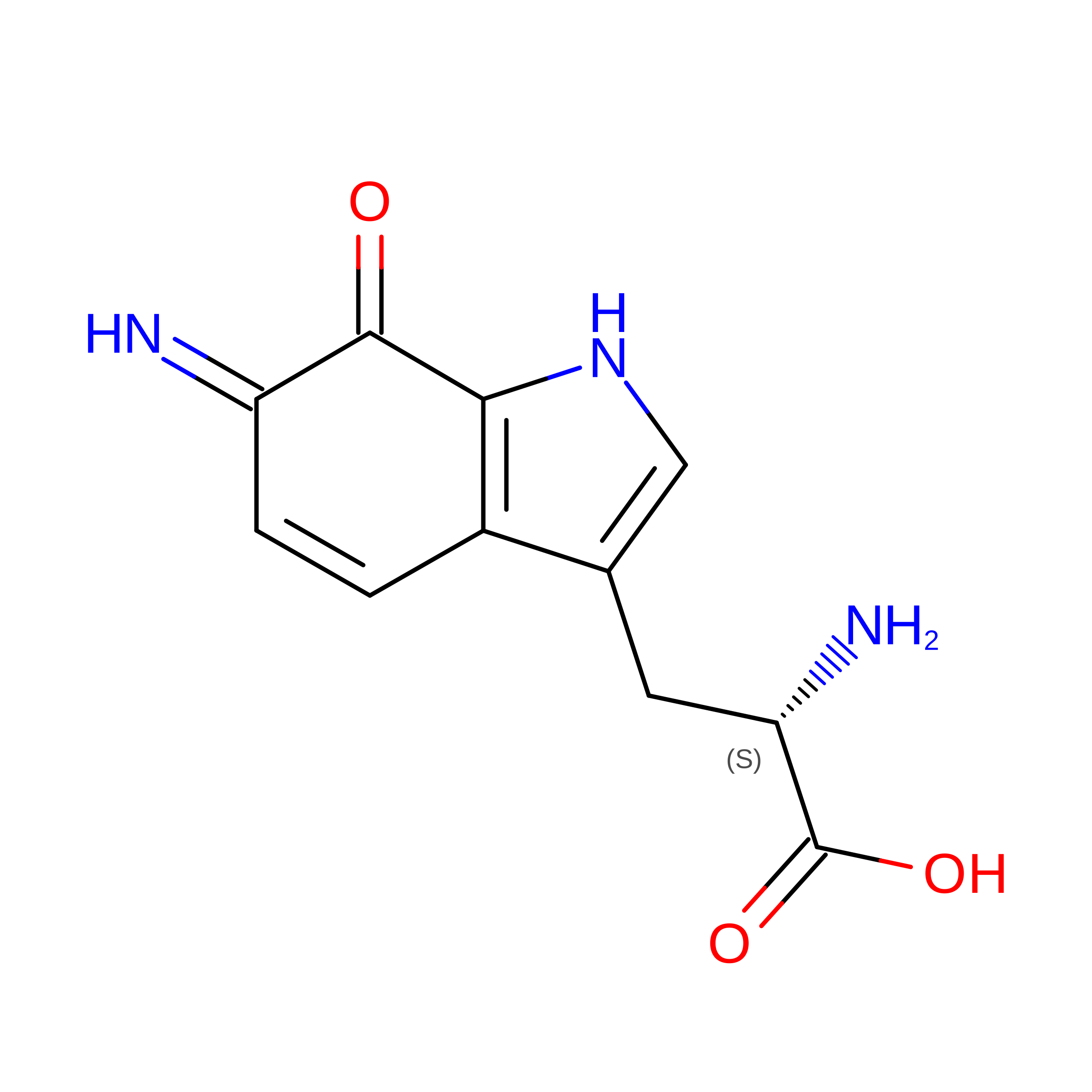
Modified Residues  1 Unique
IDChains TypeFormula2D DiagramParent
TQQ
Query on TQQ
A [auth D],
B [auth H]
L-PEPTIDE LINKINGC11 H11 N3 O3TRP

Experimental Data & Validation

Experimental Data

  • Method: X-RAY DIFFRACTION
  • Resolution: 1.35 Å
  • R-Value Free:  0.175 (Depositor), 0.176 (DCC) 
  • R-Value Work:  0.152 (Depositor), 0.152 (DCC) 
Space Group: P 1 21 1
Unit Cell:
Length ( Å )Angle ( ˚ )
a = 70.524α = 90
b = 88.451β = 90.45
c = 80.164γ = 90
Software Package:
Software NamePurpose
REFMACrefinement
PDB_EXTRACTdata extraction
MOSFLMdata reduction
CCP4data scaling

Structure Validation

View Full Validation Report


Entry History 

Deposition Data

Revision History  (Full details and data files)

  • Version 1.0: 2007-04-24
    Type: Initial release
  • Version 1.1: 2008-05-01
    Changes: Version format compliance
  • Version 1.2: 2011-07-13
    Changes: Version format compliance
  • Version 1.3: 2024-11-13
    Changes: Data collection, Database references, Derived calculations, Structure summary