Download Mendeley
Cryo-EM reveals structural variability of apolipoprotein A-I amyloid fibrils across organs, mutations, and clinical presentations.
Nguyen, B.A., Fernandez-Ramirez, M.D.C., Bassett, P., Singh, V., Singh, P., Pekala, M., Villalon, L., Ahmed, Y., Lemoff, A., Evers, B., Lopez, C., Kluve-Beckerman, B., Saelices, L.(2026) Nat Commun 17
- PubMed: 41991931 Search on PubMedSearch on PubMed Central
- DOI: https://doi.org/10.1038/s41467-026-72150-z
- Primary Citation Related Structures:
9PVY, 9PVZ, 9PW3, 9ZLD - PubMed Abstract:
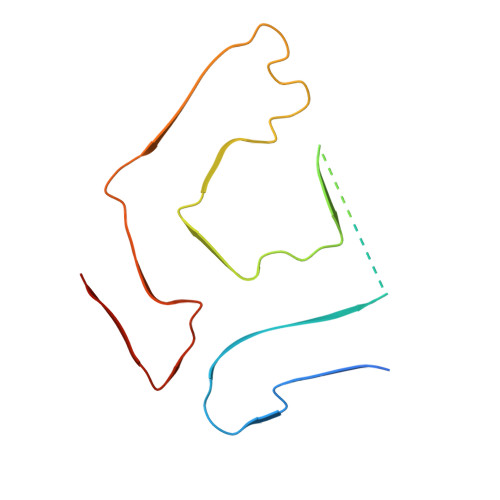
Hereditary apolipoprotein A-I (AApoA‑I) amyloidosis is a rare systemic disease caused by the deposition of amyloid fibrils formed by apolipoprotein A‑I in multiple organs, leading to severe clinical outcomes. With no available therapies or diagnostic tools, defining the structure of AApoA‑I fibrils is crucial to understanding disease mechanisms and guiding intervention. Here we use cryo-electron microscopy to analyze AApoA‑I fibrils from the heart, kidney, liver, and spleen of patients carrying G26R, L90P, and R173P mutations. G26R fibrils, regardless of organ, exhibits untwisted morphologies and cannot be resolved structurally. Conversely, L90P and R173P fibrils display a compact diabolo-shaped conformation in all organs analyzed. Their high-resolution maps enable visualization of cis-Proline 66, which may represent a potential conformational switch during fibril formation. Our findings suggest that mutation-driven polymorphism may influence organ tropism and clinical presentation. This work advances our understanding of AApoA‑I fibril assembly and provides insights toward developing targeted clinical tools.
- Center for Alzheimer's and Neurodegenerative Diseases, Department of Biophysics, Peter O'Donnell Jr Brain Institute, University of Texas Southwestern Medical Center (UTSW), Dallas, TX, USA. anbinh.nguyen@utsouthwestern.edu.
Organizational Affiliation: