Download Mendeley
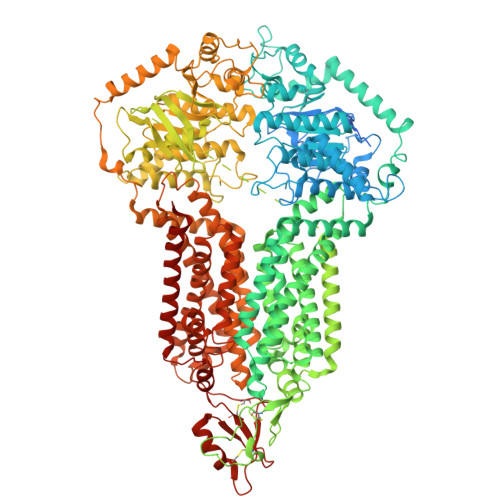
Cryo-EM structures of Cdr1 reveal snapshots of substrate transport and diverse inhibitor recognition.
Wang, Z., Yang, S., Zhang, B., Jiang, H., Li, Y., Gao, R., Wang, Y., Fan, F., Dong, L., Qiu, J., Li, X., Zhou, Y., Murchie, A.I.H., Yu, X.(2026) Sci Adv 12: eaef7706-eaef7706
- PubMed: 42664345 Search on PubMedSearch on PubMed Central
- DOI: https://doi.org/10.1126/sciadv.aef7706
- Primary Citation Related Structures:
22FR, 9VSU, 9VSV, 9VSW, 9VSZ, 9VT1, 9VT2, 9VTM, 9VTN, 9VTO - PubMed Abstract:
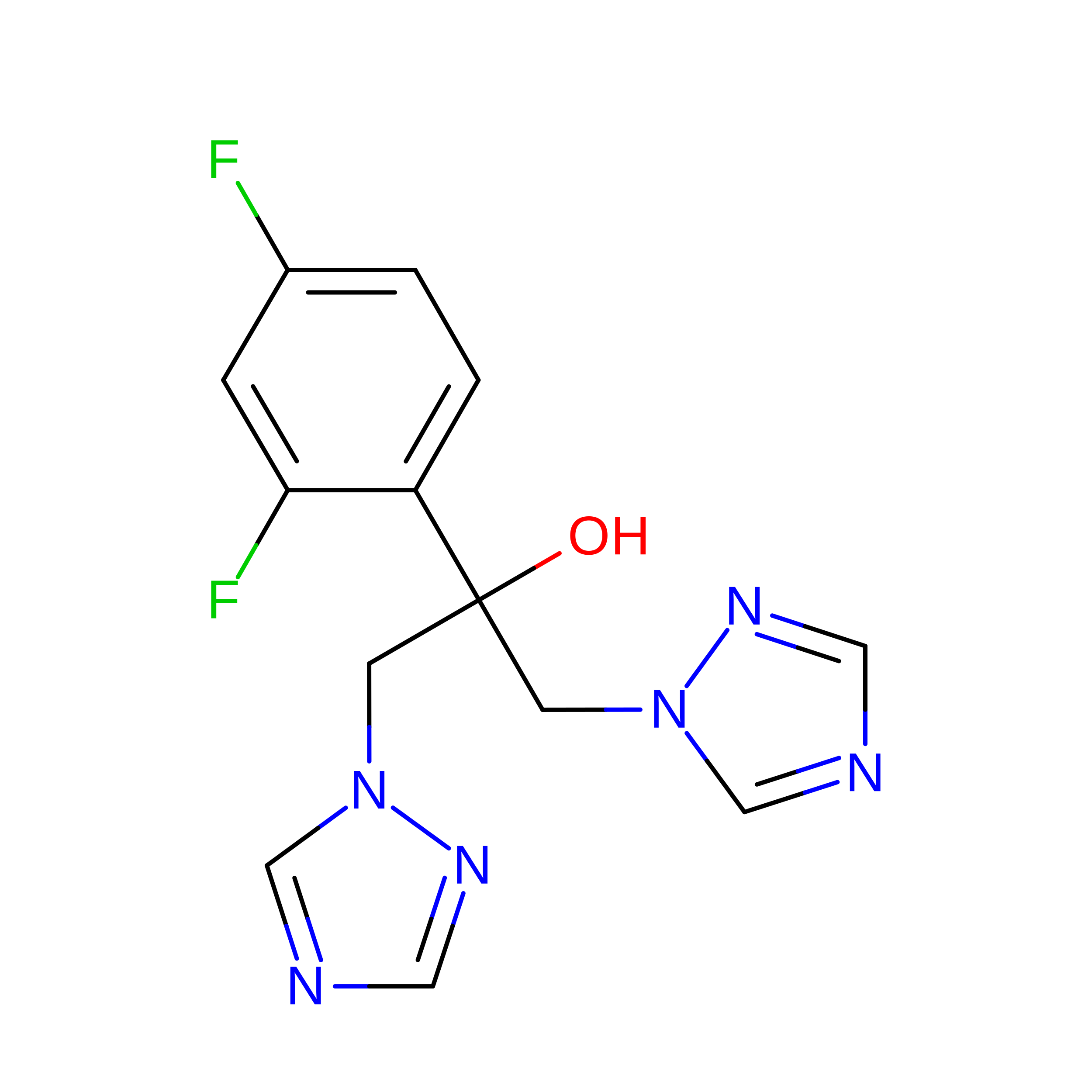
In Candida albicans -a World Health Organization fungal priority pathogen-overexpression of the adenosine triphosphate (ATP)-binding cassette transporter Cdr1 drives multidrug resistance. We present seven cryo-electron microscopy structures capturing substrate entry and expulsion. An inward-facing transmembrane channel with three on-off substrate binding sites defines a proposed entry pathway for a single substrate molecule. Coordinated ATP binding to both nucleotide-binding domains induces transmembrane domain closure, driving the substrate expulsion; adenosine diphosphate release following ATP hydrolysis resets the transporter to an inward-open conformation, enabling substrate entry for the next translocation cycle. Structures with three structurally diverse inhibitors resolve two distinct binding modes: one occupying all three substrate sites and another specifically binding two extracellular-proximal sites. These findings provide snapshots of the substrate translocation cycle and structural blueprints for antifungal drug design.
- State Key Laboratory of Drug Research, Shanghai Institute of Materia Medica, Chinese Academy of Sciences, Shanghai 201203, China.
Organizational Affiliation: