Download Mendeley
Molecular architecture of OXGR1 reveals an evolutionary conserved mechanisms for metabolite surveillance.
Zhang, X., Lu, Y., He, X., Guo, S., Li, C., Wang, Y., Gao, Y., Yao, J., Yuan, Q., Tang, Y., Hu, J., Hu, W., Luo, Z., Wu, K., Wang, Y., Yin, W., Xie, X., Xu, H.E., Liu, H.(2026) EMBO J 45: 4931-4955
- PubMed: 42236546 Search on PubMedSearch on PubMed Central
- DOI: https://doi.org/10.1038/s44318-026-00823-y
- Primary Citation Related Structures:
26XH, 9M1R, 9M1S, 9M1U, 9UXN, 9UXO, 9UXP, 9UXQ - PubMed Abstract:
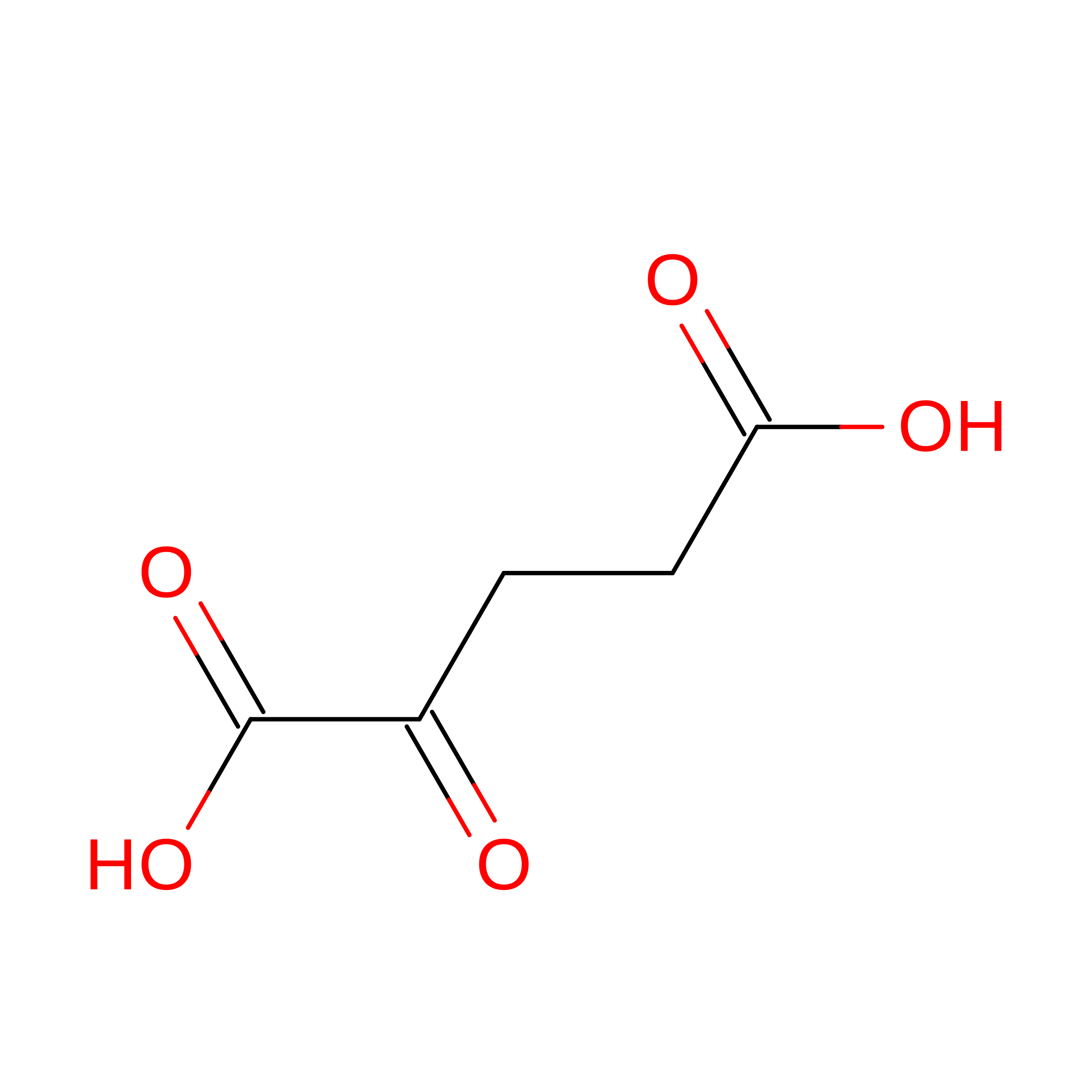
The ability of cells to sense and respond to metabolic signals is fundamental to life, yet the molecular mechanisms underlying metabolite surveillance remain incompletely understood. Here, we elucidate the structural basis of metabolite recognition by OXGR1, a G Protein-Coupled Receptor (GPCR) that senses key intermediates in the tricarboxylic acid (TCA) cycle. Using cryo-electron microscopy, we determined cryo-EM structures of OXGR1 bound to α-ketoglutarate (AKG), itaconate (ITA), and structurally related metabolites succinate (SUC) and maleate (MA). These structures reveal a positively charged binding pocket and an extensive hydrogen-bond network that mediate selective recognition of dicarboxylic acids. In addition, we identify a distinct arrangement of hydrophobic residues that modulates ligand potency and selectivity. Mutational analysis and molecular dynamics simulations further demonstrate that noncanonical micro-switch motifs, including FRY and NLxxY, are essential for ligand recognition and receptor activation. Comparative structural and evolutionary analyses indicate that these mechanisms are conserved across species, underscoring the critical role of OXGR1 in maintaining metabolic homeostasis. Together, our findings define a mechanistic framework for metabolite sensing by OXGR1 and provide a framework for therapeutic modulation of metabolic and inflammatory diseases.
- School of Chinese Materia Medica, Nanjing University of Chinese Medicine, Nanjing, China.
Organizational Affiliation: