Download Mendeley
Structures of folding intermediates on BAM show diverse substrates fold by a conserved mechanism.
Thomson, B.D., Marquez, M.D., Rawson, S., Dos Santos, T.M.A., Harrison, S.C., Kahne, D.(2026) Proc Natl Acad Sci U S A 123: e2534936123-e2534936123
- PubMed: 41926538 Search on PubMedSearch on PubMed Central
- DOI: https://doi.org/10.1073/pnas.2534936123
- Primary Citation Related Structures:
9MGE, 9MGF, 9MGG, 9P1U - PubMed Abstract:
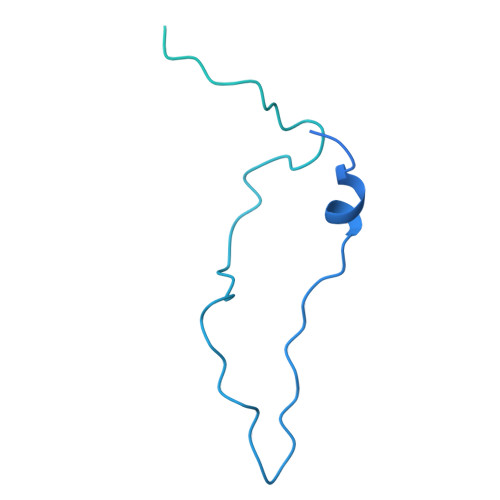
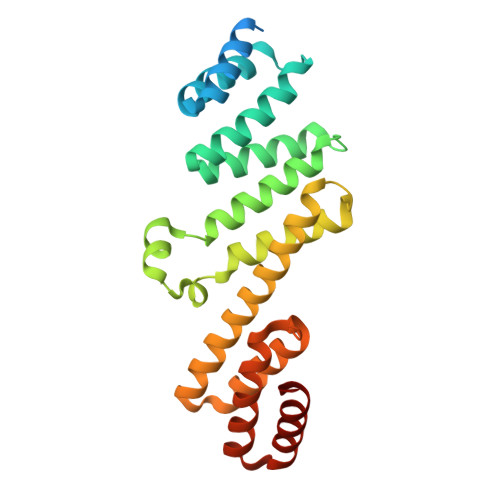
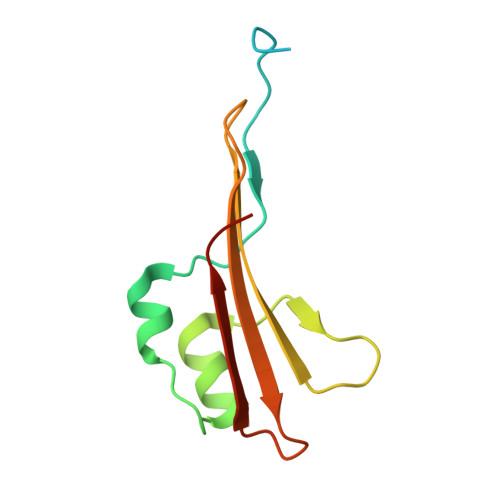
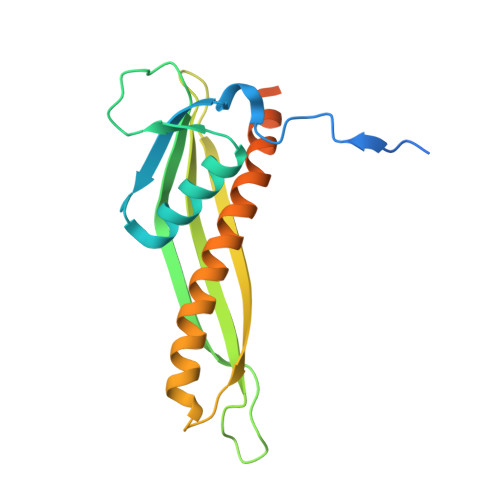
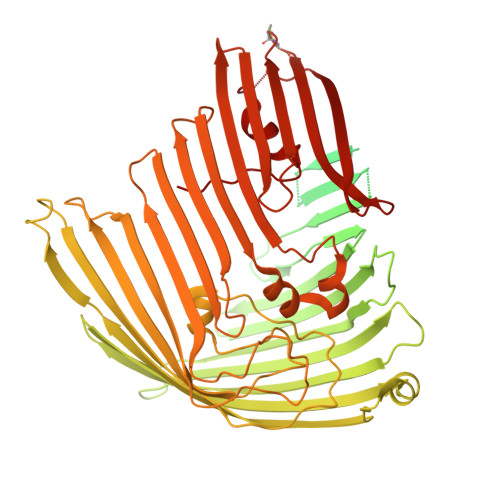
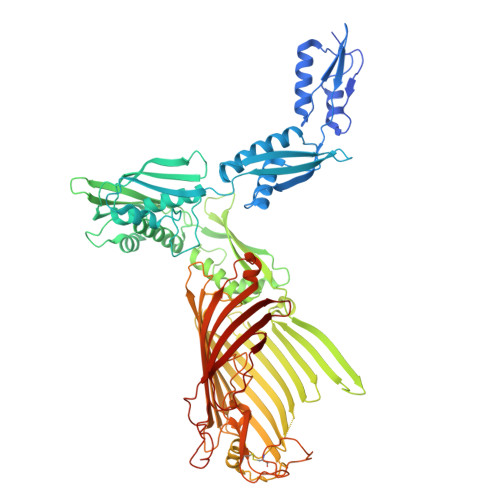
The outer membranes of mitochondria, chloroplasts, and Gram-negative bacteria contain β-barrel membrane proteins that are assembled by conserved multisubunit machines. In bacteria, the β-barrel assembly machine (BAM) folds over a hundred compositionally different substrates into barrels that vary greatly in size. Some larger barrels require globular proteins to plug the barrel lumen. How a single machine can assemble such different barrels is unknown. Here we report three structures representing progressively folded stages of a 16-stranded barrel engaged with BAM, as well as the structure of a late-stage folding intermediate of a 26-stranded substrate folding around its soluble lipoprotein plug on BAM. We find that BAM catalyzes folding of these substrates by a uniform mechanism in which BAM undergoes major distortions to accommodate the nascent barrel.
- Department of Chemistry and Chemical Biology, Harvard University, Cambridge, MA 02138.
Organizational Affiliation: