Download Mendeley
Molecular assemblies and pharmacology of cerebellar GABA A receptors.
Sun, C., Jahncke, J.N., Wright, K.M., Gouaux, E.(2026) Proc Natl Acad Sci U S A 123: e2524504123-e2524504123
- PubMed: 41650215 Search on PubMedSearch on PubMed Central
- DOI: https://doi.org/10.1073/pnas.2524504123
- Primary Citation Related Structures:
9OUM, 9OUN, 9OUO, 9OUP, 9OUQ, 9OUR, 9OV4 - PubMed Abstract:
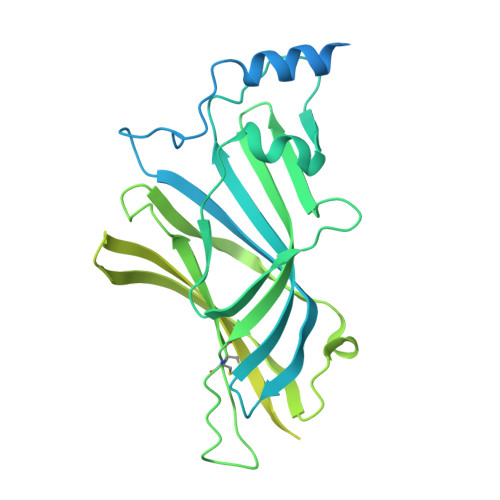
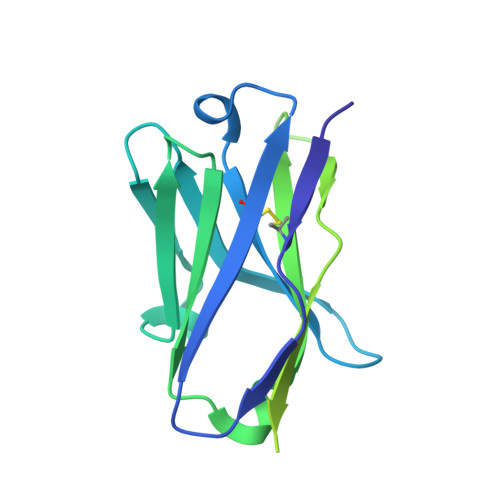
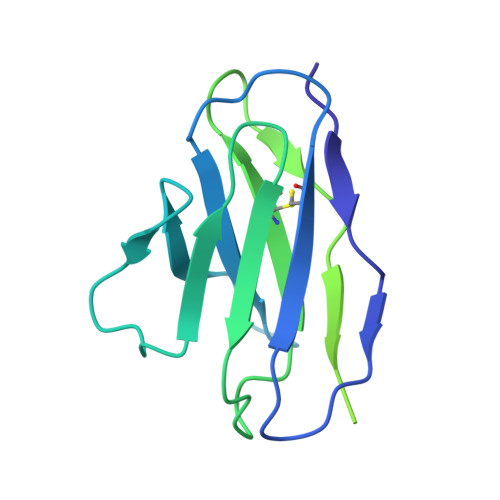
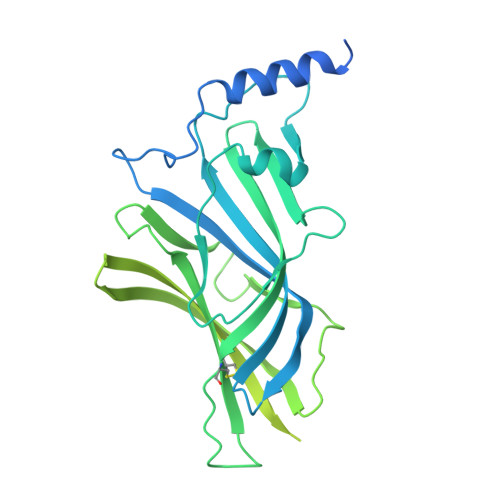
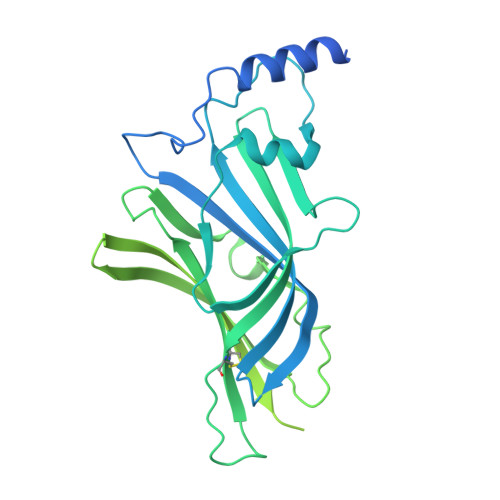
GABA A receptors (GABA A Rs) mediate fast inhibitory neurotransmission in the brain and are assembled from 19 subunit isoforms into multiple pentameric assemblies. Although α1-containing GABA A Rs are broadly expressed and are pharmacologically important, the molecular diversity of native α1-based assemblies in specific brain regions remains incompletely understood. Here, we use immunofluorescence, mass spectrometry, and cryogenic electron microscopy (cryo-EM) to characterize the spatial distribution, subunit composition, and structural architecture of native α1-containing GABA A Rs in the rat cerebellum. Confocal microscopy reveals robust colocalization of α1 and γ2 subunits across cerebellar layers, including prominent labeling at glomerular synapses. Biochemical purification and proteomic analysis identify a range of α, β, and γ subunits, along with abundant α6 and δ subunits. Using cryo-EM and automated subunit identification, we resolve eight α1-containing receptor assemblies, including the first structure of α6-containing receptors. We further determine the binding mode of the α6-selective pyrazoloquinolinone modulator PZ-II-029 at the α + /γ - interface, showing ligand-induced expansion of the entire extracellular domain (ECD). Together, our study defines the structure and subunit composition of the α1-containing cerebellar GABA A Rs and elaborates the molecular interactions between native receptors and pyrazoloquinolinone, thereby laying the groundwork for brain region and subunit-specific pharmacology.
- Vollum Institute, Oregon Health and Science University, Portland, OR 97239.
Organizational Affiliation: