Download Mendeley
A unified catalytic mechanism in bifunctional DNA glycosylases with an evolutionarily conserved aspartate-lysine dyad.
Syed, A., Serafim, L.F., Arvai, A.S., Minko, I.G., Tang, H.Y.H., Huffman, J.L., Mol, C.D., Hitomi, K., Sarker, A.H., Parikh, S., Tsai, C.L., Bacolla, A., Shin, D.S., Cunningham, R.P., Iwai, S., Chowdhury, D., Lloyd, R.S., Ivanov, I., Tainer, J.A.(2026) Nat Commun 17
- PubMed: 42457729 Search on PubMed
- DOI: https://doi.org/10.1038/s41467-026-75471-1
- Primary Citation Related Structures:
10MN, 9NZ8, 9NZ9, 9NZA, 9NZC, 9NZD, 9O00, 9O01, 9O02, 9O03 - PubMed Abstract:
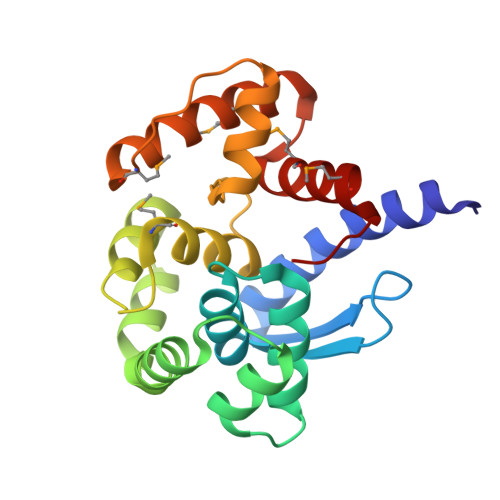
Bifunctional glycosylases, OGG1 for purines and NTH1 for pyrimidines, repair oxidized DNA bases via consecutive glycosylase and AP-lyase reactions, yet their catalytic relationships and lyase activity's biological relevance remain unresolved. Here, we solved crystal structures of archaeal and human Ogg1 and Nth1 captured in key damage-recognition and catalysis-ready states, complemented by ab initio molecular dynamics simulations of their complete reaction trajectories. We thereby define a unified catalytic mechanism for OGG1 and NTH1 conserved over three billion years, distinct from the canonical oxocarbenium-ion mechanism of monofunctional glycosylases. While divergent in their oxidized substrate recognition, their chemistry converged on ribose protonation and ring opening that precede the deglycosylation step. Acid-base catalysis mediated by a conserved aspartate-lysine dyad lowers the C-N bond cleavage barrier, while the excised 8-oxoG base in OGG1 or a conserved aspartate in NTH1 facilitates the AP-lyase reaction. Moreover, structures of human OGG1 bound to product DNA and to product DNA plus a potent small-molecule agonist F51, within the catalytic pocket, reveal that agonists accelerate enzyme turnover by promoting product release. Together, these findings clarify the catalytic logic of bifunctional glycosylases, enabling the development of chemical tools to interrogate lyase activity and therapeutics for oxidative damage in cancer and aging.
- Department of Molecular and Cellular Oncology, Department of Cancer Biology, The University of Texas MD Anderson Cancer Center, Houston, TX, USA. aleem_syed@dfci.harvard.edu.
Organizational Affiliation: