Download Mendeley
De novo design of potent CRISPR-Cas13 inhibitors.
Taveneau, C., Chai, H.X., D'Silva, J., Bamert, R.S., Chen, H., Hayes, B.K., Calvert, R.W., Purcell, J., Curwen, D.J., Munder, F., Martin, L.L., Barr, J.J., Rosenbluh, J., Fareh, M., Grinter, R., Knott, G.J.(2026) Nat Chem Biol 22: 1342-1350
- PubMed: 41588195 Search on PubMedSearch on PubMed Central
- DOI: https://doi.org/10.1038/s41589-025-02136-3
- Primary Citation Related Structures:
9MVR, 9MVS - PubMed Abstract:
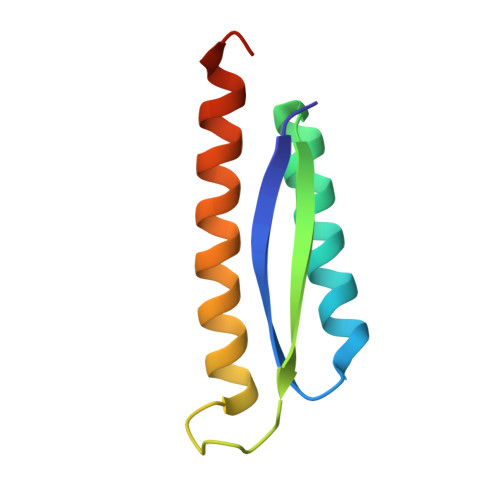
CRISPR-Cas systems are transformative tools for gene editing that can be tuned or controlled by anti-CRISPRs (Acrs)-phage-derived inhibitors that regulate CRISPR-Cas activity. However, Acrs that can inhibit biotechnologically relevant CRISPR systems are relatively rare and challenging to discover. To overcome this limitation, we describe a highly successful and rapid approach that leverages de novo protein design to develop new-to-nature proteins for controlling CRISPR-Cas activity. Here, using Leptotrichia buccalis CRISPR-Cas13a as a representative example, we demonstrate that Acrs designed using artificial intelligence (AIcrs) are capable of highly potent and specific inhibition of CRISPR-Cas13a nuclease activity. We present a comprehensive workflow for design validation and demonstrate AIcr functionality in controlling CRISPR-Cas13 activity in bacterial and human cells. The ability to design bespoke inhibitors of Cas effectors will contribute to the ongoing development of CRISPR-Cas tools in diverse applications across research, medicine, agriculture and microbiology.
- Department of Biochemistry and Molecular Biology, Biomedicine Discovery Institute, Monash University, Clayton, Victoria, Australia. cyntia.taveneau@monash.edu.
Organizational Affiliation: