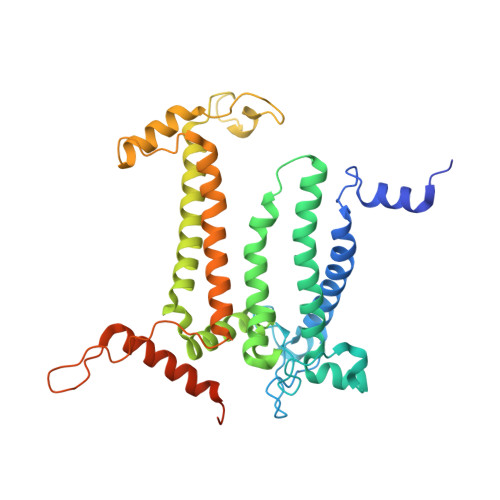
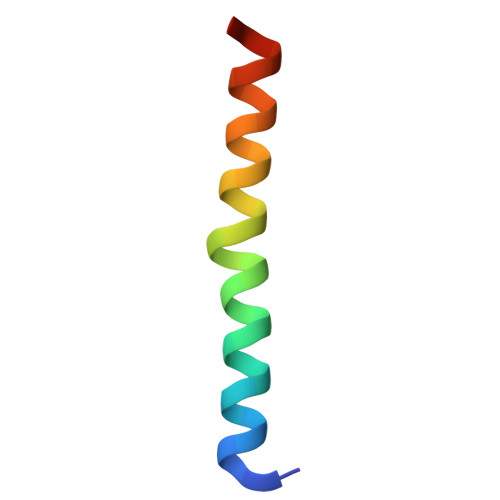
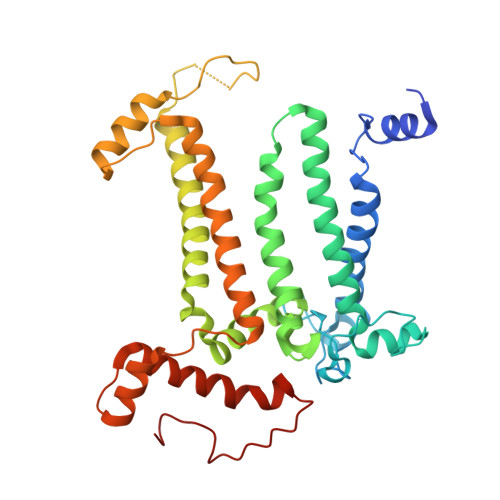
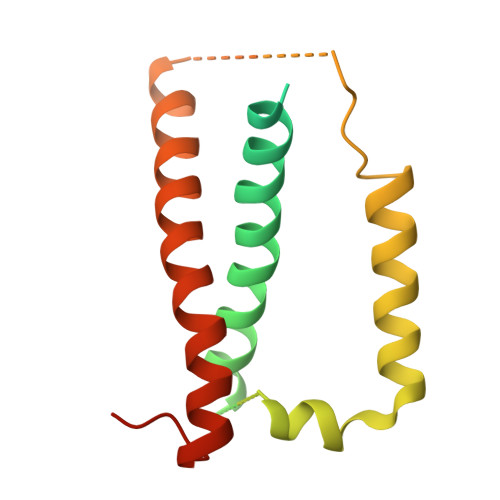
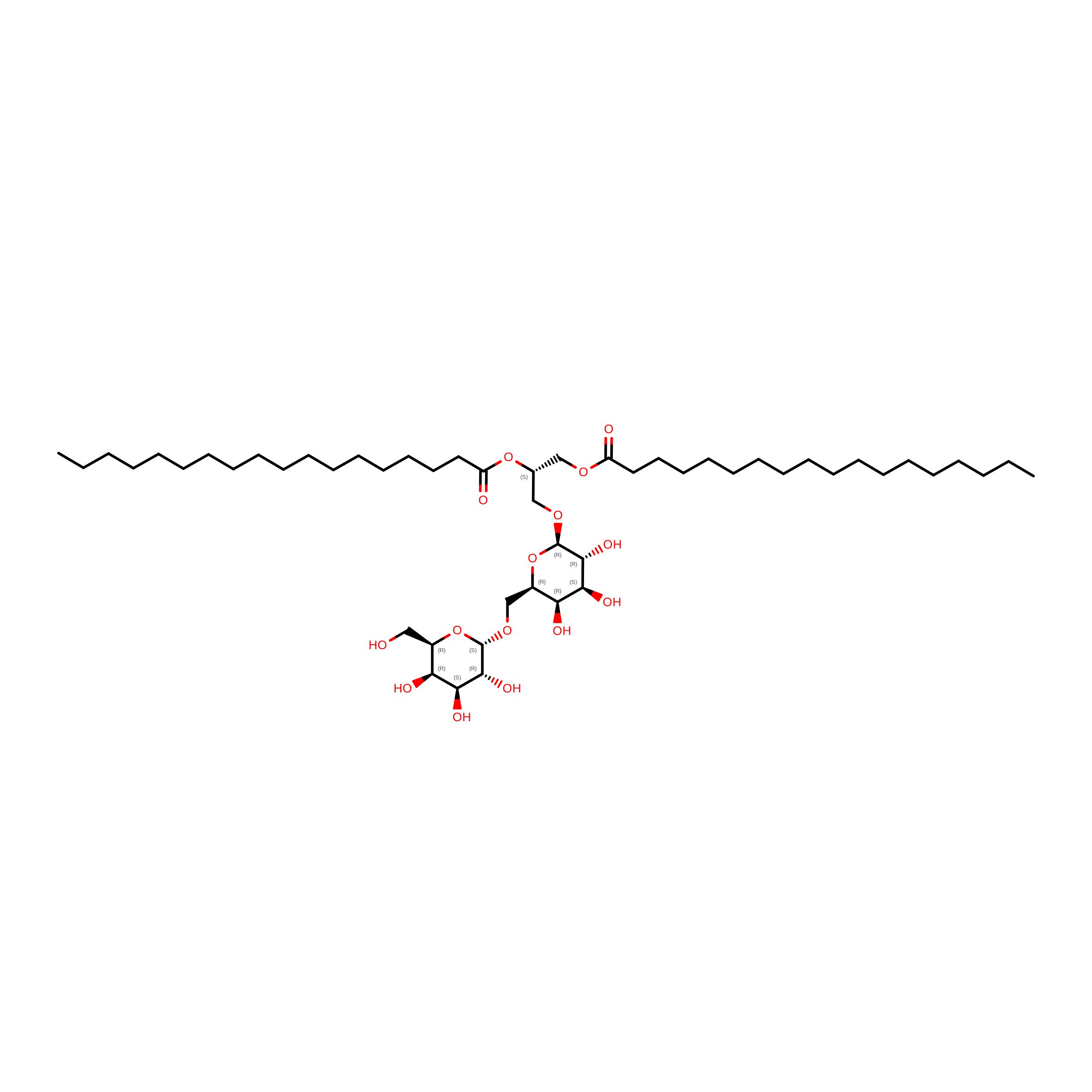
Haptophytes are unicellular algae that produce 30 to 50% of biomass in oceans. Among haptophytes, a subset named coccolithophores is characterized by calcified scales. Despite the importance of coccolithophores in global carbon fixation and CaCO 3 production, their energy conversion system is still poorly known. Here we report a cryo-electron microscopic structure of photosystem II (PSII)-fucoxanthin chlorophyll c-binding protein (FCPII) supercomplex from Chyrostila roscoffensis, a representative of coccolithophores. This complex has two sets of six dimeric and monomeric FCPIIs, with distinct orientations. Interfaces of both FCPII/FCPII and FCPII/core differ from previously reported. We also determine the sequence of Psb36, a subunit previously found in diatoms and red algae. The principal excitation energy transfer (EET) pathways involve mainly 5 FCPIIs, where one FCPII monomer mediates EET to CP47. Our findings provide a solid structural basis for EET and energy dissipation pathways occurring in coccolithophores.
Organizational Affiliation:
Research Institute for Interdisciplinary Science, and Advanced Research Field, Graduate School of Environmental, Life, Natural Science and Technology, Okayama University, Okayama, Japan.
Research Institute for Interdisciplinary Science, and Advanced Research Field, Graduate School of Environmental, Life, Natural Science and Technology, Okayama University, Okayama, Japan. fusamichi_a@okayama-u.ac.jp.
Research Institute for Interdisciplinary Science, and Advanced Research Field, Graduate School of Environmental, Life, Natural Science and Technology, Okayama University, Okayama, Japan. shen@cc.okayama-u.ac.jp.








 Download Mendeley