Download Mendeley
Structural insights into single-pass transmembrane receptor GC-A activation by distinct antihypertensive antibodies.
Liu, S., Manzo, O., Wang, J., Zhu, L., Xiao, F., Su, Y.C., Kurre, D., Liu, W., Miao, Y., Di Lorenzo, A., Huang, X.Y.(2026) Nat Commun 17
- PubMed: 41942428 Search on PubMedSearch on PubMed Central
- DOI: https://doi.org/10.1038/s41467-026-71594-7
- Primary Citation Related Structures:
9DZF, 9DZG, 9DZH, 9DZJ, 9DZK - PubMed Abstract:
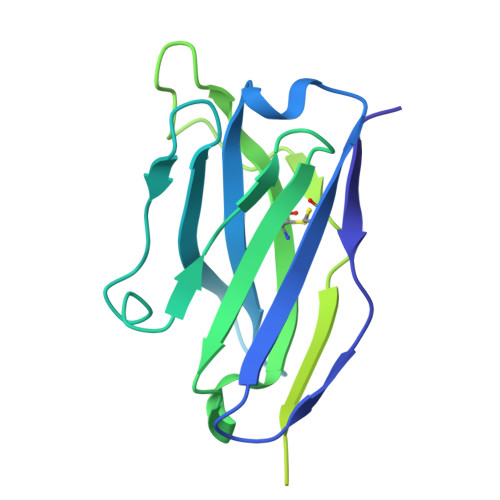
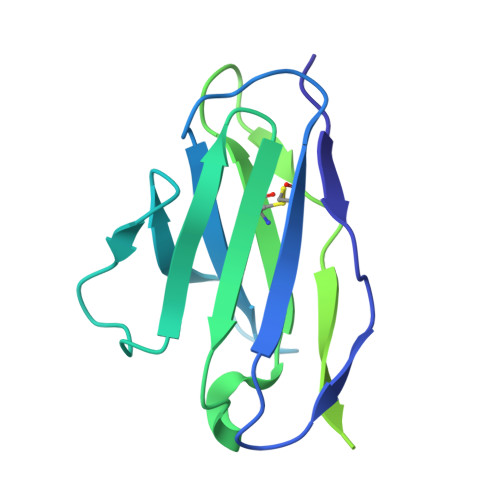
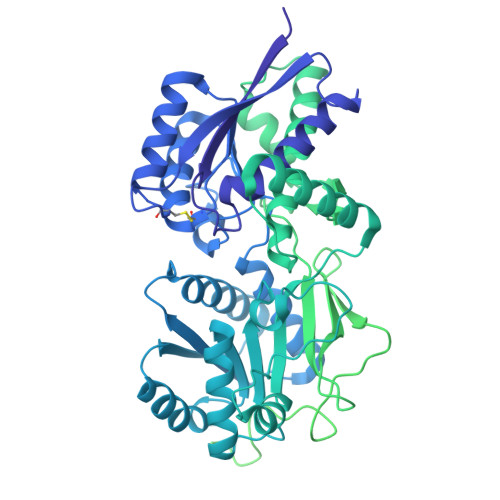
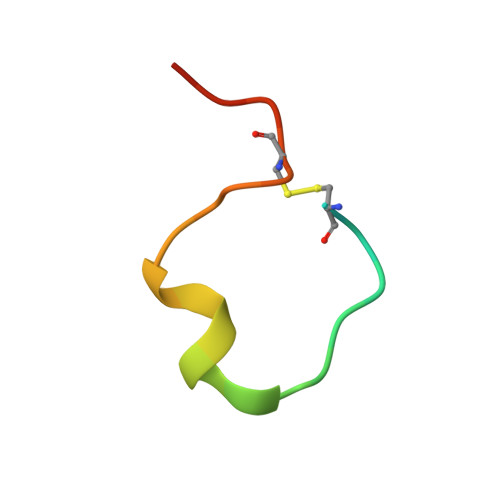
The single-pass transmembrane receptor guanylyl cyclase A (GC-A), also known as natriuretic peptide receptor A (NPR-A) or NPR1, regulates blood pressure through vasodilation and natriuresis, making it a promising therapeutic target for hypertension and heart failure. We describe two monoclonal antibodies, XX16 and REGN5308, that differentially activate GC-A. Using cryo-electron microscopy and molecular dynamics simulations, we reveal that XX16 stabilizes GC-A in an active conformation even without its ligand ANP, whereas REGN5308 requires ANP to fully promote receptor activation. Both antibodies increase ANP binding affinity to GC-A and enhance GC-A-mediated cGMP signaling, although XX16 exerts a stronger stabilizing influence on ATP and GTP binding. In a mouse model of obesity-induced hypertension, XX16 treatment significantly reduces blood pressure, underscoring its therapeutic potential. These findings outline the structural and functional basis of GC-A activation by antibody positive allosteric modulators, offering strategies for durable antihypertensive therapies and improved management of cardiovascular diseases.
- Department of Biochemistry and Biophysics, Weill Medical College of Cornell University, New York, NY, USA.
Organizational Affiliation: