Download Mendeley
Structure of the E3 ligase CRL2 ZYG11B with substrates reveals the molecular basis for N-degron recognition and ubiquitination.
Liu, X., Li, Y., Castro, L.K., Yu, Z., Cheng, Y., Daugherty, M.D., Gross, J.D.(2026) Cell Rep 45: 117401-117401
- PubMed: 42224082 Search on PubMedSearch on PubMed Central
- DOI: https://doi.org/10.1016/j.celrep.2026.117401
- Primary Citation Related Structures:
9BID, 9BIE, 9BJ8, 9BJ9 - PubMed Abstract:
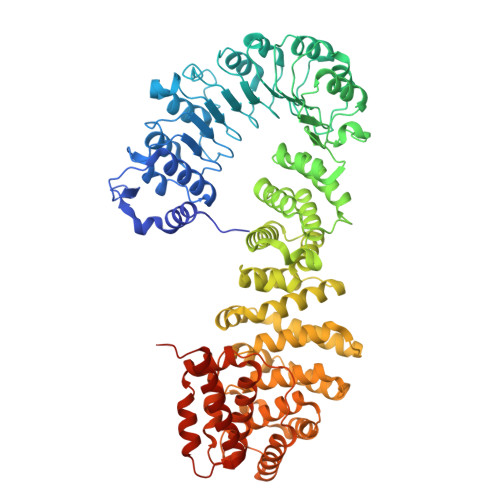
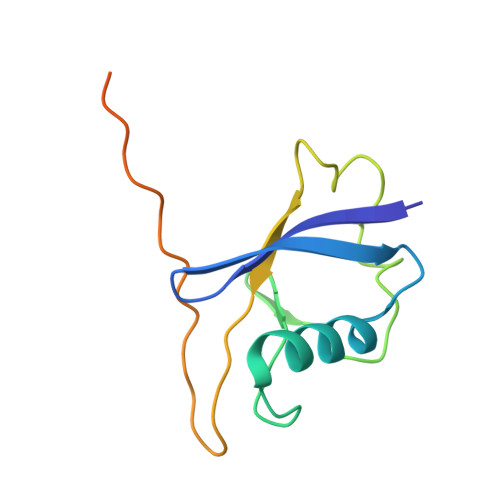
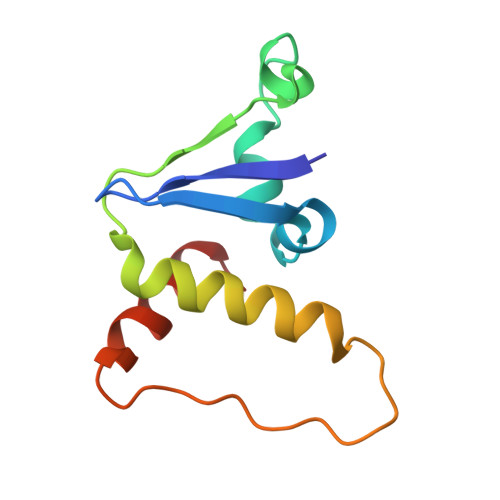
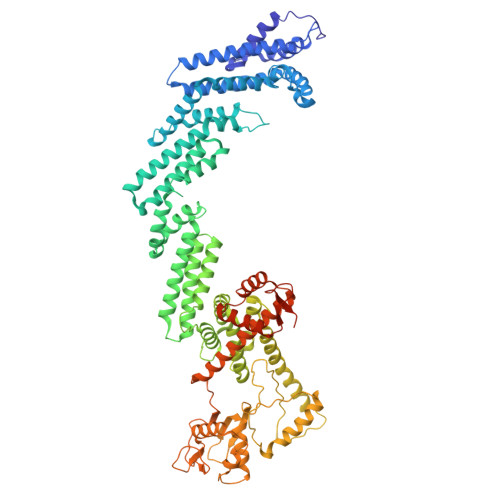
ZYG11B is a substrate specificity factor for the cullin-2-RING ubiquitin ligase (CRL2), which plays a critical role in the recognition and degradation of Gly/N-degrons. Yet, how ZYG11B assembles with CRL2, and how ZYG11B couples specific substrate recognition to CRL2-mediated ubiquitination, is unknown. We present the cryo-electron microscopy (cryo-EM) structures of the CRL2 ZYG11B holoenzyme alone and in complex with a Gly/N-peptide from the inflammasome-forming pathogen sensor NLRP1. The structures indicate that ZYG11B folds into a leucine-rich repeat followed by two armadillo repeat domains that promote assembly with CRL2 and specific recognition of the NLRP1 Gly/N-degron that is revealed by viral protease cleavage. Our structural and functional data indicate that blocking ZYG11B recognition of the NLRP1 Gly/N-degron inhibits NLRP1 inflammasome activation by a viral protease. Overall, we show how the CRL2 ZYG11B E3 ligase complex recognizes Gly/N-degron substrates, including those that are involved in viral protease-mediated activation of the NLRP1 inflammasome.
- Department of Pharmaceutical Chemistry, University of California, San Francisco, San Francisco, CA 94158, USA.
Organizational Affiliation: