Download Mendeley
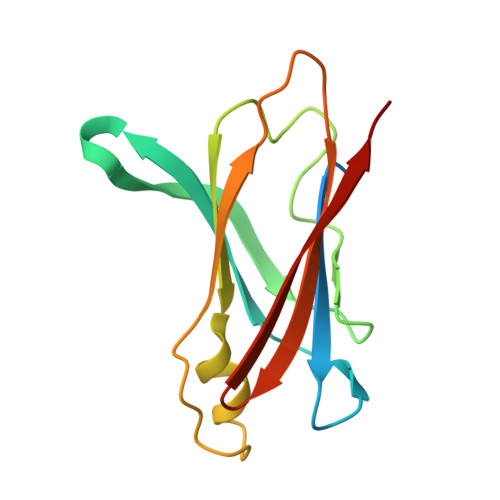
Transthyretin can denature by an alternative pathway.
Jager, M., Schafer, J.H., Lander, G.C., Powers, E.T., Gruebele, M., Kelly, J.W.(2026) Proc Natl Acad Sci U S A 123: e2536532123-e2536532123
- PubMed: 42709794 Search on PubMed
- DOI: https://doi.org/10.1073/pnas.2536532123
- Primary Citation Related Structures:
9ZDY - PubMed Abstract:
Transthyretin (TTR) is a kinetically stable protein in the bloodstream, cerebrospinal fluid, and in the eye, whose aggregation causes a prominent human amyloid disease, TTR amyloidosis (ATTR). Dissociation of the wild-type TTR tetramer into metastable dimers is rate-limiting for aggregation at acidic pH and unfolding in denaturant solutions at neutral pH. However, this "canonical dimer" pathway of denaturation is not the only one accessible under conditions possibly relevant to amyloid disease. At pH-values reached in the late endosome and lysosome (pH 4.0 to 5.0), as well as with perturbing mutations at neutral pH, a second denaturation pathway becomes accessible involving a more expanded transition state. This "alternative unfolding" pathway is evident via a characteristic switch to a steeper slope in the plot of the log-transformed unfolding rate constant vs. the urea concentration. Using mutations, we identify globally distributed locations in the protein that are sensitive to pathway-switching and correlate them with structural information. We show that flux along the alternative denaturation pathway becomes kinetically competitive in a subset of variants under mildly acidic conditions. A small-molecule kinetic stabilizer of TTR decreases flux along the canonical denaturation pathway, and exhibits reduced influence on denaturation by the alternative pathway. We present a "universal" plot allowing classification of TTR mutants to either pathway, and suggest a mechanism by which the two pathways operate. We speculate that the existence of an alternative unfolding pathway could allow for rapid protein degradation and turnover of kinetically stable TTR under acidic conditions in the autolysosome.
- Department of Chemistry, The Scripps Research Institute, La Jolla, CA 92037.
Organizational Affiliation: