Download Mendeley
Molecular insights into juvenile hormone maturation by juvenile hormone acid methyltransferase.
Picard, M.E., Cusson, M., Shi, R.(2026) J Biol Chem 302: 111474-111474
- PubMed: 42001950 Search on PubMed
- DOI: https://doi.org/10.1016/j.jbc.2026.111474
- Primary Citation Related Structures:
9XYO, 9XYQ, 9XYS - PubMed Abstract:
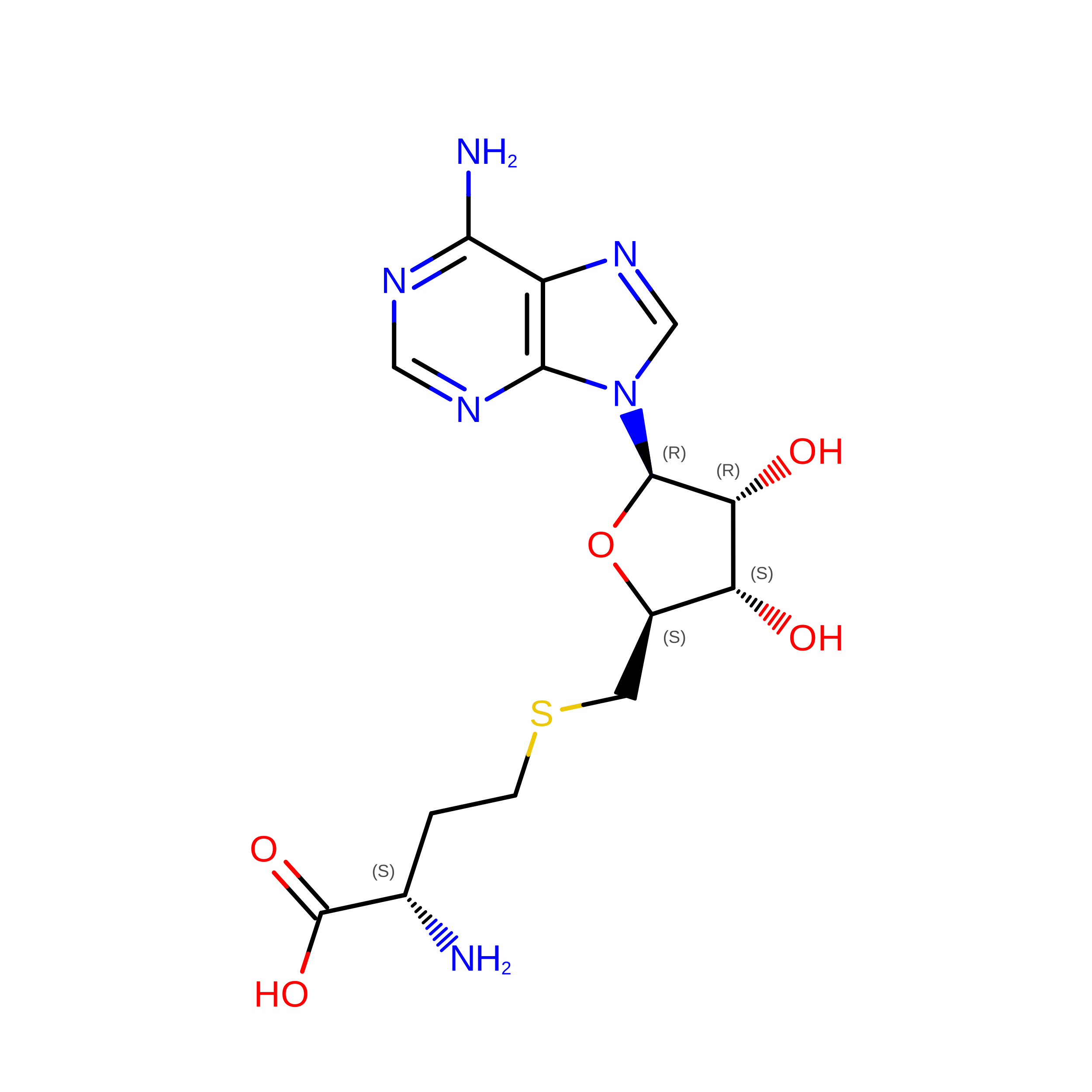
Juvenile hormone acid methyltransferase (JHAMT) is an enzyme involved in the biosynthesis of juvenile hormone (JH) in insects, catalyzing the methylation of farnesoic acid and JH acids to produce active JHs. Given its important role in JH biosynthesis, JHAMT has attracted significant interest as a potential target for pest control strategies. Inhibiting JHAMT activity could disrupt normal JH production, leading to developmental abnormalities and reduced reproductive success in pest species. We have determined the crystal structure of a JHAMT from the spruce budworm Choristoneura fumiferana (CfJHAMT) in complex with the cofactor product S-adenosyl-L-homocysteine (SAH) and the substrate juvenile hormone acid III, at a resolution of 1.77 Å, and in the presence of SAH alone. Structural and biochemical analyses, supported by site-directed mutagenesis, revealed key residues involved in cofactor and substrate recognition. A proximity-based catalytic mechanism is proposed wherein critical interactions position the substrate and cofactor for methyl group transfer. These findings contribute to our understanding of the structure-function relationship of CfJHAMT and offer preliminary structural insights that may assist in the development of inhibitors, which could potentially be used to target JH biosynthesis in pest insects.
- Département de biochimie, de microbiologie et de bio-informatique, Institut de Biologie Intégrative et des Systèmes, Université Laval, Quebec City, QC, G1V 0A6, Canada; PROTEO, Université du Québec à Montréal, Montreal, QC, H2X 3Y7, Canada.
Organizational Affiliation: