Download Mendeley
Biochemical characterization and molecular mechanism study of trans-aconitate decarboxylase Tad1.
Lu, Y., Zhang, K., Wang, C., Wu, D., Huang, X., Xu, H., Ma, H., Lu, X.(2026) Enzyme Microb Technol 199: 110875-110875
- PubMed: 42060999 Search on PubMed
- DOI: https://doi.org/10.1016/j.enzmictec.2026.110875
- Primary Citation Related Structures:
9XB2 - PubMed Abstract:
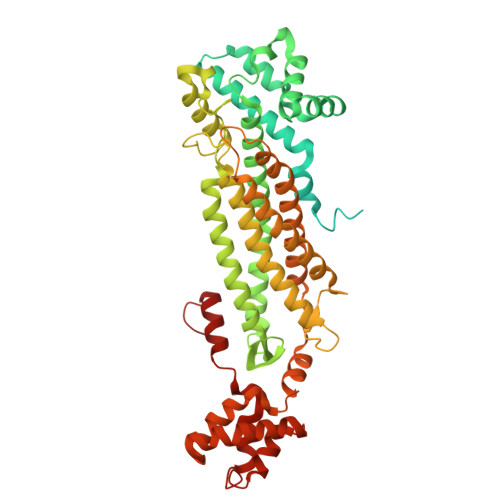
Trans-aconitate decarboxylase (Tad1) catalyzes the conversion of trans-aconitate to itaconate, a compound of growing interest in biotechnology owing to its diverse applications as a platform chemical. Despite this potential, detailed biochemical and mechanistic insights into Tad1 remain incomplete. This study presents the heterologous expression, purification, and comprehensive biochemical characterization of Tad1 from Ustilago maydis. We determined its optimal pH and temperature, and cofactor requirements. Furthermore, we employed X-ray crystallography, molecular docking, and site-directed mutagenesis to elucidate key residues involved in substrate binding and catalysis, thereby establishing a molecular basis for its decarboxylase activity. Elucidating Tad1's catalytic mechanism and active site architecture is essential for overcoming current limitations in itaconate biosynthesis and advancing sustainable chemical production.
- Key Laboratory of Photoelectric Conversion and Utilization of Solar Energy, Key Laboratory of Biofuels, Qingdao Institute of Bioenergy and Bioprocess Technology, Chinese Academy of Sciences, Songling Rd 189, Qingdao 266101, China; Shandong Energy Institute, Songling Rd 189, Qingdao 266101, China.
Organizational Affiliation: