9X1M | pdb_00009x1m

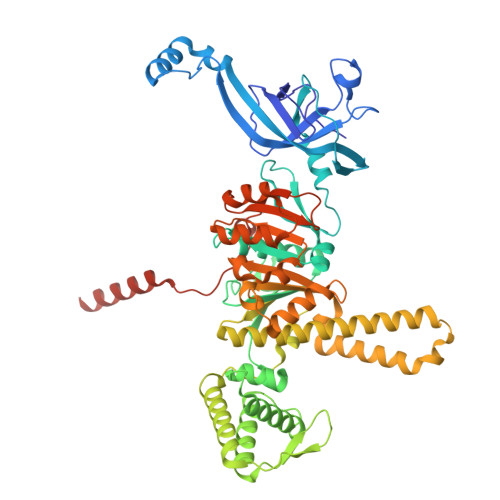
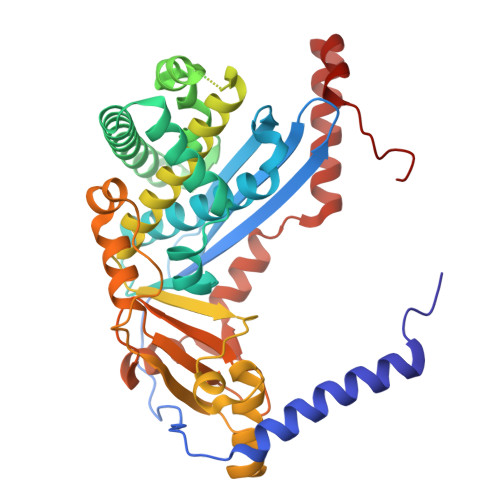
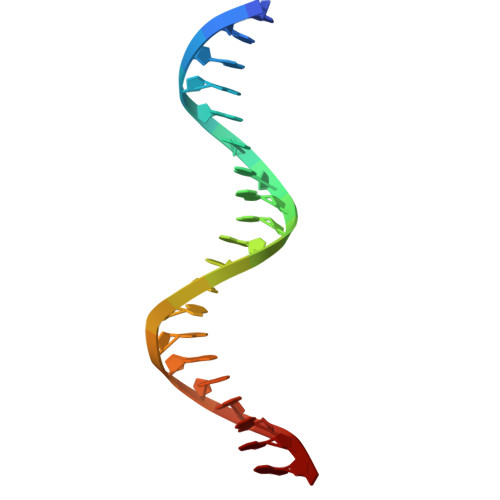
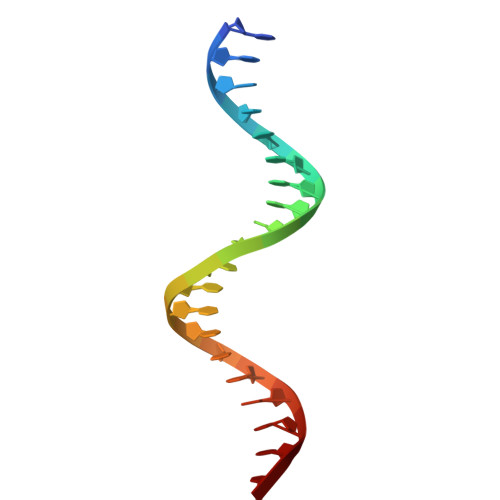
The cryo-EM structure of HerA-NurA complex with AMPPNP and dsDNA from Thermococcus kodakarensis


Experimental Data Snapshot

  • Method: ELECTRON MICROSCOPY
  • Resolution: 2.30 Å
  • Aggregation State: PARTICLE 
  • Reconstruction Method: SINGLE PARTICLE 

Starting Model: in silico
View more details

wwPDB Validation 3D Report Full Report

Validation slider image for 9X1M

This is version 1.1 of the entry. See complete history

Literature

Substrate specificity and action mechanism of the HerA-NurA nuclease from the hyperthermophilic archaeon Thermococcus kodakarensis.

Uda, K.Yamagami, T.Ishino, S.Gerle, C.Gopalasingam, C.C.Shigematsu, H.Numata, T.Ishino, Y.

(2026) mBio 17: e0352325-e0352325

  • DOI: https://doi.org/10.1128/mbio.03523-25
  • Primary Citation Related Structures: 
    9X1L, 9X1M, 9X1N, 9X1O, 9X1P

  • PubMed Abstract: 

    The HerA-NurA complex reportedly functions in DNA end resection in archaea. End resection is important to start homologous recombination by forming a single-stranded DNA region with an overhanging 3'-end, which invades double-stranded DNA (dsDNA) with a homologous sequence to form a D-loop. Here, we studied the structure and functions of HerA-NurA from the hyperthermophilic archaeon, Thermococcus kodakarensis . Our analyses demonstrated that NurA is a non-directional and single-stranded specific nuclease, but the HerA-NurA complex cleaves both strands of dsDNA in an exonucleolytic manner, regardless of the structure of the DNA end. The 3D structures of HerA-NurA and its complex with dsDNA revealed the detailed molecular mechanisms of these nuclease reactions. These results suggest that HerA-NurA may not be involved in the end resection process but instead performs other functions, such as exerting an antiviral function by degrading the dsDNA of foreign viruses, similar to recent studies in bacteria. To understand the specific function of the HerA-NurA complex, which is believed to function in the end resection process to create a 3'-overhanging DNA for the following strand invasion in homologous recombination, we performed biochemical and structural analyses of this complex from a hyperthermophilic archaeon, Thermococcus kodakarensis , inhabiting a harsh environment where DNA is easily damaged. We found that the HerA-NurA complex cleaves both strands of double-stranded DNA in an exonucleolytic manner, regardless of the structure of the DNA end. Our structural analysis revealed the detailed characteristics of the nuclease activity exhibited by the HerA-NurA complex. Based on the presented information, it is unlikely that the HerA-NurA complex directly functions in end resection, but rather is involved in other functions, possibly in defense against viral infections.


  • Organizational Affiliation
    • Department of Bioscience and Biotechnology, Graduate School of Bioresource and Bioenvironmental Sciences, Kyushu University, Fukuoka, Japan.

Macromolecule Content 

  • Total Structure Weight: 514.51 kDa 
  • Atom Count: 34,604 
  • Modeled Residue Count: 4,300 
  • Deposited Residue Count: 4,478 
  • Unique protein chains: 2
  • Unique nucleic acid chains: 2

Macromolecules


Find similar proteins by:|  3D Structure
Entity ID: 1
MoleculeChains  Sequence LengthOrganismDetailsImage
DNA helicase
A, B, C, D, E
A, B, C, D, E, F
592Thermococcus kodakarensisMutation(s): 0 
Gene Names: TK2213
EC: 3.6.4.12
UniProt
Find proteins for Q5JHP7 (Thermococcus kodakarensis (strain ATCC BAA-918 / JCM 12380 / KOD1))
Explore Q5JHP7 
Go to UniProtKB:  Q5JHP7
Entity Groups
Sequence Clusters30% Identity50% Identity70% Identity90% Identity95% Identity100% Identity
UniProt GroupQ5JHP7
Sequence Annotations
Expand
Reference Sequence
Find similar proteins by:|  3D Structure
Entity ID: 2
MoleculeChains  Sequence LengthOrganismDetailsImage
5'-3' nuclease, encoded next to Rad50 and Mre11 homologs
G, H
443Thermococcus kodakarensisMutation(s): 0 
Gene Names: TK2210
UniProt
Find proteins for Q5JHL5 (Thermococcus kodakarensis (strain ATCC BAA-918 / JCM 12380 / KOD1))
Explore Q5JHL5 
Go to UniProtKB:  Q5JHL5
Entity Groups
Sequence Clusters30% Identity50% Identity70% Identity90% Identity95% Identity100% Identity
UniProt GroupQ5JHL5
Sequence Annotations
Expand
Reference Sequence
Find similar nucleic acids by:  Sequence
Entity ID: 3
MoleculeChains LengthOrganismImage
DNA20DNA molecule
Sequence Annotations
Expand
Reference Sequence
Find similar nucleic acids by:  Sequence
Entity ID: 4
MoleculeChains LengthOrganismImage
DNA20DNA molecule
Sequence Annotations
Expand
Reference Sequence

Small Molecules

Ligands 2 Unique
IDChains Name / Formula / InChI Key2D Diagram3D Interactions
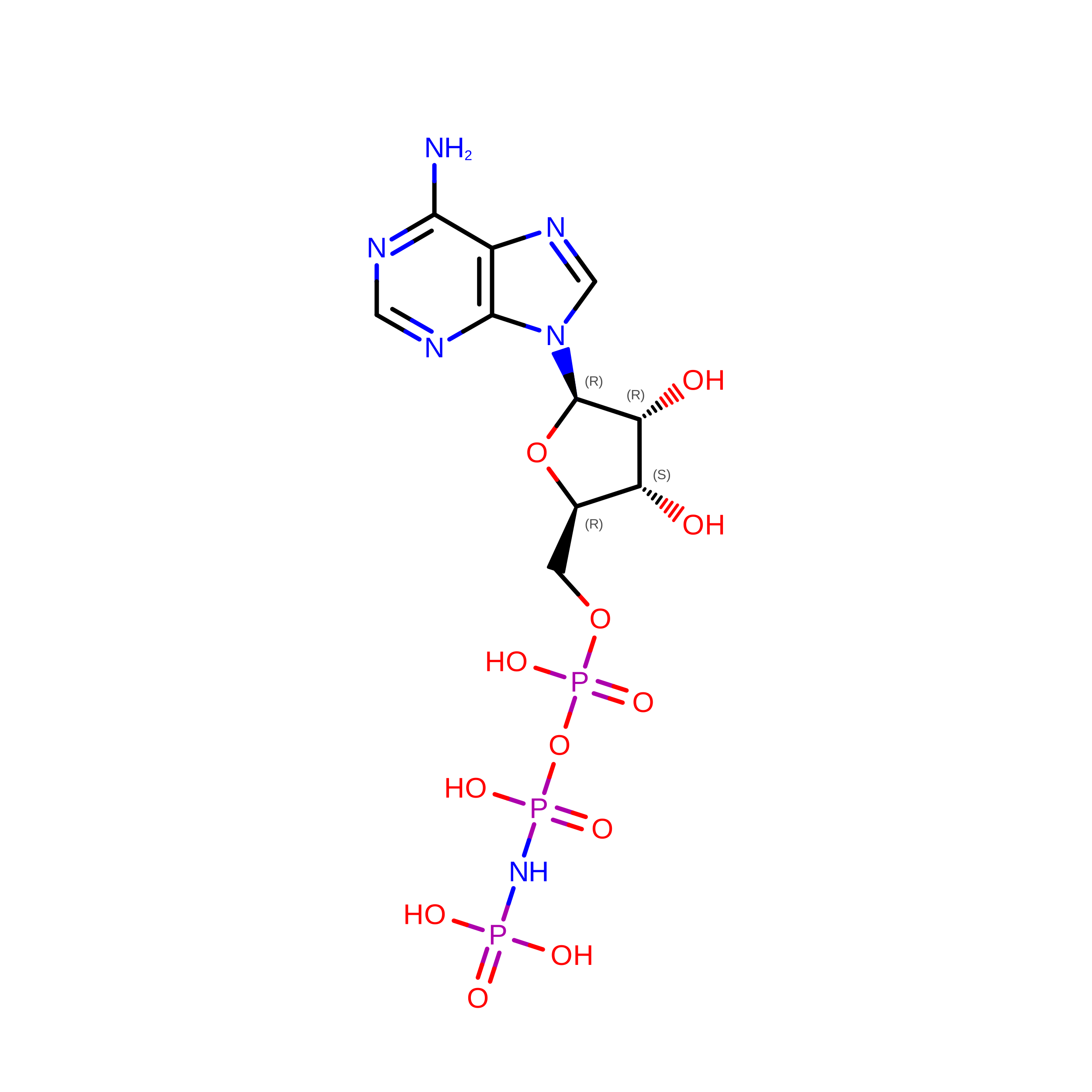
ANP
(Subject of Investigation/LOI)

Query on ANP


Download:Ideal Coordinates CCD File
K [auth A]
M [auth B]
O [auth C]
Q [auth D]
S [auth E]
K [auth A],
M [auth B],
O [auth C],
Q [auth D],
S [auth E],
U [auth F]
PHOSPHOAMINOPHOSPHONIC ACID-ADENYLATE ESTER
C10 H17 N6 O12 P3
PVKSNHVPLWYQGJ-KQYNXXCUSA-N
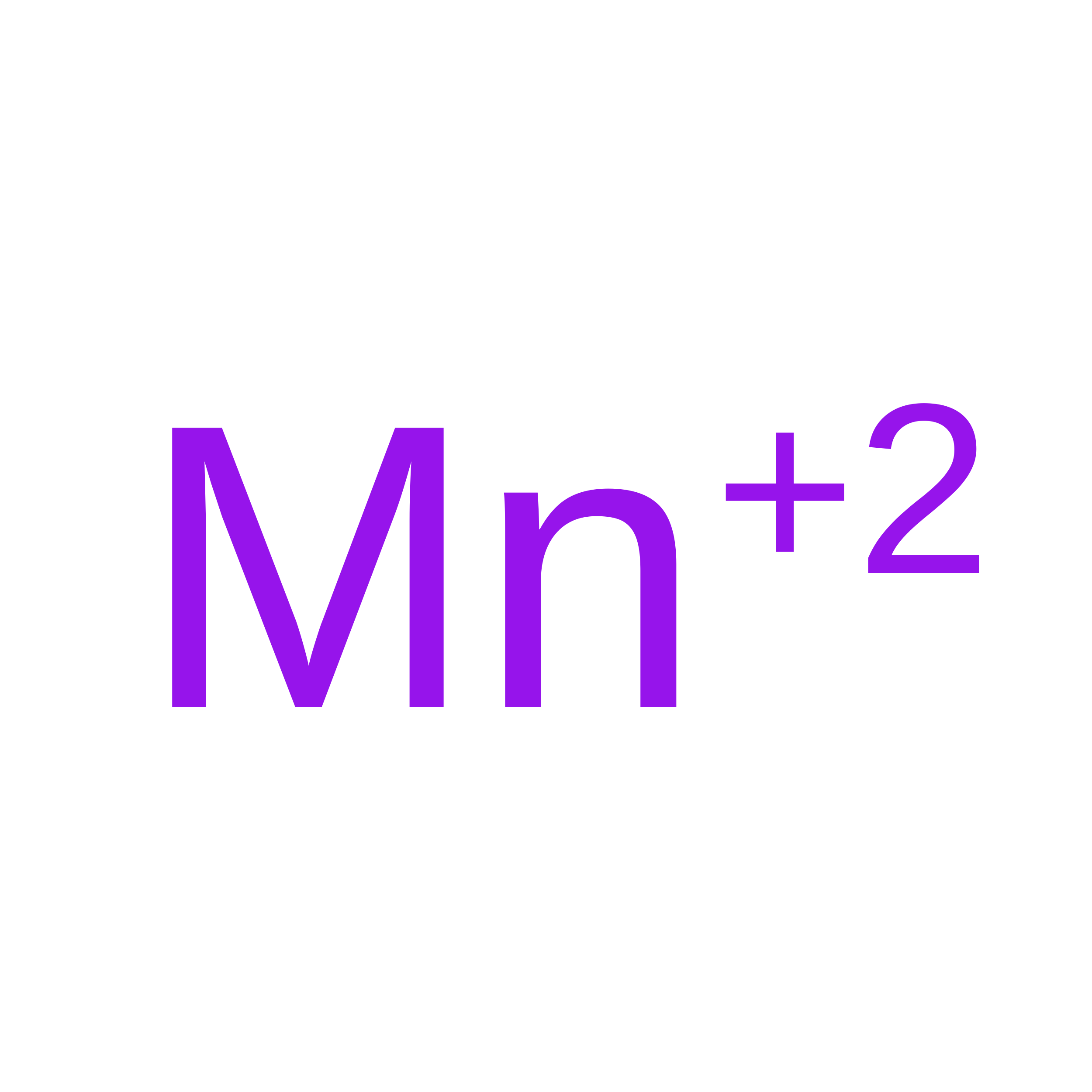
MN
(Subject of Investigation/LOI)

Query on MN


Download:Ideal Coordinates CCD File
L [auth A]
N [auth B]
P [auth C]
R [auth D]
T [auth E]
L [auth A],
N [auth B],
P [auth C],
R [auth D],
T [auth E],
V [auth F],
W [auth G],
X [auth H]
MANGANESE (II) ION
Mn
WAEMQWOKJMHJLA-UHFFFAOYSA-N

Experimental Data & Validation

Experimental Data

  • Method: ELECTRON MICROSCOPY
  • Resolution: 2.30 Å
  • Aggregation State: PARTICLE 
  • Reconstruction Method: SINGLE PARTICLE 
EM Software:
TaskSoftware PackageVersion
RECONSTRUCTIONcryoSPARC
MODEL REFINEMENTPHENIX1.19.2_4158
MODEL REFINEMENTCoot

Structure Validation

View Full Validation Report


Entry History 

& Funding Information

Deposition Data


Funding OrganizationLocationGrant Number
Japan Society for the Promotion of Science (JSPS)JapanJP1922289
Japan Society for the Promotion of Science (JSPS)JapanJP21K05394
Japan Society for the Promotion of Science (JSPS)Japan20H02916
Japan Society for the Promotion of Science (JSPS)Japan20K21281
Japan Society for the Promotion of Science (JSPS)Japan24H00505

Revision History  (Full details and data files)

  • Version 1.0: 2026-02-04
    Type: Initial release
  • Version 1.1: 2026-04-29
    Changes: Data collection, Database references