Download Mendeley
Structural insights into OST alpha / beta-mediated transport of bile acids and steroid conjugates.
Sun, X., Tian, T., Low, M., Li, S., Yao, D., Yuan, Y., Cao, M., Lei, M., Wang, Y., Chen, H., Lan, P., Xia, Q., Xue, J.(2026) Nat Struct Mol Biol 33: 1288-1298
- PubMed: 42304113 Search on PubMedSearch on PubMed Central
- DOI: https://doi.org/10.1038/s41594-026-01825-4
- Primary Citation Related Structures:
9WPL, 9WPY, 9WPZ, 9WQ0, 9WQR - PubMed Abstract:
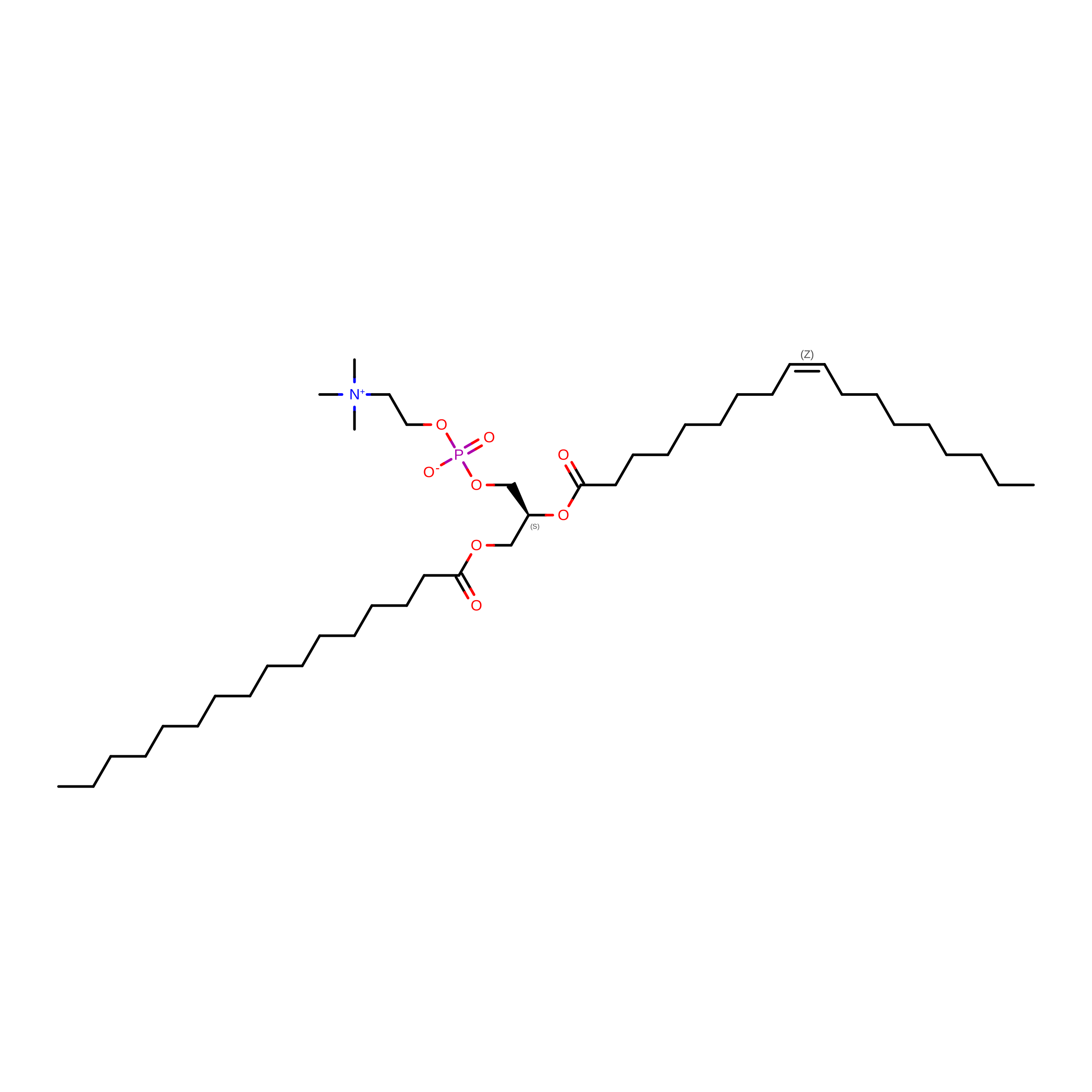
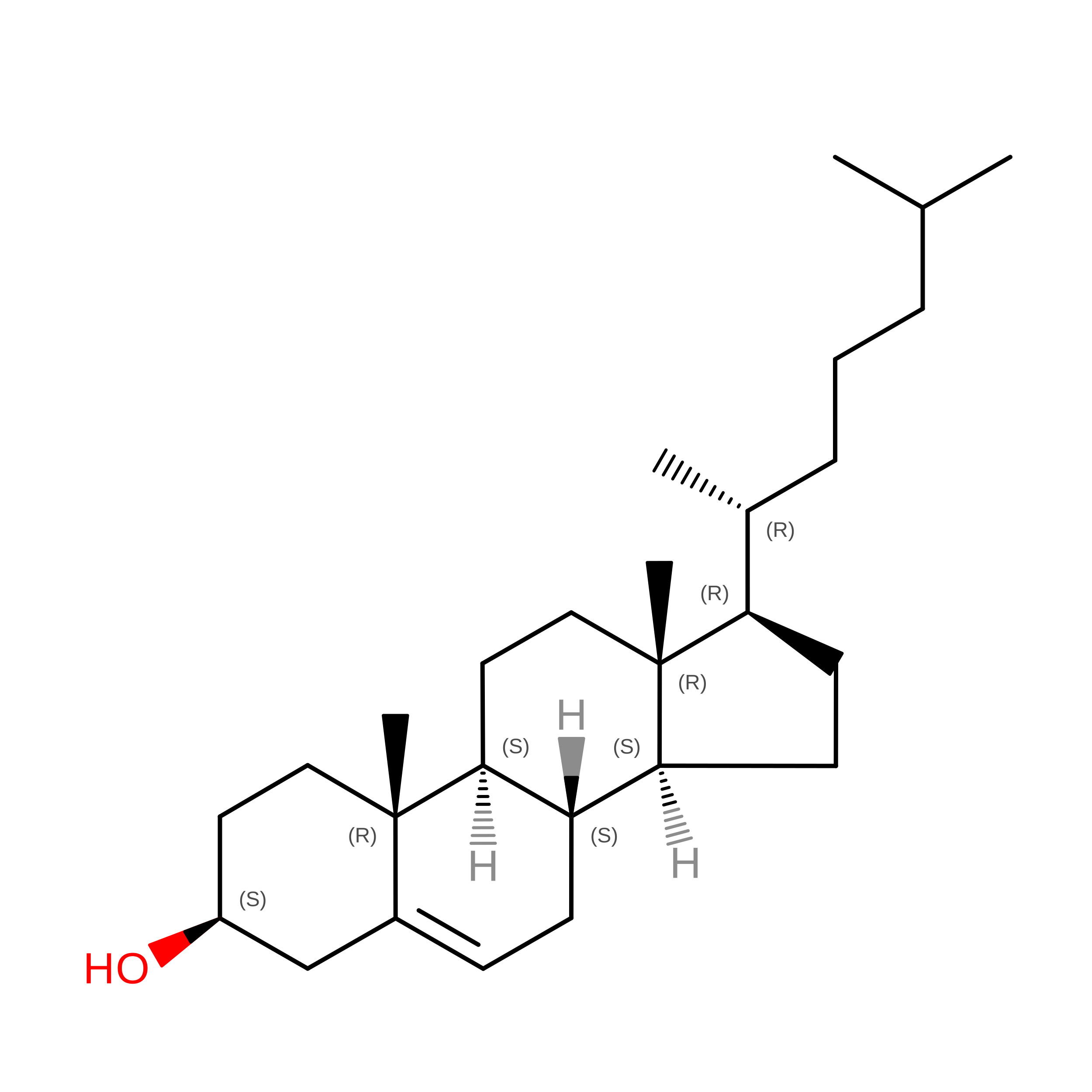
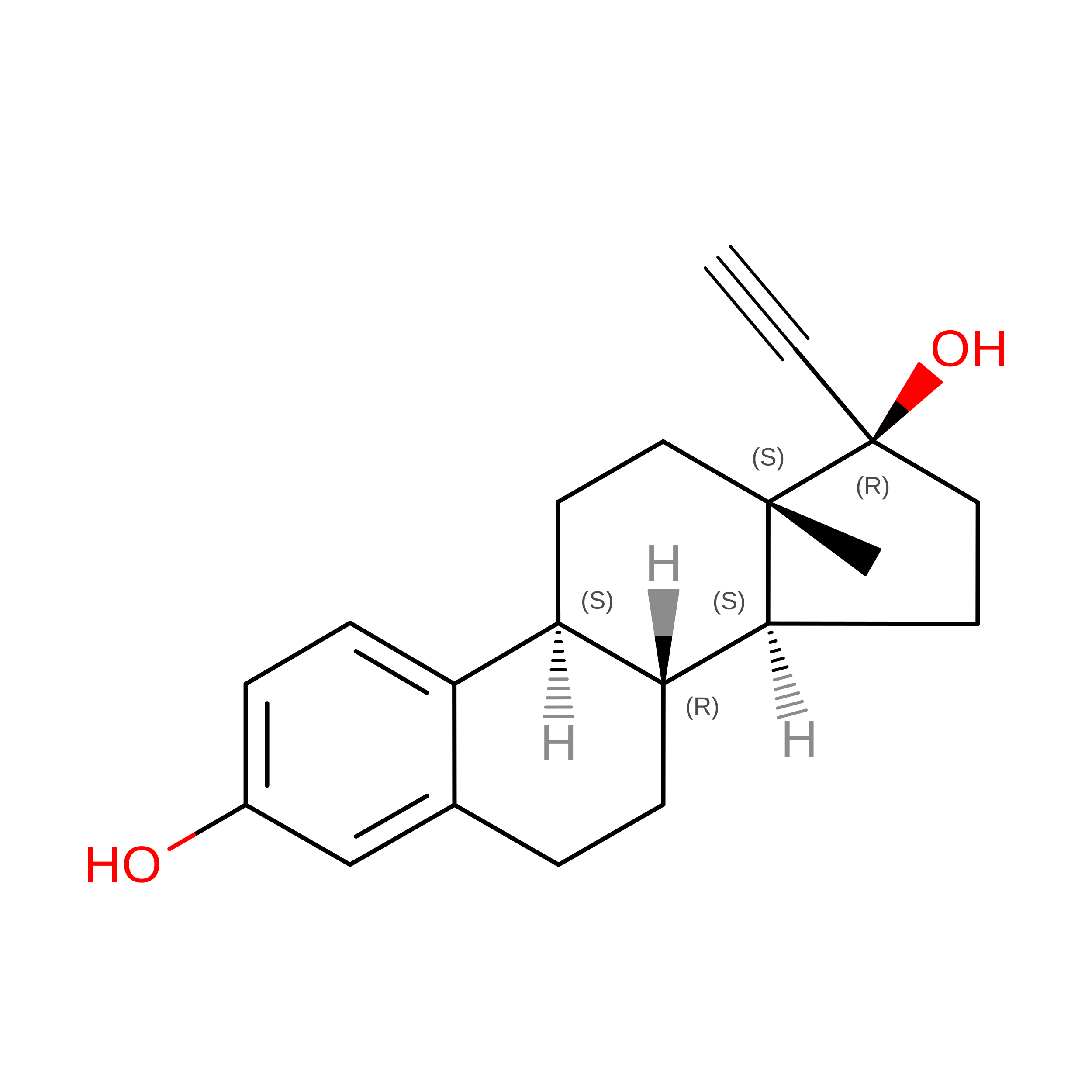
Mammalian organic solute transporter α/β (OSTα/β) is crucial for the enterohepatic circulation of bile acids and the homeostasis of steroid conjugates, mediating their movement across membranes as an obligate heterodimer. Here we present high-resolution cryo-EM structures of human OSTα/β in apo, substrate-bound and inhibitor-bound states, revealing a tetrameric organization as a homodimer of heterodimers that is required for membrane activity. Substrates bind within a surface-exposed tunnel formed by transmembrane helices 5 and 6, which is unexpectedly sealed by multiple palmitoyl chains covalently attached to a conserved intracellular loop IL2. Two chemically distinct inhibitors, fidaxomicin and ethinylestradiol, disrupt transport by both competing for the substrate-binding pocket and sterically occluding the tunnel. Together with biochemical and evolutionary analyses, our work defines a distinctive class of solute carriers that uses palmitoylation to facilitate substrate transport, a mechanism conserved across eukaryotes.
- Department of Liver Surgery, Renji Hospital, Shanghai Jiao Tong University School of Medicine, Shanghai, China.
Organizational Affiliation: