Download Mendeley
A distinct zearalenone detoxification strategy mediated by cytochrome P450.
Liu, Z., Peng, R., Li, Q., Chen, C.C., Xin, L., Li, K., Huang, J.W., Liu, X., Zhang, X., Hu, L., Luo, S., Zhou, H., Li, A., Min, J., Guo, R.T.(2026) Food Chem 510: 148697-148697
- PubMed: 41795529 Search on PubMed
- DOI: https://doi.org/10.1016/j.foodchem.2026.148697
- Primary Citation Related Structures:
9W11, 9W12, 9W13 - PubMed Abstract:
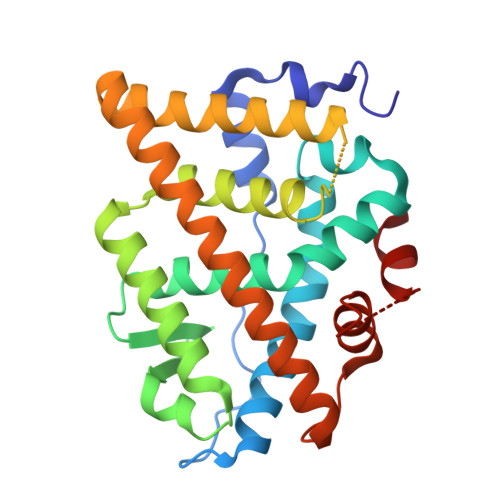
Developing the bio-detoxification of estrogenic mycotoxin zearalenone (ZEN) and its more potent metabolite α-zearalenol (α-ZOL) represents a research priority in food safety. Here, we report a variant cytochrome P450 enzyme termed T8F3 that consumes 54% ZEN and 63.9% α-ZOL in an initial screening assay. The hydroxylated products of ZEN and α-ZOL, termed ZEN-P and ZOL-P, respectively, were isolated, purified and structurally characterized. The estrogenicity of ZEN-P and ZOL-P is suppressed by 21- and 105-fold, respectively, compared with their parental compounds. Structural elucidation shows that T8F3-catalyzed hydroxylation at β-C8' (ZEN) and α-C3' (α-ZOL) positions, which might introduce steric hinderance that compromises the binding to estrogen receptor α, establishing a structure-detoxification relationship. Altogether, our study reports the first P450-mediated hydroxylation of ZEN and α-ZOL, resolves the mechanism of detoxification and addresses the behaviors of the hydroxylated ZEN and α-ZOL. These results should offer novel bio-detoxification machineries toward ZEN and derivatives.
- School of Life Sciences, Hubei University, Wuhan 430062, PR China; Zhejiang Key Laboratory of Medical Epigenetics, Hubei Hongshan Laboratory, Department of Immunology and Pathogen Biology, School of Basic Medical Sciences, Hangzhou Normal University, Hangzhou 311121, PR China.
Organizational Affiliation: