Download Mendeley
Structural insights into TRPA1 and TRPV1 modulation by flavonoid glycosides from licorice for cough relief.
Yi, Y., Duan, G., Dai, Z., Zhou, X., Huang, J., Jin, Z., Yang, A., Li, Y., Huang, Z., Ye, M.(2026) Phytomedicine 159: 158419-158419
- PubMed: 42335638 Search on PubMed
- DOI: https://doi.org/10.1016/j.phymed.2026.158419
- Primary Citation Related Structures:
9VTZ, 9VU0, 9VU1 - PubMed Abstract:
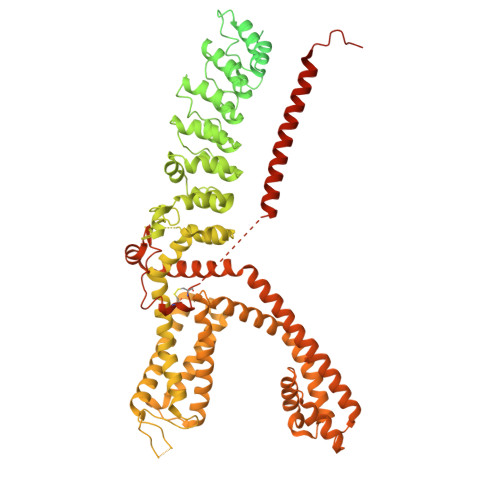
Transient receptor potential vanilloid 1 (TRPV1) and ankyrin 1 (TRPA1) are two nociceptive TRP channel subtypes that play central roles in cough hypersensitivity. This study evaluated the antitussive efficacy of liquiritin apioside (LIQA) and liquiritin (LIQ), two major flavonoid glycosides from licorice, in acute chemically induced cough models, and investigated their modulations of TRPA1 and TRPV1. In guinea pig models, cough was induced by capsaicin (a TRPV1 agonist) and cinnamaldehyde (a TRPA1 agonist), respectively. The inhibitory effects of LIQA and LIQ against TRPA1 and TRPV1 were assessed using electrophysiological profiling and fluorescence-based calcium assays. To elucidate the underlying mechanisms, high-resolution cryo-electron microscopy (cryo-EM) structural analysis, and molecular simulations were conducted. LIQA and LIQ significantly reduced cough frequency in the guinea pig models. Electrophysiological profiling revealed that LIQA suppressed human TRPA1 (hTRPA1) channel activity, while LIQ blocked human TRPV1 (hTRPV1) activation. High-resolution cryo-EM structures of hTRPA1/LIQA (2.59 Å) and hTRPV1/LIQ (3.05 Å) complexes were obtained. Structural analysis indicates that LIQA stabilizes hTRPA1 in a closed conformation with T624 at the coupling region site, whereas LIQ interacts with S512 through hydrogen bonding in the deep S4-S5 site of hTRPV1, thereby inhibiting pore opening. This study establishes LIQA and LIQ as lead compounds with acute antitussive activities mediated by TRPA1/TRPV1 modulation.
- State Key Laboratory of Natural and Biomimetic Drugs, School of Pharmaceutical Sciences, Peking University, Beijing 100191, China; Yunnan Baiyao International Medical Research Centre, Peking University, Beijing 100191, China.
Organizational Affiliation: