Download Mendeley
Repression of RIPK1 kinase by INPP5D inhibits expression of diverse proinflammatory mediators and late-onset Alzheimer's disease risk factors.
Xie, X., Liu, J., Liang, W., Zhang, Y., Gong, X., Yuan, S., Qi, C., Huang, M., Shi, L., Hou, M., Zhang, M., Liu, W., Sun, W., Wu, Y., Li, C., Cao, Z., Jing, H., Qian, L., Liu, J., Yuan, S., Wang, Q., Shen, Y., Liu, Z., Li, Y., Pan, H., Zhu, B., Shan, B., He, K., Wang, W., Zou, C., Li, Y., Chou, J.J., Yuan, J.(2026) Immunity 59: 419-437.e11
- PubMed: 41633359 Search on PubMed
- DOI: https://doi.org/10.1016/j.immuni.2026.01.014
- Primary Citation Related Structures:
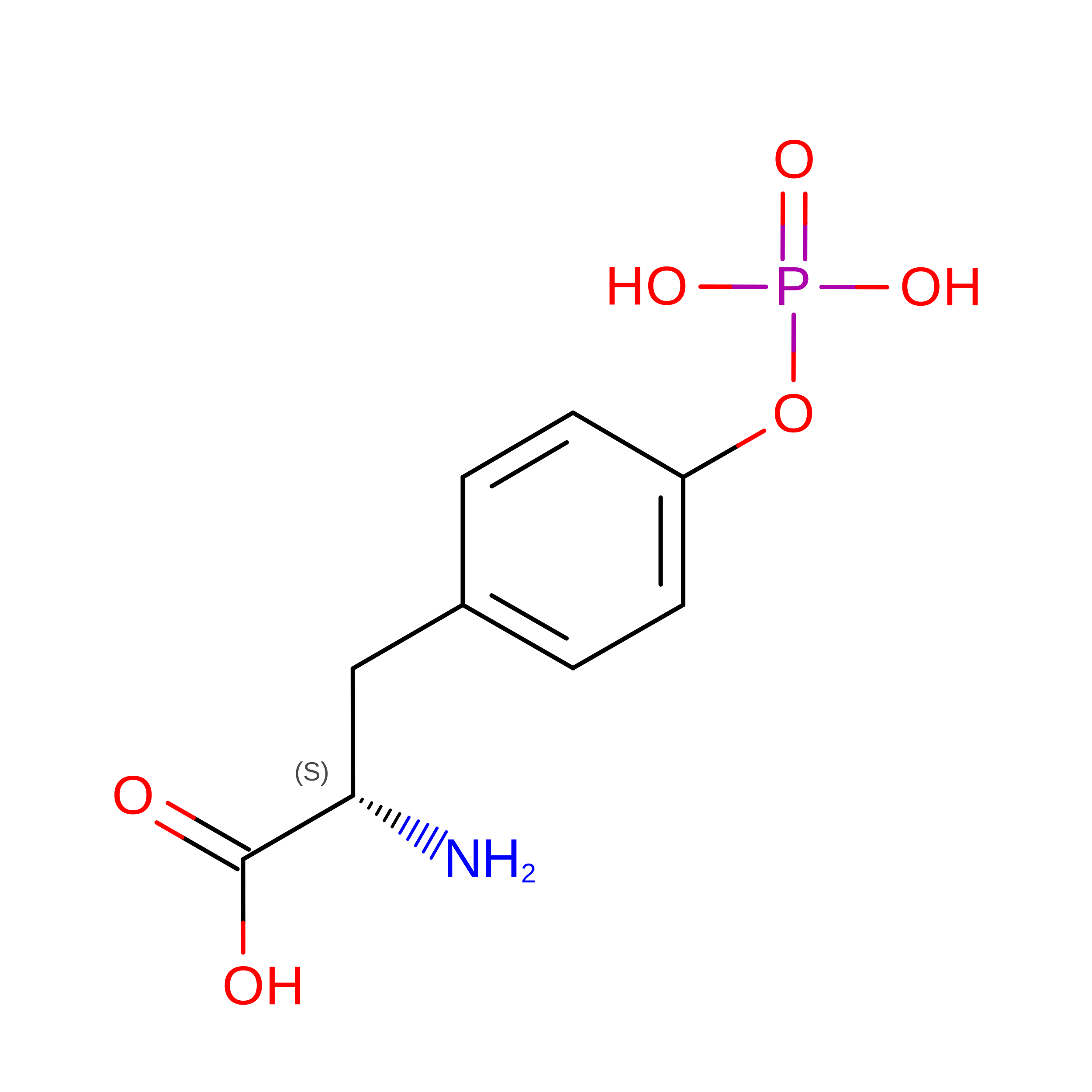
9VJL - PubMed Abstract:
Genome-wide association studies strongly implicate neuroinflammation in late-onset Alzheimer's disease (LOAD). Genetic risk loci for LOAD are enriched for genes expressed in microglia, but the relationship among microglial LOAD risk genes has been unclear. We found that the N-terminal SH2 domain of INPP5D, an important LOAD risk gene, directly interacted with the cell death regulator RIPK1 at p-Y383 to suppress RIPK1 kinase activation. Microglial INPP5D deficiency cell-autonomously promoted RIPK1-mediated transcriptional induction of diverse LOAD risk genes, proinflammatory cytokines, complements, and ROS mediators, as well as proinflammatory signaling mediators such as Toll-like receptors (TLRs), MyD88, Nlrp3, gasdermin D, and Zbp1. RIPK1-regulated microglial transcriptomic signatures were found in microglial subtypes implicated in human Alzheimer's disease (AD) pathogenesis. Furthermore, microglial INPP5D deficiency promoted aging-dependent RIPK1-mediated development of neuronal TDP-43 pathology, neuronal loss, and motor dysfunction in a non-cell-autonomous manner. Our data suggest that INPP5D functions as an intracellular rheostat in regulating RIPK1-mediated neuroinflammation for promoting aging-related neurodegenerative diseases, including LOAD and AD-amyotrophic lateral sclerosis comorbidity.
- Interdisciplinary Research Center on Biology and Chemistry, Shanghai Institute of Organic Chemistry, Chinese Academy of Sciences, Shanghai 201203, China; University of Chinese Academy of Sciences, Beijing 100049, China; Shanghai Key Laboratory of Aging Studies, Shanghai 201203, China.
Organizational Affiliation: