Download Mendeley
An integrated structural and functional profiling approach uncovers the mechanisms of pregnane X receptor binding and activation by pharmaceutical and environmental compounds.
Derosa, Q., Carivenc, C., Sirounian, S., Grimaldi, M., Boulahtouf, A., Delfosse, V., Balaguer, P., Bourguet, W.(2026) Mol Pharmacol 108: 100140-100140
- PubMed: 42480387 Search on PubMedSearch on PubMed Central
- DOI: https://doi.org/10.1016/j.molpha.2026.100140
- Primary Citation Related Structures:
9TWE - PubMed Abstract:
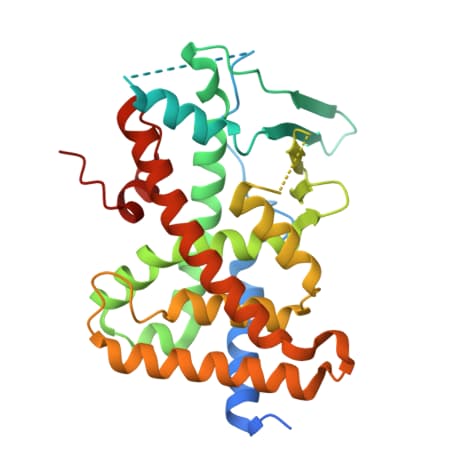
The pregnane X receptor (PXR) is a key chemosensory protein that helps the organism adapt to its chemical environment. Indeed, humans are continuously exposed to a wide range of external chemicals, known as xenobiotics, which include environmental pollutants, food components, cosmetics, and pharmaceuticals. PXR has the unique property to sense a large variety of xenobiotics and regulate the expression of detoxifying enzymes and transporters, facilitating the clearance of these chemicals. However, prolonged activation of this pathway can lead to negative effects, such as drug-drug interactions, chemoresistance, endocrine disruption, a heightened risk of metabolic diseases, or enhanced cell growth and tumor aggressiveness. Understanding how PXR interacts with xenobiotics is crucial for predicting, assessing, and preventing the potential impacts of these chemicals on human health. Here, we present the structural and functional analysis of the interaction of PXR with 2 approved drugs (nimodipine and liranaftate), a natural flavor commonly used in cosmetics and the food industry (sclareol), and an environmentally relevant halogenated derivative of the emblematic endocrine disruptor bisphenol A (2,2'-dichlorobisphenol A). Cell-based assays show that these 4 compounds display different PXR binding potencies, stimulate the expression of key target genes related to drug metabolism and cell proliferation, and promote colon cancer cell proliferation to varying degrees. Crystallographic analysis reveals their distinct mechanisms of binding to PXR. The integrated functional and structural characterization pipeline we have established yields critical insights for both environmental risk assessment and the rational development of industrial and pharmaceutical compounds with minimal harmful PXR activity. SIGNIFICANCE STATEMENT: The pregnane X receptor is an off-target of many pharmaceuticals and industrial chemicals whose activation is associated with clinically relevant drug-drug interactions. This study describes a pipeline for the identification and characterization of pregnane X receptor ligands, designed to support environmental risk assessment and the informed design of safer substitutes.
- Institut de Recherche en Cancérologie de Montpellier, Inserm U1194, Montpellier, France.
Organizational Affiliation: