Download Mendeley
Structural and spectral adaptation of the seagrass Posidonia oceanica photosystem I to seabed light.
Amelii, A., Capaldi, S., Russo, M., Guardini, Z., Sanita, G., Esposito, E., Olive, I., Maiuri, M., Dall'Osto, L., Cerullo, G., Procaccini, G., Bassi, R.(2026) Nat Commun 17
- PubMed: 42463682 Search on PubMedSearch on PubMed Central
- DOI: https://doi.org/10.1038/s41467-026-75200-8
- Primary Citation Related Structures:
9S1L, 9S1M - PubMed Abstract:
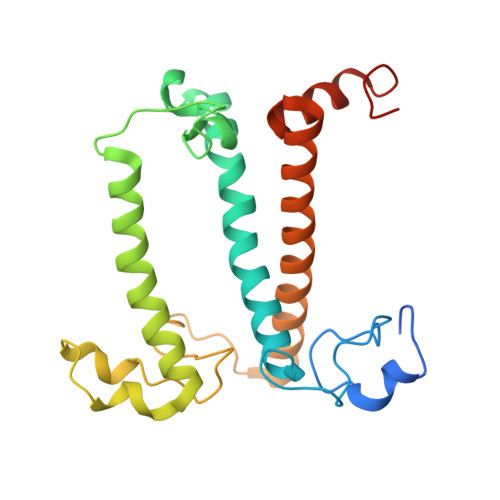
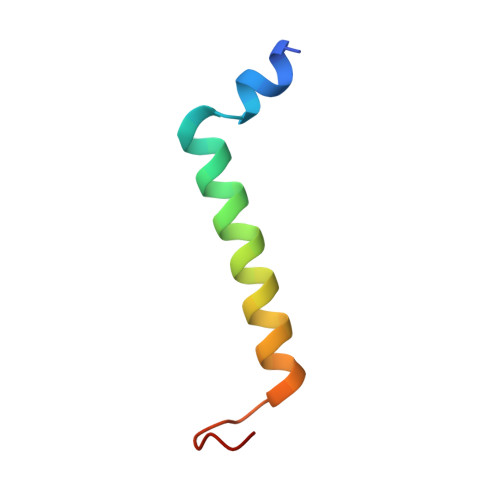
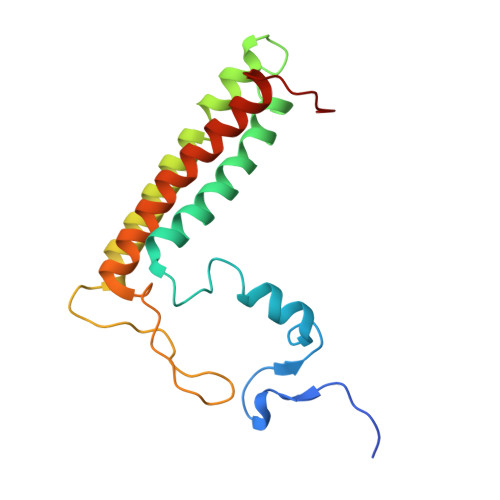
Seagrasses are marine angiosperms re-adapted to underwater life, forming productive ecosystems and long-term carbon sinks. Posidonia oceanica thrives up to 50 m depth, where light is scarce and spectrally shifted; yet, the molecular basis of its photosynthetic adaptation remains unclear. Here, we report that P. oceanica genetically adapts for highly efficient photon use under dim light by enhancing photosystem antenna size and reducing exciton trapping time. We determine the structures of P. oceanica PSI supercomplexes by cryo-electron microscopy, revealing an expanded antenna system composed of PSI-LHCI, a trimeric phospho-LHCII, and an additional LHCI heterodimer. Low-energy chlorophyll forms associated with LHCI are lost. Ultrafast spectroscopy shows that this loss correlates with faster exciton trapping, which compensates for antenna expansion and enhances light-use efficiency under dim light. We identify key residues responsible for the loss of low-energy forms. Reversion to land-plant ortholog sequences restores red-shifted emission, providing strategies to enhance light-use efficiency in crops.
- Laboratory of Photosynthesis and Bioenergy, Department of Biotechnology, University of Verona; Strada Le Grazie 15, Verona, Italy.
Organizational Affiliation: