Download Mendeley
Species- and variant-specific ACE2 compatibility shapes SARS-CoV-2 spillover potential in North American cervids.
Espada, C., Ye, K., Long, Y., Pasai, K., DeLiberto, T.J., Heale, J., Wiese, R., Yang, Q., Zhou, M., Streich, S., Tao, Y.J., Chandler, J.C., Wan, X.F.(2026) Nat Commun 17
- PubMed: 41957014 Search on PubMedSearch on PubMed Central
- DOI: https://doi.org/10.1038/s41467-026-71623-5
- Primary Citation Related Structures:
9Q3U, 9Q3V - PubMed Abstract:
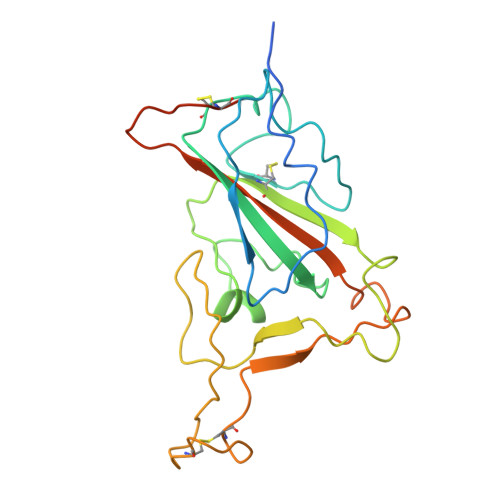
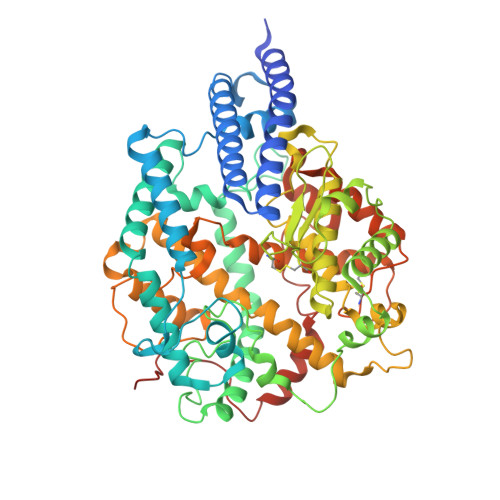
Free-ranging white-tailed deer (WTD) are established SARS-CoV-2 reservoirs, but the susceptibility of other cervid species remains unclear. Here we integrate receptor analysis, structural modeling, and field surveillance to assess SARS-CoV-2 susceptibility across North American cervids. We identify species- and variant-specific differences in ACE2-spike compatibility. Elk ACE2 exhibits weak binding to the ancestral strain (Wuhan-Hu-1) and Delta spike receptor-binding domains (RBDs), likely due to a unique K31N substitution. In contrast, it shows stronger binding to Alpha, Beta, Gamma, and Omicron RBDs containing N501Y. Biophysical assays, gel filtration chromatography, and cryo-EM confirm stable complex formation between elk ACE2 and Alpha RBD, but not RBD from the ancestral strain. Despite weak binding, elk ACE2 supports viral entry and replication in vitro. However, surveillance revealed limited evidence of infection in the United States, contrasting with widespread WTD transmissions. These findings demonstrate that ACE2 compatibility alone is insufficient to predict reservoir potential and provide a framework for assessing species susceptibility to emerging coronaviruses.
- NextGen Center for Influenza and Emerging Infectious Diseases, University of Missouri, Columbia, MO, USA.
Organizational Affiliation: