Download Mendeley
In vivo evolution of antibody CR3022 expands cross-neutralization of SARS-CoV-2 variants and informs pan-sarbecovirus immunity.
Fu, Y., Feng, Z., Erickson, S.A., Halfmann, P.J., Li, L., Chervin, J.C., Troxell, C.A., Sun, J., Yasuhara, A., Changrob, S., Huang, M., Zheng, N.Y., Yuan, M., Kawaoka, Y., Wilson, I.A., Wilson, P.C.(2026) Cell Rep 45: 117137-117137
- PubMed: 41865371 Search on PubMed
- DOI: https://doi.org/10.1016/j.celrep.2026.117137
- Primary Citation Related Structures:
9PSN, 9PSO, 9PSP - PubMed Abstract:
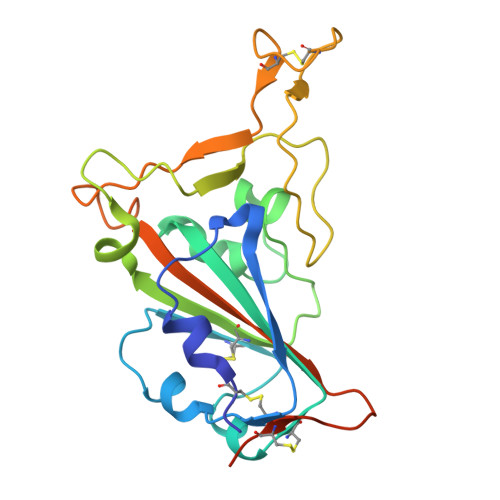
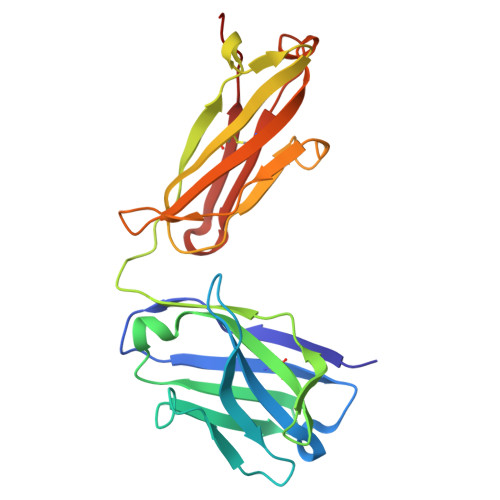
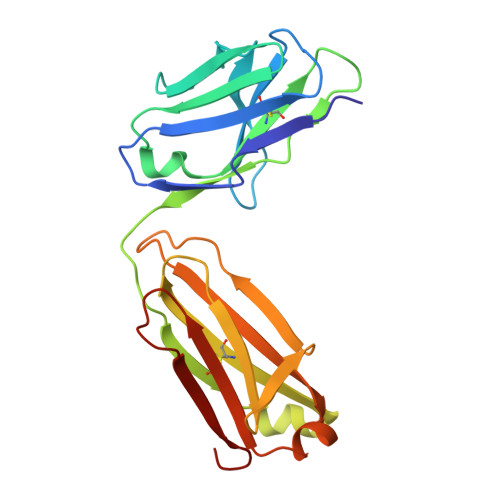
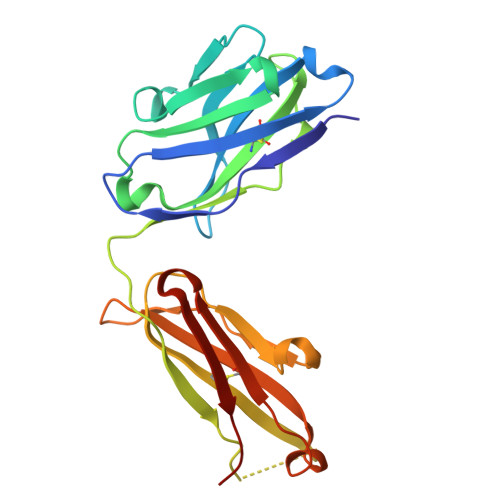
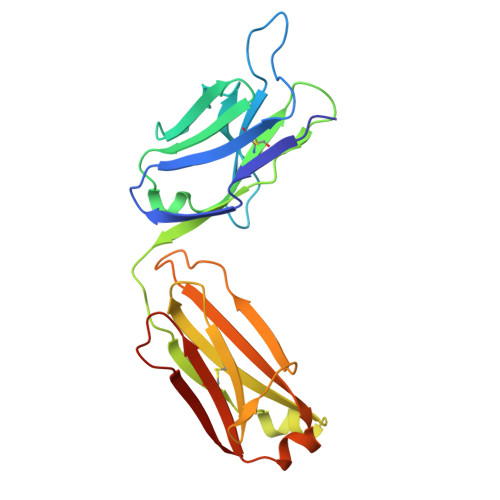
The epitope that monoclonal CR3022 binds to represents a promising target for broad protection against a wide range of human and zoonotic coronaviruses. We develop a powerful model to evaluate antibody affinity maturation in vivo using immunoglobulin (Ig)-humanized mice that express the predicted germline heavy chain of antibody CR3022. Severe acute respiratory syndrome coronavirus (SARS-CoV)/SARS-CoV-2 sequential immunization leads to the convergent evolution of the germline CR3022 through somatic hypermutation (SHM), resembling the affinity-matured CR3022 from a human but now also adapting to key variants and divergent sarbecoviruses. While simple prime-boost strategies drive CR3022-epitope targeting, an intensive vaccination protocol elicits dominant responses to other epitopes. X-ray crystal structures reveal that SARS-CoV-2-neutralizing CR3022-like antibodies exhibit enhanced affinity by increasing polar and electrostatic interactions. Overall, these findings show that CR3022-like clones can be readily adapted through SHM to increase breadth and potency to sarbecoviruses by relatively minor shifts in affinity with appropriate vaccination strategies.
- Drukier Institute for Children's Health, Department of Pediatrics, Weill Cornell Medicine, New York, NY, USA.
Organizational Affiliation: