Download Mendeley
Structural insight into hierarchical DNMT3A autoinhibition and its dysregulation in disease.
Lu, J., Vig, E., Chen, J., Gretarsson, K.H., Khudaverdyan, N., Shao, Z., Lu, C., Chang, C.A., Song, J.(2026) Nat Commun 17
- PubMed: 41708613 Search on PubMedSearch on PubMed Central
- DOI: https://doi.org/10.1038/s41467-026-69563-1
- Primary Citation Related Structures:
9PRW - PubMed Abstract:
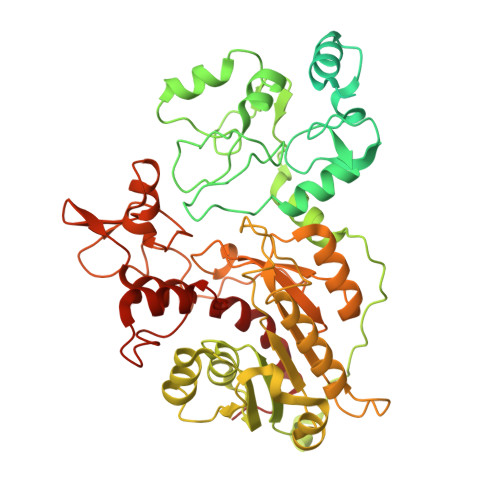
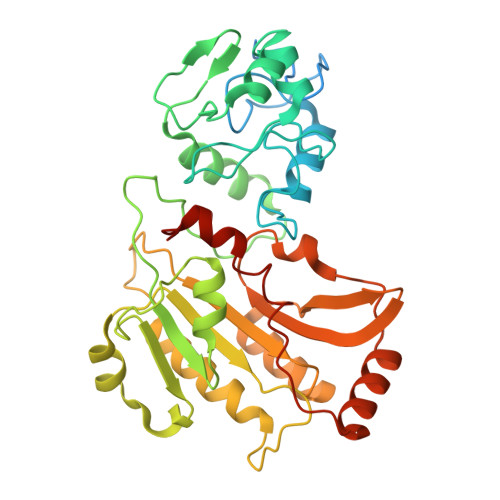
DNA methyltransferase DNMT3A-mediated DNA methylation is important for genomic imprinting and transcriptional regulation. However, how the regulatory domains of DNMT3A cooperate with its methyltransferase domain and histone marks to orchestrate genomic methylation remains unclear. Here we report the cryo-EM structure of DNMT3A2 with regulatory factor DNMT3L, revealing an intricate domain interaction underlying multilayered autoinhibition. The PWWP domain interacts with the ADD and methyltransferase domains to block the target recognition domain and the H3K36me2-binding pocket, thereby coupling the H3K36me2 binding with DNMT3A activation, adding a layer of allosteric regulation distinct from the previously characterized ADD-H3K4me0 regulation. Molecular dynamics simulations of the DNMT3A-DNMT3L complex further reveals that relief of DNMT3A autoinhibition involves disengagement of the CpG-recognition loop of the target recognition domain from autoinhibitory interaction, leading to enhanced accessibility of the target recognition domain loop for DNA binding and DNMT3A activation. Importantly, our combined structural, biochemical and genomic methylation analysis demonstrates that disrupting the PWWP-ADD interaction by disease-associated DNMT3A mutations leads to impaired DNMT3A autoinhibition and substrate specificity, providing a potential explanation to aberrant DNA methylation in disease.
- Department of Biochemistry, University of California, Riverside, CA, USA.
Organizational Affiliation: